
India’s gaming and animation industry just got a massive vote of confidence. Tencent, one of the world’s biggest gaming companies, has pledged over Rs. 10 crore to grow India’s creative talent base. The move signals a long-term bet on India becoming a global force in animation, gaming, and visual effects.
The Big Bet on India’s Orange Economy
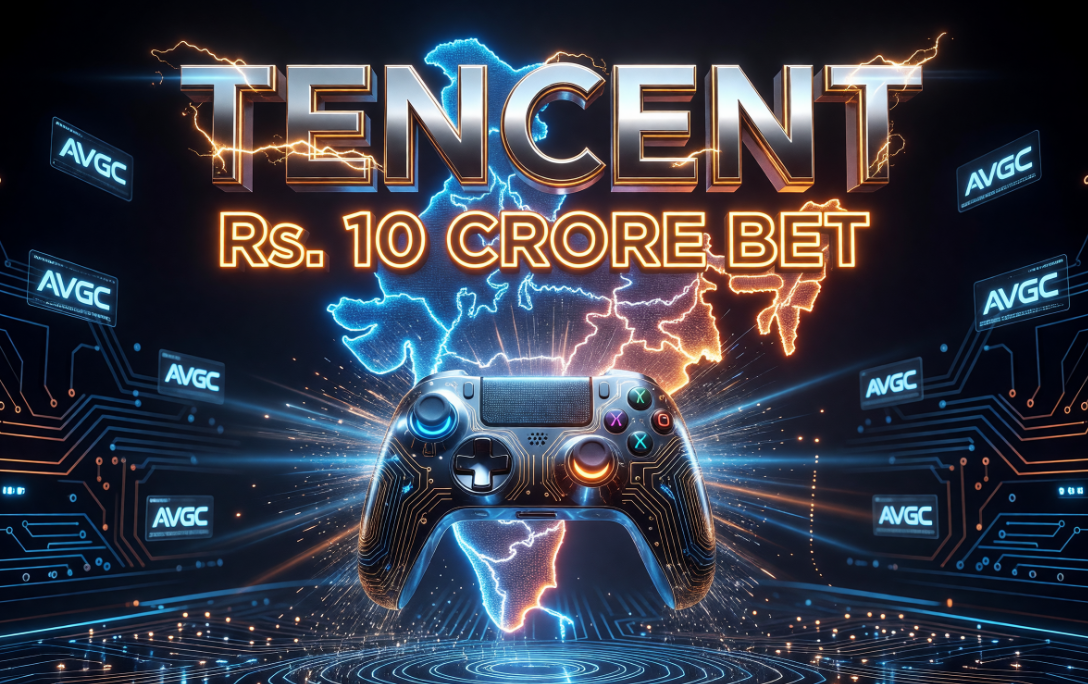
Tencent has announced a multi-year financial commitment of over Rs. 100 million, which equals Rs. 10 crore, directed specifically at India’s AVGC-XR sector. AVGC stands for Animation, Visual Effects, Gaming, and Comics, while XR covers Extended Reality technologies including augmented and virtual reality.
The funding is channeled into three focused areas: curriculum development, industry-level training, and structured mentorship programs. This is not a one-time grant or a symbolic gesture.
The commitment spans multiple years, making Tencent one of the first major international gaming companies to formally back India’s national creative sector goal with long-term financial resources.
India’s government has set an ambitious national target of training and employing two million skilled professionals in the AVGC-XR space by 2030. Tencent’s investment is designed to directly support this roadmap.
India’s Union Budget in 2022 had already flagged AVGC as a priority sector and announced a dedicated task force to position the country as a global creative hub. That policy push built the foundation that investments like Tencent’s are now building upon.
The term “Orange Economy” describes industries that generate value through creativity and intellectual property. India has been actively promoting this concept as a pillar of long-term economic growth, and Tencent’s entry adds serious global weight to that ambition.
Two Key MoUs That Could Shape India’s Gaming Talent Pipeline
To translate commitment into real action, Tencent signed two separate three-year Memorandums of Understanding with leading Indian industry bodies. Each MoU targets a different layer of the talent ecosystem.
The first MoU is with the Services Export Promotion Council (SEPC), which operates under India’s Ministry of Commerce and Industry. This partnership focuses on national capacity building and helping Indian AVGC companies plug directly into international value chains, positioning India as a top global destination for AVGC service exports.
The second MoU is with the Game Developers Association of India (GDAI), and this one goes straight to the grassroots level. Here is what the GDAI partnership will deliver:
- A National Game Jam targeting over 10,000 students every single year
- Train-the-Trainer programs designed specifically for college educators across India
- Structured participation in the Indian Game Developers Conference (IGDC)
Together, these two MoUs create a twin-track approach: top-down policy alignment with the government and bottom-up talent development at the student level, working simultaneously.
Danny Marti, Head of Public Policy and Global Affairs at Tencent, summed up the company’s vision clearly:
“Our goal goes beyond investing in programmes. We want to work with local partners to build practical pathways for talent, creators, and studios. By combining India’s creative strengths with Tencent’s expertise, we hope to support a more connected and globally competitive AVGC ecosystem.”
The Event That Brought India’s AVGC Leaders Together
The announcements were officially unveiled at an event called “Tencent | Building India’s Orange Economy Together.” This was not a routine press event. Policymakers, industry veterans, and AVGC institutions gathered in one room to talk strategy, share ideas, and map a clear direction for India’s creative economy.
Dr. Abhay Sinha, Director General of SEPC under the Ministry of Commerce and Industry, attended as a senior government representative. Key figures also joined from the Indian Institute of Creative Technologies (IICT), the Esports Federation of India (ESFI), and NODWIN Gaming, one of India’s most recognized esports platforms.
The event hosted two sharp, focused panel discussions that addressed the sector’s biggest challenges and opportunities head-on:
| Panel Discussion | Key Focus |
|---|---|
| Charting Pathways to the Global Gaming Industry | Public-private collaboration and career pathways for Indian youth |
| Taking India to the Global Stage | Grassroots community building, workforce development, and esports governance |
Dr. Abhay Sinha reinforced the importance of the partnership from the government’s standpoint, noting that the AVGC sector is a key driver of India’s services exports and that collaborations like this can open wider international doors for Indian professionals and companies.
India’s Gaming Market Is Set to Explode by 2029
Tencent’s decision to invest in India at this specific moment is no coincidence. The country’s gaming market is growing at a pace that most markets can only dream of matching.
Research firm Niko Partners has identified India as the fastest-growing gaming market across both the Asia and MENA regions combined. That is a striking distinction in an area already packed with gaming investment and activity.
The projections behind India’s gaming growth tell a compelling story:
- India’s gaming market is projected to reach $1.5 billion in player spending by 2028
- Active gamers in India are expected to reach 724 million by 2029
To put that 724 million figure in perspective, that number would exceed the total population of Europe. India’s gaming audience is not just growing. It is transformative in scale.
Beyond the signed MoUs, Tencent has laid out a broader ecosystem strategy for its India operations. The company plans to explore additional partnerships with local institutions to create internship opportunities and professional knowledge exchange for young talent.
Tencent also plans to introduce global gaming titles like Honor of Kings to the Indian market, giving India’s booming esports and content creator communities a powerful new platform to compete and build on.
India brings together a vast young population, a mobile-first digital culture, and a creative talent pool that has been quietly making global marks in animation, visual effects, and gaming for years. Tencent has clearly done its homework, and this investment is the company’s direct, tangible response to everything India represents right now.
With Rs. 10 crore committed, two landmark MoUs signed, and a clear alignment with India’s 2030 AVGC workforce goals, Tencent’s push into India’s creative economy is one of the most strategically timed moves in the sector today. For every young Indian student who dreams of designing the next big game or animating the next global blockbuster, this partnership could be the turning point that transforms ambition into a real career. India’s creative future is being written in real time, and this chapter is only just beginning. What do you think about Tencent’s big investment in India’s gaming and animation future? Drop your thoughts in the comments below.