

The Drug Controller General of India (DCGI) has issued a warning against the use of anti-cold and flu syrups containing pholcodine for children below the age of 4 years. The move comes after the World Health Organization (WHO) alerted the health authorities of the risk of severe allergic reactions in patients who have taken these products before undergoing surgery.
What is pholcodine and why is it dangerous?
Pholcodine is an opioid cough suppressant that helps with dry cough. It works by suppressing the cough center of the brain. It is contraindicated in patients who have liver disease, according to Dr. Shreya Dubey, Consultant – Neonatology & Pediatrics, CK Birla Hospital Gurugram.
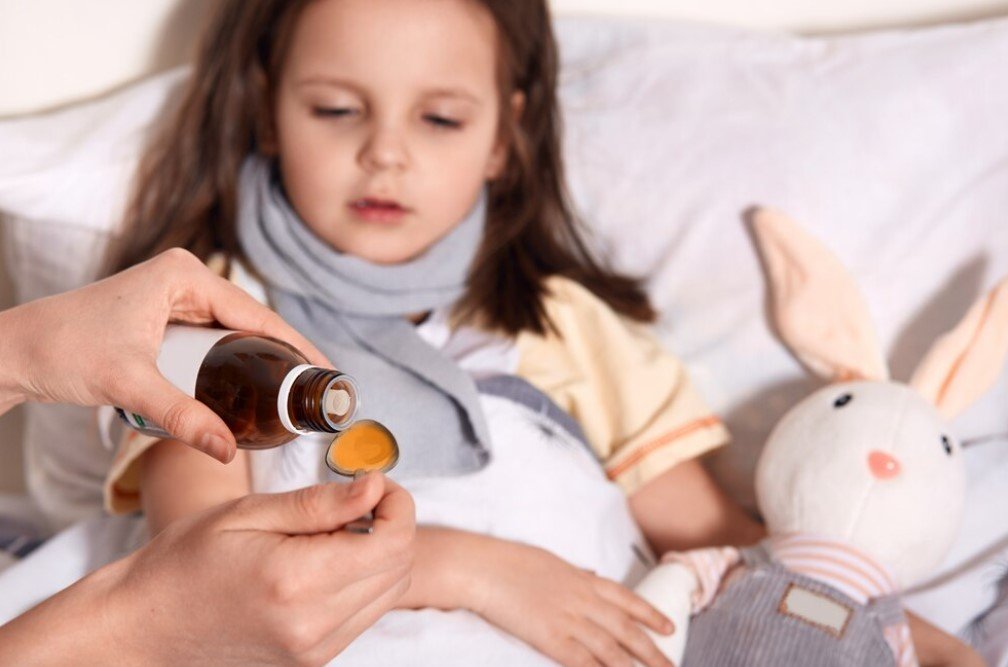
Pholcodine is a common ingredient in over-the-counter tablets and syrups that are marketed globally to treat non-productive or dry coughs. However, the WHO has found that pholcodine can react with certain neuromuscular blocking agents (NMBAs) that are used during general anesthesia for surgical procedures. This can lead to anaphylaxis, a life-threatening allergic reaction that can cause breathing difficulties, low blood pressure, and shock.
The WHO has reported 66 deaths among children in The Gambia who had taken pholcodine-containing products at least 12 months prior to surgery. The WHO has also advised health care professionals and authorities to avoid prescribing or dispensing these products to patients who are likely to undergo surgery in the near future.
How is the Indian government responding to the WHO alert?
The DCGI has taken up the matter with the concerned state regulatory authority, under whose jurisdiction the drug manufacturing unit is located. The DCGI has also asked the manufacturers of pholcodine-containing products to mention a warning on the label and package insert that these products should not be used in children below 4 years of age.
The DCGI has also requested the WHO to share the report on the establishment of a causal relation between the deaths and the medical products in question, as well as the photographs of labels and the certificate of analysis of the samples tested.
The DCGI has stated that it is a practice that the importing country tests these products on quality parameters and satisfies itself as to the quality of the products before their release for usage in the country.
Which are the pholcodine-containing products that are under scrutiny?
According to the WHO, the four products that are potentially linked with the adverse events are:
- Promethazine Oral Solution
- Kofexmalin Baby Cough Syrup
- Makoff Baby Cough Syrup
- Magrip N Cold Syrup
The manufacturer of these products is Maiden Pharmaceuticals Limited, Haryana, India. The WHO has stated that the manufacturer has not provided guarantees to the WHO on the safety and quality of these products.
What are the alternatives to pholcodine-containing products for treating cough?
Dr. Saurabh Khanna, Lead Consultant- Paediatrics & Neonatology, CK Birla Hospital Gurugram, advises that the use of antitussives should be restricted to only times when the cough is very severe and not associated with any other risk factors. He also suggests that every cough should not be treated by using pholcodine as this is only symptomatic treatment and does not treat the root cause of the cough.
He recommends that parents should consult a child specialist before giving any cough and cold medication to their children, especially those below 4 years of age. He also advises that parents should look for the ingredients of the products and avoid those that contain pholcodine.
He says that some of the alternatives to pholcodine-containing products are:
- Honey and lemon: These are natural remedies that can soothe the throat and reduce coughing. However, honey should not be given to infants below 1 year of age as it can cause botulism, a rare but serious form of food poisoning.
- Steam inhalation: This can help loosen the mucus and clear the airways. Adding a few drops of eucalyptus oil or menthol can enhance the effect. However, care should be taken to avoid burns and scalds from the hot water or steam.
- Saline nasal drops or sprays: These can help moisten the nasal passages and reduce congestion. They are safe and effective for children of all ages.
- Hydration: Drinking plenty of fluids can help thin the mucus and prevent dehydration. Warm liquids such as soups, broths, or herbal teas can also provide relief.
- Rest: Getting enough rest can help the body fight off the infection and recover faster.