

India, the world’s third-largest emitter of greenhouse gases, is planning to launch a carbon capture policy that will allow it to reduce its emissions while still using its abundant coal resources. The policy, which is expected to be unveiled later this year, will provide incentives for companies to capture, recycle, and store their carbon dioxide emissions underground.
The policy is part of India’s efforts to balance its energy security and climate goals, as it faces increasing pressure from the international community to take more ambitious action to curb global warming. India has pledged to achieve net-zero emissions by 2070, and to increase its share of renewable energy to 40% by 2030.
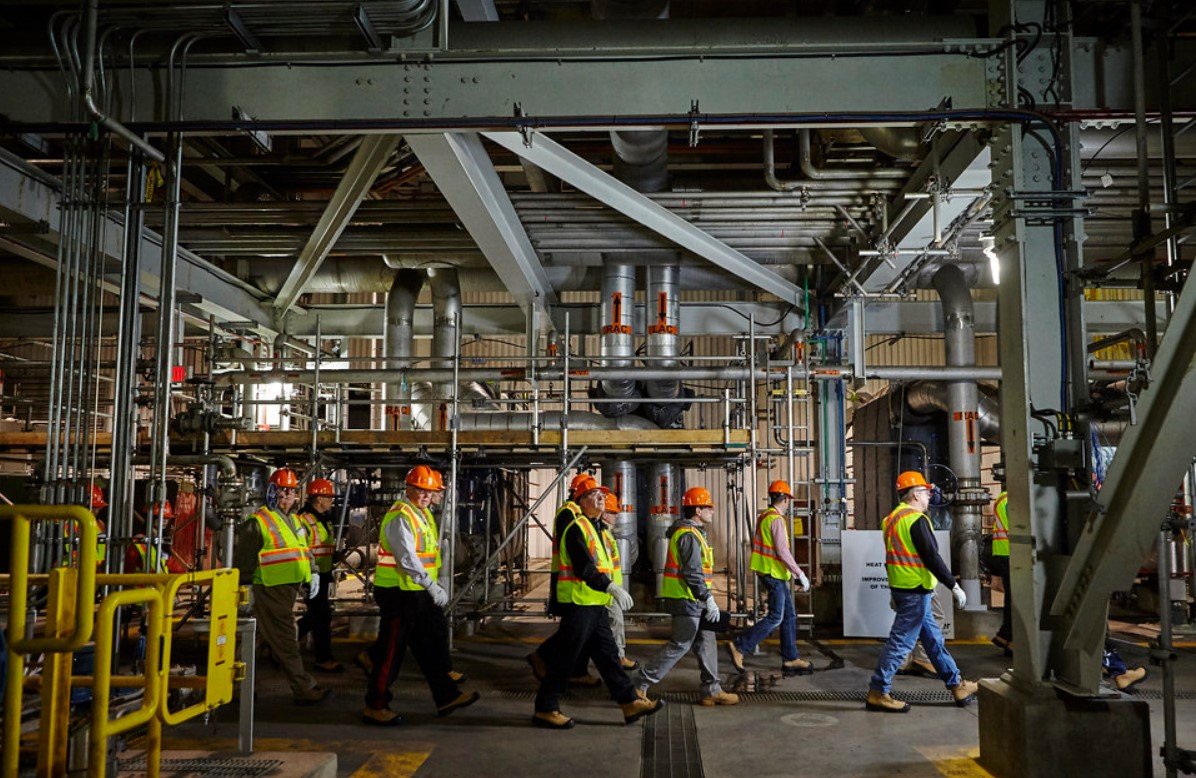
However, India also relies heavily on coal for its electricity generation, as it has the world’s fourth-largest coal reserves. Coal accounts for about 70% of India’s power mix, and is expected to remain the dominant source of energy for the foreseeable future. India also plans to expand its coal production and consumption, as it aims to meet the growing demand from its 1.3 billion population and its fast-growing economy.
A Potential Solution for Coal Emissions
Carbon capture, or carbon capture and storage (CCS), is a technology that involves capturing the carbon dioxide emitted from burning fossil fuels, such as coal, and injecting it into underground reservoirs, such as depleted oil and gas fields. This prevents the carbon dioxide from entering the atmosphere and contributing to climate change.
Carbon capture is seen as a potential solution for reducing emissions from coal plants, as well as from other industries, such as cement, steel, and chemicals. According to the International Energy Agency (IEA), carbon capture could account for 15% of the global emissions reductions needed by 2050 to limit global warming to 1.5 degrees Celsius above pre-industrial levels.
However, carbon capture is also a costly and complex technology, which requires a lot of infrastructure, investment, and regulation. There are currently only 26 large-scale carbon capture projects operating or under construction worldwide, capturing about 40 million tonnes of carbon dioxide per year. This is far below the IEA’s target of capturing 7.6 billion tonnes of carbon dioxide per year by 2050.
India’s Plans and Challenges for Carbon Capture
India’s carbon capture policy is being drafted by Niti Aayog, the government’s think tank, in consultation with various stakeholders, such as the power ministry, the coal ministry, the environment ministry, and the industry associations. The policy is likely to include financial and regulatory incentives, such as tax breaks, subsidies, carbon credits, and mandatory targets, for companies to adopt carbon capture.
According to Rajnath Ram, the energy adviser at Niti Aayog, the policy will focus on the power sector, which accounts for 42% of India’s total emissions. He said that 70% of the emissions from the power sector can be captured and recycled through carbon capture. He also said that the policy will benefit from India’s existing infrastructure and expertise in enhanced oil recovery (EOR), which is a technique that uses carbon dioxide to extract more oil from aging wells.
However, India also faces many challenges in implementing carbon capture, such as the high cost, the low efficiency, the lack of storage sites, and the public acceptance. According to a study by the Council on Energy, Environment and Water (CEEW), a Delhi-based think tank, the cost of carbon capture in India ranges from $30 to $60 per tonne of carbon dioxide, which is higher than the global average of $25 to $50 per tonne. The study also found that India has a limited potential for carbon storage, as most of its coal plants are located far from suitable geological formations.
Moreover, India has to deal with the social and environmental impacts of carbon capture, such as the displacement of communities, the contamination of water sources, and the risk of leakage. India also has to convince the public and the policymakers that carbon capture is a viable and sustainable option, and not a way to justify the continued use of coal.

![gain Rise in Gold Rate in India After Falling Rs 21,200/24K; Will Gold Price Today Jump or Drop on 28 March? By Harshika Yadav Published: Saturday, March 28, 2026, 6:55 [IST] preference Add as a preferred source on Google Gold rates in India witnessed a modest recovery on March 27, 2026, after a sharp fall in the previous session, indicating a cautious stabilisation in the bullion market. The yellow metal had dropped by Rs 212 per gram (or Rs 21,200 per 100 grams) of 24 Karat (24K) earlier, but managed to regain some ground. Gold Price Updates as US-Iran Tensions Ease; Pakistan, Turkiye & Egypt Step Up Mediation Efforts The rise in yellow metal follows easing geopolitical concerns after US President Donald Trump signalled a delay in potential military action against Iran's energy infrastructure by 10 days, pushing the deadline to April 6. This development, along with ongoing diplomatic efforts, has helped support safe-haven demand. gold Rate Today Further adding to market sentiment, Pakistan's Foreign Minister Ishaq Dar confirmed that Islamabad is acting as an intermediary between the United States and Iran, relaying messages as part of efforts to de-escalate tensions. Countries like Türkiye and Egypt are also reportedly supporting the mediation process, offering some relief to global financial markets. Gold Rate in India: Check Latest 22K, 24K & 18K Gold Prices Per Gram 24 Karat Gold Rate Today in India In the 24 Karat segment, at the time of writing, the rate for 1 gram stood at Rs 14,471, rising by Rs 16 from Rs 14,455. For 8 grams, the price increased to Rs 1,15,768, up by Rs 128. The rate for 10 grams climbed to Rs 1,44,710, reflecting a gain of Rs 160, while 100 grams of 24 Karat gold were priced at Rs 14,47,100, marking an increase of Rs 1,600. 22 Karat Gold Rate Today in India The price of one gram of 22K stood at Rs 13,265, gaining Rs 15 from the previous session. For 8 grams, the rate rose to Rs 1,06,120, registering an increase of Rs 120. The cost of 10 grams advanced to Rs 1,32,650, up by Rs 150, while 100 grams were priced at Rs 13,26,500, reflecting a gain of Rs 1,500. 18 Karat Gold Rate Today in India The rate for one gram of 18K stood at Rs 10,853, up by Rs 12. For 8 grams, the price moved up to Rs 86,824, marking a gain of Rs 96. The rate for 10 grams climbed to Rs 1,08,530, increasing by Rs 120, while 100 grams were valued at Rs 10,85,300, reflecting an uptick of Rs 1,200. Latest MCX Gold Price In the domestic futures market, gold on the Multi Commodity Exchange (MCX) held firm above the Rs 1,44,500 level as per latest trading record, supported largely by the weakness in the Indian rupee, which continues to cushion local prices despite global volatility. Latest Spot Gold Rate The rebound in domestic gold rates comes alongside a recovery in international markets, where gold moved above the $4,400 per ounce mark. What Lies Ahead for Gold Prices? Check Gold Rate Prediction Jateen Trivedi, VP - Research Analyst (Commodity and Currency), LKP Securities, said, "Gold remained slightly positive, trading above $4,425 with highs near $4,475, supported by initial optimism around US-Iran talks. However, the sharp rise in crude continues to signal underlying market stress and inflation risks." From a technical perspective, he explained, "Technically, support is seen near Rs 1,42,000, while resistance is placed around Rs 1,46,500. Overall, gold is expected to remain volatile with limited upside unless clarity emerges on inflation and geopolitics."](https://keralanews247.com/wp-content/uploads/2026/03/rupee-and-dollar-scaled-350x250.png)