

India has achieved a milestone in the field of electric mobility by developing the world’s first AC and DC combined charging connector standard for light electric vehicles (LEVs). The standard, IS17017 (Part 2 / Sec 7): 2023, is designed and engineered in India and can become the global benchmark for LEVs.
A collaborative effort by government and industry
The standard was approved by the Bureau of Indian Standards (BIS), the National Standard Body of India, after a collaborative effort by NITI Aayog, the Department of Science and Technology, ARAI, EV makers, and other stakeholders. This is a unique example of how good policy, innovation, and enterprise can come together to guide the country in the right direction.
B V R Subrahmanyam, CEO, NITI Aayog, said, “A strong need was felt for a combined charging system for Light EVs in India and since such an option has not been provided in International Standards, it was necessary to develop it indigenously to give Light EV Customers the option of charging both from an AC or a DC outlet, whichever is available conveniently for them. Since more than 75% of new vehicles sold in India are either two or three-wheelers, we created a standard that impacts the biggest chunk of the vehicle market. Several government bodies and private sector OEMs came together to make this happen.”
He further added, “This is a unique global innovation that has been indigenously developed by BIS. It facilitates both AC (slow) and DC (fast) charging from the same service point/station and has enormous potential for adoption and proliferation of Electric Mobility. This is also a fine example of what we can achieve when good policy, innovation, and enterprise come together to guide the country in the right direction. We expect the new standard to be one of the most helpful factors in making India a global player in the clean mobility space.”
A solution for light electric vehicles
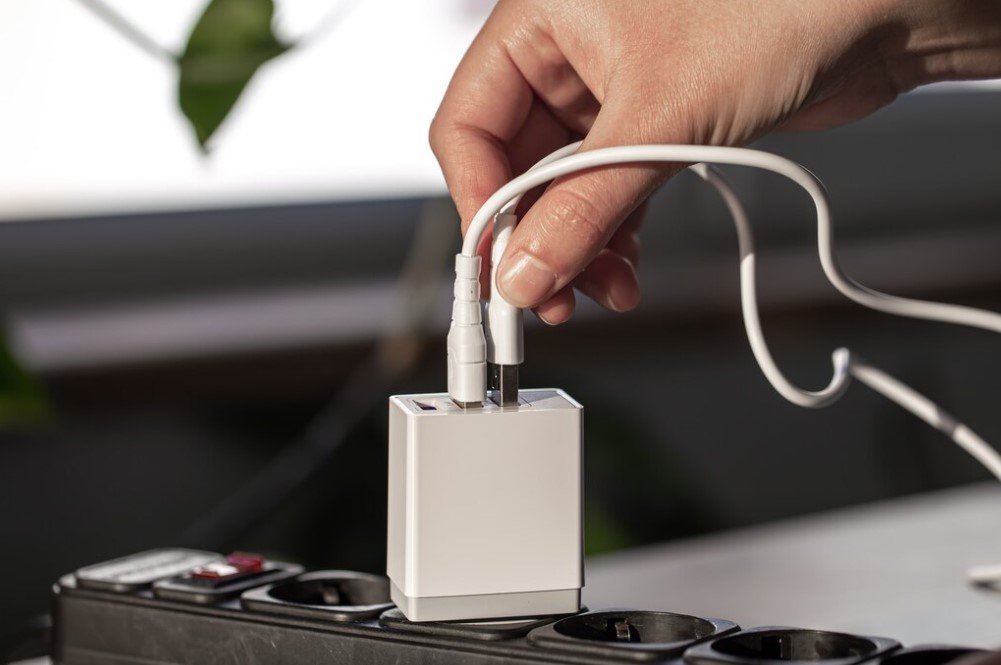
The standard addresses a large gap that existed in the market for a standardized connector for an AC and DC combined charging system for light electric vehicles (2-wheelers, 3-wheelers, and microcars). Light electric vehicle charging requirements are unique, as the high cost and large size of a 4W charging connector make it infeasible to adopt a four-wheeler charging connector.
A combined AC and DC charging connector ensures that a hybrid, cost-efficient infrastructure emerges for all forms of charging, whether fast or slow, for light electric vehicles. The customer benefits from having an interoperable network for both fast and slow charging without having to carry a bulky charger with them.
Swapnil Jain, Founder, Ather Energy, said, “Taking our stride further in the EV space today, we have an EV charging standard for India with the potential to be implemented worldwide. This is a remarkable achievement because, for the first time, an India-designed and developed technology can be used globally. As a country, we have come a long way because we are no longer dependent on any EV technology transfer from outside India to create something that has a worldwide market. This could well be the tipping point that catapults India into a global league of technology-based solution providers in the EV-automobile sector that only a few countries in the world are capable of.”
Niranjan Gupta, CEO, Hero MotoCorp, said, “A home-grown connector standard is a breakthrough achievement for the country and the EV industry, aligned with the government’s ‘ Make in India ’ policy. In fact, it is not just about Make in India any more, it is ‘Innovate in India and Make for the World’. Along with Ather Energy, it has been Hero MotoCorp’s constant endeavour to take the industry forward and make India the global leader in the light electric vehicle category.”
He added, “This development will go a long way in the pursuance of our vision. We appreciate the government agencies for passing this landmark standard that will provide convenience to customers. Congratulations to the teams at Ather Energy and Hero MotoCorp for supporting this significant government initiative.”


![gain Rise in Gold Rate in India After Falling Rs 21,200/24K; Will Gold Price Today Jump or Drop on 28 March? By Harshika Yadav Published: Saturday, March 28, 2026, 6:55 [IST] preference Add as a preferred source on Google Gold rates in India witnessed a modest recovery on March 27, 2026, after a sharp fall in the previous session, indicating a cautious stabilisation in the bullion market. The yellow metal had dropped by Rs 212 per gram (or Rs 21,200 per 100 grams) of 24 Karat (24K) earlier, but managed to regain some ground. Gold Price Updates as US-Iran Tensions Ease; Pakistan, Turkiye & Egypt Step Up Mediation Efforts The rise in yellow metal follows easing geopolitical concerns after US President Donald Trump signalled a delay in potential military action against Iran's energy infrastructure by 10 days, pushing the deadline to April 6. This development, along with ongoing diplomatic efforts, has helped support safe-haven demand. gold Rate Today Further adding to market sentiment, Pakistan's Foreign Minister Ishaq Dar confirmed that Islamabad is acting as an intermediary between the United States and Iran, relaying messages as part of efforts to de-escalate tensions. Countries like Türkiye and Egypt are also reportedly supporting the mediation process, offering some relief to global financial markets. Gold Rate in India: Check Latest 22K, 24K & 18K Gold Prices Per Gram 24 Karat Gold Rate Today in India In the 24 Karat segment, at the time of writing, the rate for 1 gram stood at Rs 14,471, rising by Rs 16 from Rs 14,455. For 8 grams, the price increased to Rs 1,15,768, up by Rs 128. The rate for 10 grams climbed to Rs 1,44,710, reflecting a gain of Rs 160, while 100 grams of 24 Karat gold were priced at Rs 14,47,100, marking an increase of Rs 1,600. 22 Karat Gold Rate Today in India The price of one gram of 22K stood at Rs 13,265, gaining Rs 15 from the previous session. For 8 grams, the rate rose to Rs 1,06,120, registering an increase of Rs 120. The cost of 10 grams advanced to Rs 1,32,650, up by Rs 150, while 100 grams were priced at Rs 13,26,500, reflecting a gain of Rs 1,500. 18 Karat Gold Rate Today in India The rate for one gram of 18K stood at Rs 10,853, up by Rs 12. For 8 grams, the price moved up to Rs 86,824, marking a gain of Rs 96. The rate for 10 grams climbed to Rs 1,08,530, increasing by Rs 120, while 100 grams were valued at Rs 10,85,300, reflecting an uptick of Rs 1,200. Latest MCX Gold Price In the domestic futures market, gold on the Multi Commodity Exchange (MCX) held firm above the Rs 1,44,500 level as per latest trading record, supported largely by the weakness in the Indian rupee, which continues to cushion local prices despite global volatility. Latest Spot Gold Rate The rebound in domestic gold rates comes alongside a recovery in international markets, where gold moved above the $4,400 per ounce mark. What Lies Ahead for Gold Prices? Check Gold Rate Prediction Jateen Trivedi, VP - Research Analyst (Commodity and Currency), LKP Securities, said, "Gold remained slightly positive, trading above $4,425 with highs near $4,475, supported by initial optimism around US-Iran talks. However, the sharp rise in crude continues to signal underlying market stress and inflation risks." From a technical perspective, he explained, "Technically, support is seen near Rs 1,42,000, while resistance is placed around Rs 1,46,500. Overall, gold is expected to remain volatile with limited upside unless clarity emerges on inflation and geopolitics."](https://keralanews247.com/wp-content/uploads/2026/03/rupee-and-dollar-scaled-120x86.png)