

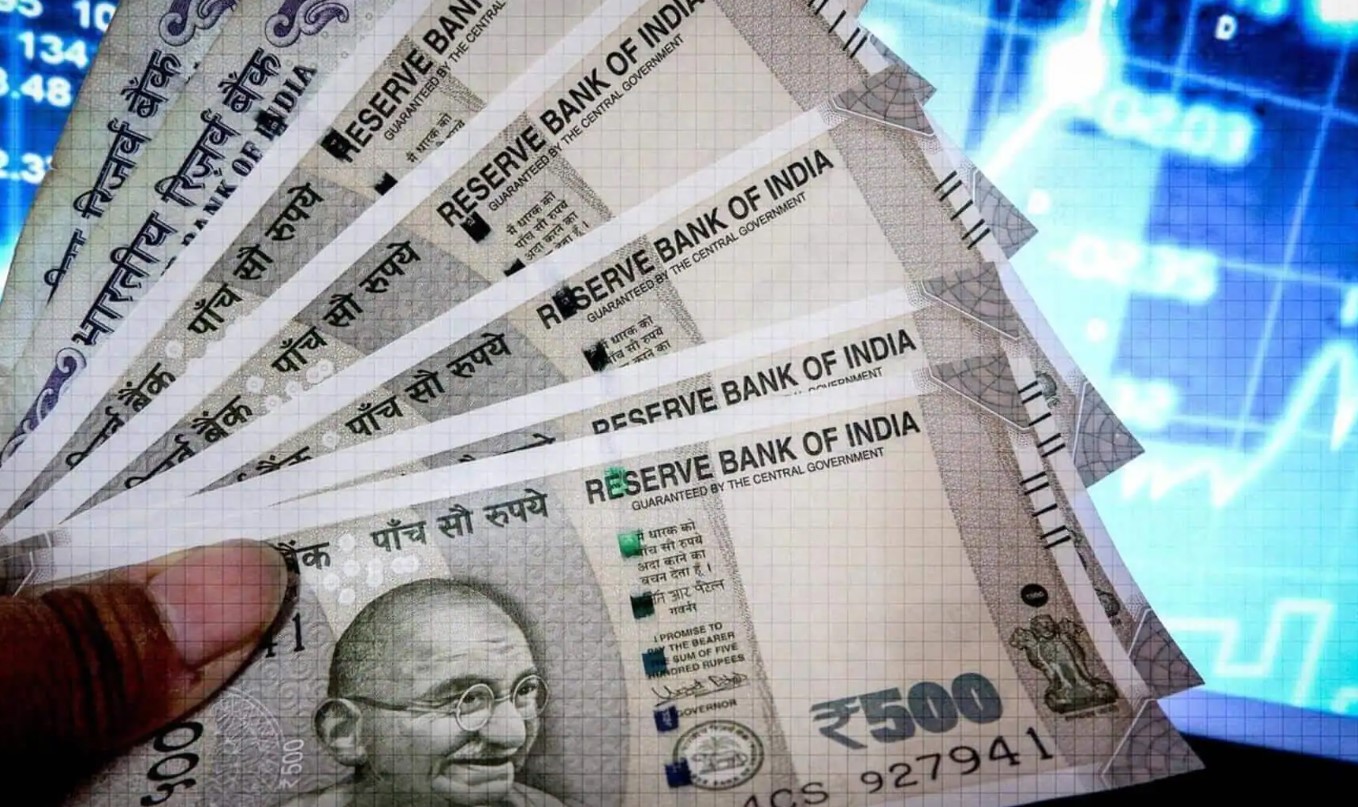
The Indian rupee opened at a record low of 86.20 against the US dollar on Monday, marking a five-paise drop from its previous close of 85.97. This decline marks the fourth consecutive trading session of record lows for the currency, as global and domestic factors continue to apply pressure.
The rupee’s breach of the psychologically significant 86-per-dollar mark comes amid rising oil prices, a surging dollar index, and persistent capital outflows. The Reserve Bank of India’s (RBI) capacity to intervene is being tested, even as market participants brace for further turbulence.
Offshore Weakness and RBI’s Dilemmas
In the offshore non-deliverable forwards (NDF) market, the rupee also weakened beyond 86 on Friday, recording its 10th consecutive weekly loss. The currency slipped 0.2% last week alone, reflecting the strength of the dollar and persistent capital outflows.
Amit Pabari, managing director at CR Forex Advisors, noted that the RBI typically intervenes during sharp rupee declines by selling dollars from its reserves. However, liquidity shortages have begun to constrain its ability to do so effectively. Excessive intervention risks exacerbating the domestic liquidity deficit, complicating monetary policy further.
Meanwhile, traders are closely monitoring RBI actions, anticipating sporadic support to curb excessive volatility.
Dollar Soars to 2-Year High
The dollar index, which tracks the greenback’s performance against six major currencies, climbed to 109.97 on Friday, its highest level since November 2022. A combination of robust US labor market data and rising inflation expectations has fueled this surge.
The US economy added 256,000 jobs in December, surpassing expectations of 227,000, according to the Non-Farm Payroll report. Inflation projections have also edged higher, giving further strength to the dollar.
Kunal Sodhani, vice president at Shinhan Bank, explained, “The jobs data and inflation trends bolster expectations that the Federal Reserve will maintain its hawkish stance for longer than previously anticipated.”
Rate Cut Speculations Wane
The robust US labor market data has also dampened hopes for aggressive Federal Reserve rate cuts this year. The CME FedWatch Tool now reflects a 93.1% likelihood that the Fed will hold rates steady at its upcoming January meeting.
Market expectations for rate cuts in 2025 have shifted sharply. Traders now anticipate a mere 30 basis points of reductions this year, down from the earlier estimate of 45 basis points before the jobs report was released.
This shift has further widened the interest rate differential between India and the US, making dollar-denominated assets more attractive to investors.
Oil Prices Add to the Pressure
Crude oil futures surged to $81.49 per barrel, their highest level since October 2024, driven by fresh US sanctions targeting Russian oil exports. The aggressive measures impact two major Russian exporters, over 150 tankers, and several insurance firms, complicating global oil logistics.
For India, which imports over 80% of its crude oil needs, these developments translate into higher import bills, adding to the rupee’s woes. The strain is compounded by a weakening currency, further inflating costs for the economy.
Foreign Investors Pull $3 Billion From Indian Assets
Capital outflows have intensified, with foreign investors withdrawing over $3 billion from Indian equities and bonds this month alone. Concerns over policy changes under the new US administration, coupled with rising US bond yields, have prompted a shift toward dollar-denominated investments.
The Indian rupee’s increased volatility has also unsettled investors, with market sentiment further shaken by a recent change in leadership at the RBI. Analysts warn that sustained outflows could lead to additional rupee depreciation in the weeks ahead.
| Factor | Impact on Rupee |
|---|---|
| Rising Dollar Index | Stronger dollar weakens rupee |
| High Oil Prices | Increased import costs |
| Foreign Capital Outflows | Reduced demand for rupee assets |
| RBI’s Limited Intervention | Constrained ability to stabilize rates |
While the government and RBI are likely to explore measures to stabilize the rupee, the outlook remains challenging in the near term. A combination of external pressures and domestic concerns suggests further depreciation may be on the cards.