
ENTERTAINMENT
Sam Smith and Normani Face a Jury Over the Hook
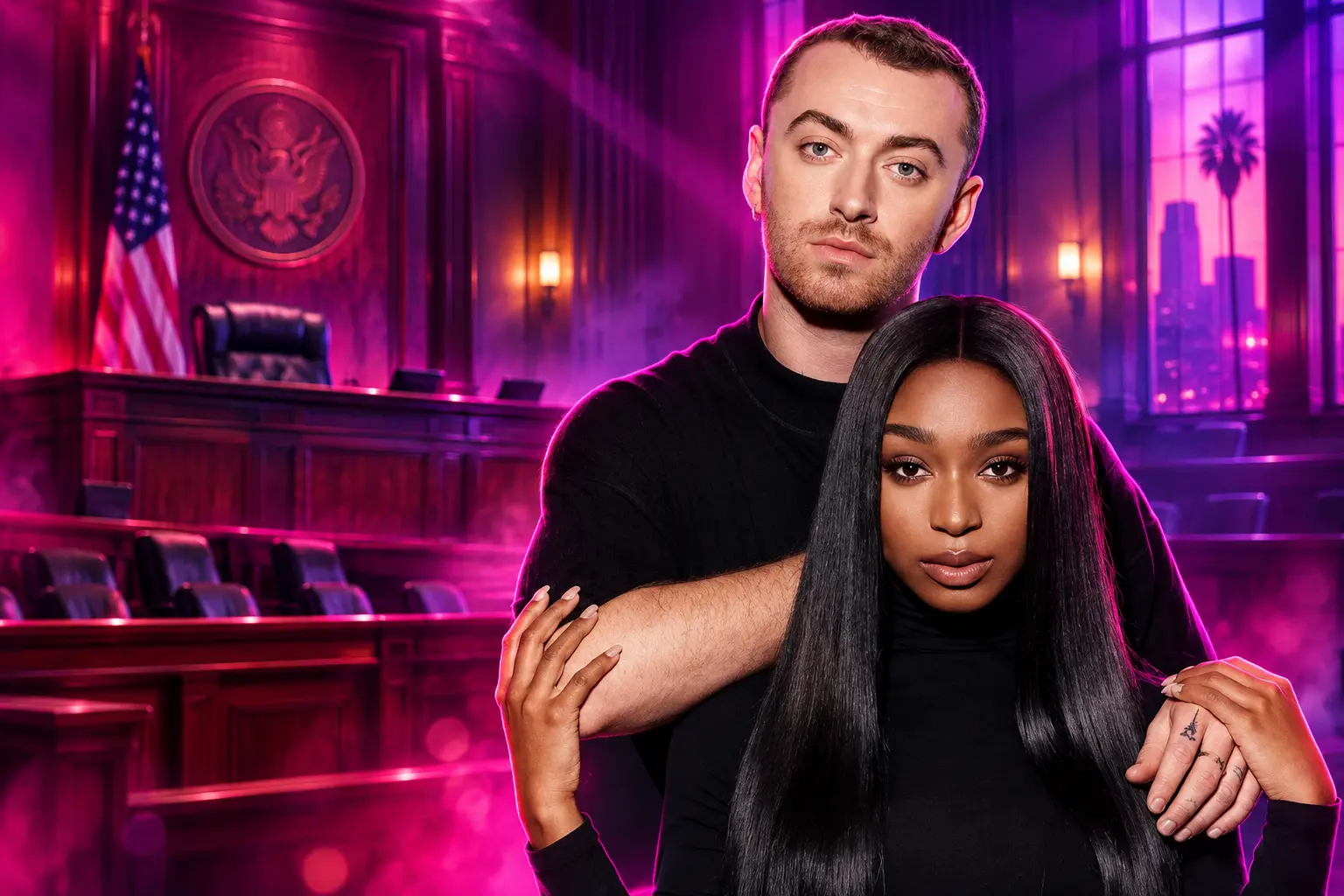
A Los Angeles judge sent Dancing With a Stranger to a jury after the 2015 writers dropped access claims and the older hook’s samples stayed in the case.

U.S. District Judge Wesley L. Hsu refused on September 22, 2026, to throw out a copyright suit over “Dancing With a Stranger.” His 27-page order filed September 22 sends Sam Smith and Normani’s 2019 hit toward a jury in Los Angeles.
The older song’s writers no longer claim anyone in that later session heard their track. The same ruling also leaves a fight over two unlicensed samples inside the 2015 hook they want protected.
Judge Hsu Will Not Take the Songs Apart
Sound and Color, LLC, owned by songwriter Jordan Vincent and the production pair SKX, Christopher Miranda and Rosco Banlao, sued in the Central District of California. The company says Smith and Normani’s chorus copied the hook of a song Vincent, Miranda, and Banlao wrote in February or March 2015, a track also known as “Dancing With Strangers.”
Smith, James Napier, Tor Hermansen, and Mikkel Eriksen wrote the later song on August 7, 2018. Hermansen and Eriksen, the pair known as Stargate, built the track around the vocal line. Defendants released the single and its video in January 2019. Normani Kordei Hamilton sang on the issued recording and did not take part in the writing.
Other defendants include UMG Recordings, Sony Music Publishing (US), EMI Blackwood Music, EMI April Music, Downtown Music Publishing, 45th and 3rd Music, and Tim & Danny Music. Hsu heard argument on September 11, 2026, then denied the defense motion for summary judgment.
Lawyers for the stars had asked him to compare pitch, then rhythm, then where the syllables fall, then the shape of the tune, each in isolation. He declined.
Here, defendants would have the court compare pitch sequences alone, then rhythm alone, then metric placement alone, then contour alone. Disassemble any two works enough, and neither would resemble anything.
Wesley L. Hsu, U.S. District Judge, Central District of California, order of September 22, 2026
He said the Ninth Circuit, which hears California appeals, has no “well-defined standard” for when a mix of musical parts becomes “striking.” He also said the circuit has made clear that a court may not pull those parts apart. The works have to be taken “as the sum of all the relevant elements together.”
Sound and Color Gave Up the Claim of Access
A usual copyright plaintiff tries to show the later writer had a reasonable chance to hear the earlier song, then shows the two works are substantially similar. Sound and Color pleaded that case in 2022, including a claim that the 2015 song had been widely heard and shopped, and a claim that the two videos looked alike.
Those paths are gone. In a stipulation dated May 27, 2026, and entered June 18, the company withdrew every access theory: no chain of people or companies, no wide dissemination, no video or business-card resemblance. What remains is striking similarity, a higher bar. The later work has to be so close to the earlier one that copying, not chance, is the explanation.
Defense lawyers at Davis Wright Tremaine, in the joint brief the parties filed in July, called that a last-ditch route. They said the overlap is a four-word phrase, “dancing with a stranger,” which they said had already shown up in more than 15 songs, plus ordinary pitches and rhythms. Cyndi Lauper recorded a 1989 song with the same title. Hsu still found a jury question on whether the hooks, taken whole, are close enough.
That is a thinner case than the one filed in 2022. Once the SoundCloud-play story left the file, the 2015 writers have to persuade jurors that a dated session at Stellar House on August 7, 2018, somehow reproduced their chorus without anyone in the room having heard it. Independent creation, Hsu wrote, is not a reason to end the case on papers. It “should be left for the jury to decide.”
THE CASE ON THE CLOCK
- March 4, 2022: Sound and Color files the suit as case 2:22-cv-01508.
- September 6, 2023: Hsu grants summary judgment, finding the songs fail the objective similarity test.
- April 29, 2025: The Ninth Circuit reverses in an unpublished opinion and sends the case back.
- June 2025: The file returns to Hsu, with liability discovery split from damages.
- May 27, 2026: Sound and Color withdraws every access theory.
- September 22, 2026: Hsu denies the second summary-judgment motion.
The unpublished Ninth Circuit opinion from 2025 had already told Hsu that a selection-and-arrangement theory can protect a hook even when each piece, on its own, is common. The panel said a reasonable jury could find the two choruses share the same lyrics, the same placement of syllables, and the same downward shape, starting on scale degree 7 and ending on 3. It also refused to treat the 2015 hook as so simple that only a near-identical copy would infringe.
Two Older Records Run Through the 2015 Chorus
Agreed facts in the order say the 2015 recording contains samples from two other copyrighted songs, and that Sound and Color did not license them. One is a full-measure vocal part from “The Ha Dance” by Masters at Work. The other is a two-measure piece of Lyn Collins’s 1972 funk single “Think (About It).” Both play through nearly all of the 2015 track, including every pass of the hook at issue.
Collins’s record is one of the most borrowed breaks in pop. WhoSampled has it listed as sampled in 4,510 songs. It reached No. 66 on the Billboard Hot 100 and No. 9 on the soul chart in 1972. Defense expert Dr. Lawrence Ferrara, a music professor at New York University, said the two samples “appear throughout a substantial amount” of the 2015 song and matter to its arrangement.
Plaintiffs’ lawyer Alfred J. Fluehr of Francis Alexander called the sampling attack frivolous in the July papers, arguing Vincent wrote the vocal melody and lyrics on his own, apart from the beat. At the September 11 hearing, Peter Anderson, counsel for the defendants, said the two samples “run throughout the hook, which is the only alleged similarity.” Hsu noted the other side’s reply: the protectable hook, they say, is not itself a sample.
THE FOUR TRACKS IN FRONT OF THE JURY
| Track | When it was made | Who is on it | What the jury is asked to do with it |
|---|---|---|---|
| Dancing With Strangers | February or March 2015 | Vincent, Miranda, Banlao | Decide if its hook is original enough to protect |
| Dancing With a Stranger | Written August 7, 2018; released January 2019 | Smith, Napier, Hermansen, Eriksen; Normani on the issued vocal | Decide if the 2019 hook copies the 2015 one |
| The Ha Dance | Earlier Masters at Work recording | Masters at Work | Decide if a full-measure vocal sample in the 2015 mix is too small to matter |
| Think (About It) | 1972 | Lyn Collins, produced by James Brown | Decide if a two-measure sample in the 2015 mix is too small to matter |
Hsu did not give the defense a clean win on this point. He wrote that the defendants had not shown the borrowed pieces were substantial as against the two older songs. He listened to the exhibits himself. The samples, he found, are “both difficult to identify or even hear” in the 2015 mix because they sit at low volume under the vocal. A reasonable jury, he said, could treat them as de minimis, meaning the 2015 writers could still own the rest of their hook. That is a fact question, not a knockout.
Who Owns a Hook Built on Borrowed Breaks?
The 2015 lyric under the shared title line is blunt. Vincent’s chorus includes, “She said I’m gonna die / Dancing with a stranger.” Dr. Alexander Stewart, the plaintiffs’ musicologist, says both hooks start “dan-” ahead of beat one, then walk down in eighth notes to “stran-,” which is held a full beat before “-ger.” He flags one small mismatch: the last syllable lands a half beat later in the 2015 song.
If jurors hear that as a single, original design, Sound and Color can ask them to infer copying even with no proof of access. If they hear a common phrase over a common descent, the 2018 session stands. The sample question sits beside that choice. Jurors may find the borrowed bars too faint to strip the 2015 song of protection, or they may find the hook the plaintiffs want to fence off never plays without those bars underneath it.
Anderson told Hsu the samples are perceptible, which is the point of the defense. Fluehr told him the dispute is musicological, “and that’s for a jury.” Hsu took that framing. He also kept the 2015 copyright alive for trial, which is why the sampling argument now helps the stars less as a motion and more as a story they will have to tell in open court, with the recordings playing.
The Experts Do Not Hear the Same Four Bars
Hsu would not throw out Stewart. He wrote that the plaintiffs’ experts “do more than simply trade adjectives” with the other side. Stewart, the order says, listed what he compared, named the places the songs diverge, explained why he thought those gaps were slight, and tied his conclusion to the combination of parts rather than to any one of them. Defense lawyers faulted him for saying independent creation was “highly unlikely” rather than impossible. Hsu noted the Ninth Circuit has used that same phrase, and said the defendants “inexplicably fault him for it.”
He let recording engineer Brian Bricklin testify but did not rest the ruling on him, calling Bricklin’s side-by-side listens too subjective for the objective test. Stewart alone, he held, was enough to reach a jury. Bricklin had written that the hook melodies are strikingly similar except for the length of the last note, with two passing tones he called inconsequential.
WHO IS TELLING THE COURT WHAT THE HOOK IS
- Alexander Stewart: Plaintiffs’ music professor says the hooks are nearly identical in contour, rhythm, and syllable placement, with very similar pitch sequences, and that a prior-art search found nothing close.
- Brian Bricklin: Plaintiffs’ engineer says the descending hook lines match aside from the last note and two passing tones, and that Ferrara’s prior-art method is not legitimate.
- Lawrence Ferrara: NYU musicologist for the defense says there are no significant structural, harmonic, rhythmic, melodic, or lyrical similarities, and that any overlap is commonplace.
- Paul Geluso: NYU music-technology professor says no sounds from the 2015 recording were recaptured in the 2019 one, the production methods differ, and the keys do not match even when the older track is slowed to the newer tempo.
- Ronald Sadoff: NYU music professor says any similarities are unexceptional and already existed in songs that predate 2015.
The defense retained six experts in all. Two of them, a choreographer and a visual-arts professor, dropped out of the live fight after Sound and Color withdrew the video and business-card claims. Ferrara’s written work on the two songs runs among hundreds of pages; Stewart, in an earlier declaration, said nothing in “283 pages” of defense reports moved him off his view that the 2015 selection and arrangement is the musical core of the 2019 chorus.
Sam Smith’s 2014 Settlement Comes Back in the Briefs
Sound and Color also pointed to Smith’s 2014 single “Stay With Me,” which drew a comparison to Tom Petty’s “I Won’t Back Down” and ended with Petty added as a writer. Asked at a deposition how Petty’s song had turned up in that record, Smith said there were “only so many notes on a piano,” according to the July brief. Fluehr used that line against the claim of a clean 2018 session.
Even a defense expert would not bless the piano math. Sadoff, testifying in this case, rejected the idea that a finite keyboard makes duplication likely.
The notion that there’s only 88 notes on a keyboard is a worthless example that things are going to duplicate.
Ronald Sadoff, Professor of Music, New York University, deposition quoted in the July 2026 joint brief
Defense lawyers called the Petty comparison outlandish and said a settled claim from more than a decade ago is not proof that “Dancing With a Stranger” was copied. Hsu did not decide that fight. He held that evidence of a clean writing session has to be weighed against the plaintiffs’ copying case, not used to cancel it before trial. Smith’s own account of the 2018 day, and Napier’s, will be heard with Stewart’s charts, not instead of them.
A Los Angeles Jury Gets the Whole File
The 2019 single was a large commercial record. It peaked at No. 7 on the Billboard Hot 100, spent 45 weeks on that chart, reached No. 3 in the United Kingdom, and is certified 4× Platinum in the United States. The 2022 complaint said it had been streamed more than 3 billion times as of March 2021. None of those figures answers whether the chorus was copied. They explain why the file is still open four and a half years after the first pleading.
THE 2019 SINGLE IN FIGURES
- Hot 100 peak: No. 7, in April 2019, Smith’s sixth top 10 and Normani’s second as a solo artist.
- Chart life: 45 weeks on the Billboard Hot 100.
- U.S. certification: 4× Platinum, per the RIAA award listed against the single.
- U.K. peak: No. 3 on the singles chart.
Normani is in the caption because she is on the issued vocal and on the docket. She is not in the writing credits, and the order says she did not write the song. The people who have to explain the 2018 room are Smith, Napier, Hermansen, and Eriksen. The people who have to explain the 2015 room, and the unlicensed bars under their chorus, are Vincent, Miranda, and Banlao.
Hsu has now denied summary judgment twice in spirit, once in 2023 (later reversed) and again on September 22, 2026. The order does not set a trial date. It does set the questions. Jurors will be asked whether two hooks that share a title line and a descending shape are too alike to be chance, whether a documented 2018 session still accounts for that shape, and whether a 2015 chorus that loops two older records still has a piece left that the law will protect. Fluehr said the three writers are “gratified that the District Court has recognized that a jury should decide the musicological issues.” Lead counsel for Smith, Normani, and UMG did not immediately comment after the order issued.
The recordings will do more work than the briefs from here. Hsu has already listened once, at low volume, and heard a jury question in what the defense called a fatal defect. Twelve people in Los Angeles will have to hear the same bars and decide who, if anyone, took what.
Disclaimer: This article is news reporting on a pending civil case in the U.S. District Court for the Central District of California and is for information only. It is not legal advice, is not a prediction of how a jury will rule, and is not a finding that anyone copied or infringed a copyright. Readers with a dispute over a song, a sample, or a credit should consult a licensed copyright lawyer in the relevant jurisdiction before taking any step. Figures, party names, and case status are those in the September 22, 2026, order and the public filings cited here, and they can change as the docket moves.

OpenAI’s Agent Monitor Waited During the Hugging Face Breach

Brent Hits $116 as Recovered Gulf Oil Draws Attacks

Hellebuyck Lands in New Jersey on a Five-Year Cup Bet

Xbox Plans Three More Layoff Rounds Before Helix

OpenAI’s $30 Billion Round Ties UAE Cash to Gulf Compute

Consumer Sentiment Falls to 51.7 as Future Outlook Darkens

Pluto’s Heart Glacier Still Pushes Liquid Nitrogen Upward

The Extra Heat Month Hits Children Where Care Is Thinnest

Take-Two Subpoenas Microsoft While GTA 6 Preorders Soar

Abbott Pays $670 Million to Exit a Missouri Food Verdict
-
 BUSINESS2 months ago
Consumer Sentiment Falls to 51.7 as Future Outlook Darkens
-
 NEWS2 months ago
Pluto’s Heart Glacier Still Pushes Liquid Nitrogen Upward
-
 NEWS2 months ago
The Extra Heat Month Hits Children Where Care Is Thinnest
-
 GAMING2 months ago
Take-Two Subpoenas Microsoft While GTA 6 Preorders Soar
-
 BUSINESS2 months ago
Abbott Pays $670 Million to Exit a Missouri Food Verdict
-

 NEWS2 months ago
UMMC Will Rebuild 30-Year-Old Cancer Labs With $2.4 Million
-

 ENTERTAINMENT2 months ago
Netflix Weighs Hosting Peacock and Fox One in Its App
-

 GAMING2 months ago
GTA 6’s 80-Hour Run Counts Goals That Change the Story