

Apple is planning a bold pivot that could redefine its global manufacturing playbook. By late 2026, the tech giant aims to assemble all iPhones destined for the U.S. in India, a dramatic shift away from its longstanding dependence on Chinese factories, according to people familiar with the matter.
That’s not a small move. Currently, nearly 80% of all iPhones are assembled in China. But mounting trade pressures, unpredictable tariff swings, and geopolitical friction have made China less of a safe bet. For Apple, India is starting to look like more than just a backup plan.
China’s Grip on iPhone Assembly is Starting to Loosen
Right now, it’s China or nothing when it comes to iPhone assembly. Estimates suggest around 90% of all iPhones—yes, nine out of ten—are still made there. That dominance is no accident. China’s deeply integrated supplier networks, mature logistics, and skilled labor force made it a no-brainer for years.
But lately, it’s gotten messier. The U.S. has slapped a 20% tariff on Chinese imports tied to the country’s role in Fentanyl production. And while iPhones haven’t been hit directly, the looming threat of broader levies has spooked companies like Apple.
Tariffs on Indian imports? They sit at around 26%. Not great, but way better than the over-100% threats China’s faced in recent months.
One source described Apple’s reaction to the uncertainty in a single word: urgency.
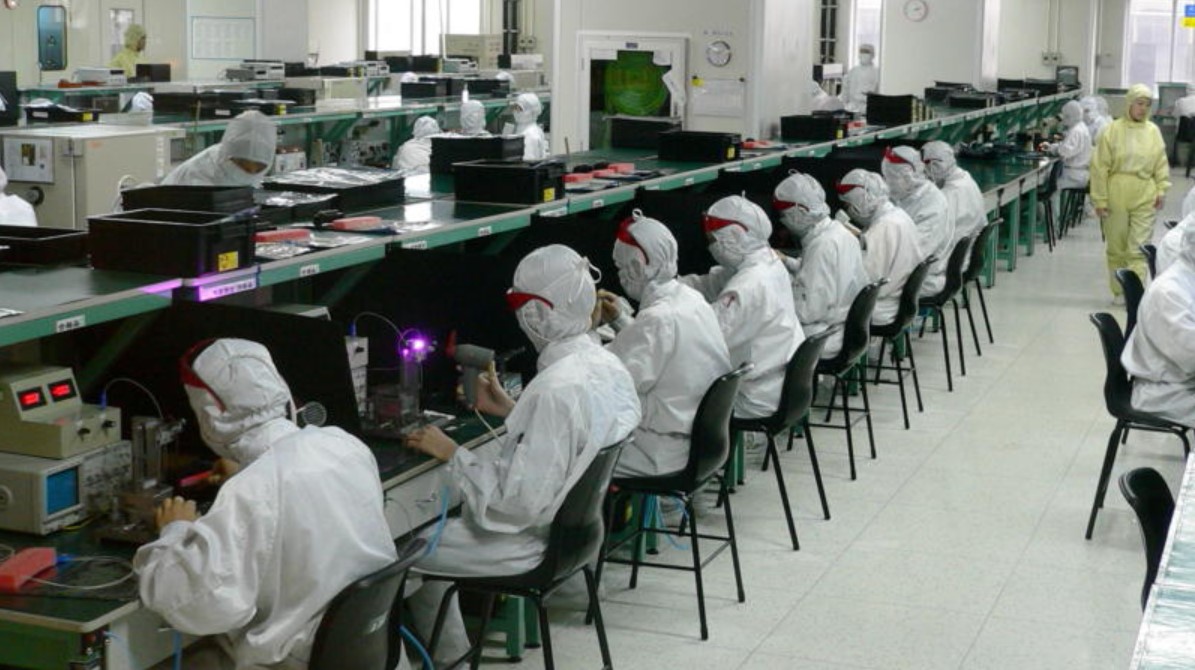
India’s Not Ready Yet — But It’s Getting There Fast
Let’s be real: India still has a ways to go before it can absorb the full scale of Apple’s iPhone needs.
Right now, the U.S. alone demands over 60 million iPhones a year. India’s output? Not even close. To meet Apple’s 2026 target, production there would need to more than double, fast.
In March alone, Apple chartered special cargo flights carrying 600 tons of iPhones—about 1.5 million units—out of India. Just that shipment came with a price tag: India’s production is about 5–8% more expensive than China’s. Sometimes even 10%, depending on the part.
Apple’s now running three factories in India, with two more under construction. Foxconn’s Chennai plant even added Sunday shifts last month to meet shipping deadlines. That’s rare.
Here’s what the March shipments looked like:
| Supplier | Value of iPhones Shipped to U.S. | Units (Estimated) |
|---|---|---|
| Foxconn | $1.3 Billion | ~975,000 units |
| Tata | $700 Million | ~525,000 units |
| Total | $2 Billion | ~1.5 Million |
Not bad. But still a long way from the 60 million mark.
Behind the Curtain: Talks, Tensions, and Tata’s Growing Role
Foxconn, Apple’s key supplier, is front and center in this transition. But they’re not alone anymore.
Tata Group, the Indian conglomerate, has emerged as a major player. And insiders say they’ve become more than just a backup option—they’re now essential to hitting that 2026 timeline.
A source close to Apple said talks with Tata and Foxconn are “intense” and happening “almost daily.” The goal: scale up, keep costs in check, and meet strict quality targets.
These discussions aren’t public. Neither Apple nor its suppliers are talking. But some things are obvious.
India’s government, led by Prime Minister Narendra Modi, has been aggressively pitching the country as a tech manufacturing powerhouse.
Apple sees the pitch—but import duties still bite hard, especially for certain components.
Shifting just assembly isn’t enough. Apple needs more local suppliers in India to make the math work.
Still, Tata’s entry is a wildcard that could help accelerate timelines.
Why Not Just Make iPhones in the U.S.?
Trump wanted Apple to bring jobs home. “Build iPhones in America,” he said during his presidency. Sounds patriotic. But it’s not happening.
Apple’s internal estimates show that producing iPhones in the U.S. would jack up prices far beyond what consumers or the company would tolerate. Labor, logistics, and regulation add up. Fast.
It’s also about parts. iPhones are made from over 1,000 components sourced globally. Trying to line all that up domestically? Logistical nightmare.
Right now, over half of Macs and 80% of iPads are still built in China. Apple Watches mostly come out of Vietnam. The iPhone is just one piece of a much bigger puzzle.
And so, Apple plays the game smartly. Keep China for now. Bet big on India for the future.
Trade War Wobbles Could Still Reshape the Timeline
Here’s where things get tricky.
Trump’s team has floated the idea of easing tensions with China, possibly even rolling back some tariffs. That could make Chinese manufacturing more attractive again—at least temporarily.
But Apple’s not banking on that. The strategy is diversification. And India, despite its higher costs, is seen as insurance.
Executives believe long-term relationships with Chinese suppliers remain key. The infrastructure is too deep, too mature to ditch overnight.
Still, India’s coming up fast. Apple’s investments there could end up changing the shape of its entire global strategy—if the politics don’t change first.
So, is this Apple breaking up with China? Not quite. But it’s definitely seeing other people.







![gain Rise in Gold Rate in India After Falling Rs 21,200/24K; Will Gold Price Today Jump or Drop on 28 March? By Harshika Yadav Published: Saturday, March 28, 2026, 6:55 [IST] preference Add as a preferred source on Google Gold rates in India witnessed a modest recovery on March 27, 2026, after a sharp fall in the previous session, indicating a cautious stabilisation in the bullion market. The yellow metal had dropped by Rs 212 per gram (or Rs 21,200 per 100 grams) of 24 Karat (24K) earlier, but managed to regain some ground. Gold Price Updates as US-Iran Tensions Ease; Pakistan, Turkiye & Egypt Step Up Mediation Efforts The rise in yellow metal follows easing geopolitical concerns after US President Donald Trump signalled a delay in potential military action against Iran's energy infrastructure by 10 days, pushing the deadline to April 6. This development, along with ongoing diplomatic efforts, has helped support safe-haven demand. gold Rate Today Further adding to market sentiment, Pakistan's Foreign Minister Ishaq Dar confirmed that Islamabad is acting as an intermediary between the United States and Iran, relaying messages as part of efforts to de-escalate tensions. Countries like Türkiye and Egypt are also reportedly supporting the mediation process, offering some relief to global financial markets. Gold Rate in India: Check Latest 22K, 24K & 18K Gold Prices Per Gram 24 Karat Gold Rate Today in India In the 24 Karat segment, at the time of writing, the rate for 1 gram stood at Rs 14,471, rising by Rs 16 from Rs 14,455. For 8 grams, the price increased to Rs 1,15,768, up by Rs 128. The rate for 10 grams climbed to Rs 1,44,710, reflecting a gain of Rs 160, while 100 grams of 24 Karat gold were priced at Rs 14,47,100, marking an increase of Rs 1,600. 22 Karat Gold Rate Today in India The price of one gram of 22K stood at Rs 13,265, gaining Rs 15 from the previous session. For 8 grams, the rate rose to Rs 1,06,120, registering an increase of Rs 120. The cost of 10 grams advanced to Rs 1,32,650, up by Rs 150, while 100 grams were priced at Rs 13,26,500, reflecting a gain of Rs 1,500. 18 Karat Gold Rate Today in India The rate for one gram of 18K stood at Rs 10,853, up by Rs 12. For 8 grams, the price moved up to Rs 86,824, marking a gain of Rs 96. The rate for 10 grams climbed to Rs 1,08,530, increasing by Rs 120, while 100 grams were valued at Rs 10,85,300, reflecting an uptick of Rs 1,200. Latest MCX Gold Price In the domestic futures market, gold on the Multi Commodity Exchange (MCX) held firm above the Rs 1,44,500 level as per latest trading record, supported largely by the weakness in the Indian rupee, which continues to cushion local prices despite global volatility. Latest Spot Gold Rate The rebound in domestic gold rates comes alongside a recovery in international markets, where gold moved above the $4,400 per ounce mark. What Lies Ahead for Gold Prices? Check Gold Rate Prediction Jateen Trivedi, VP - Research Analyst (Commodity and Currency), LKP Securities, said, "Gold remained slightly positive, trading above $4,425 with highs near $4,475, supported by initial optimism around US-Iran talks. However, the sharp rise in crude continues to signal underlying market stress and inflation risks." From a technical perspective, he explained, "Technically, support is seen near Rs 1,42,000, while resistance is placed around Rs 1,46,500. Overall, gold is expected to remain volatile with limited upside unless clarity emerges on inflation and geopolitics."](https://keralanews247.com/wp-content/uploads/2026/03/rupee-and-dollar-scaled-120x86.png)