

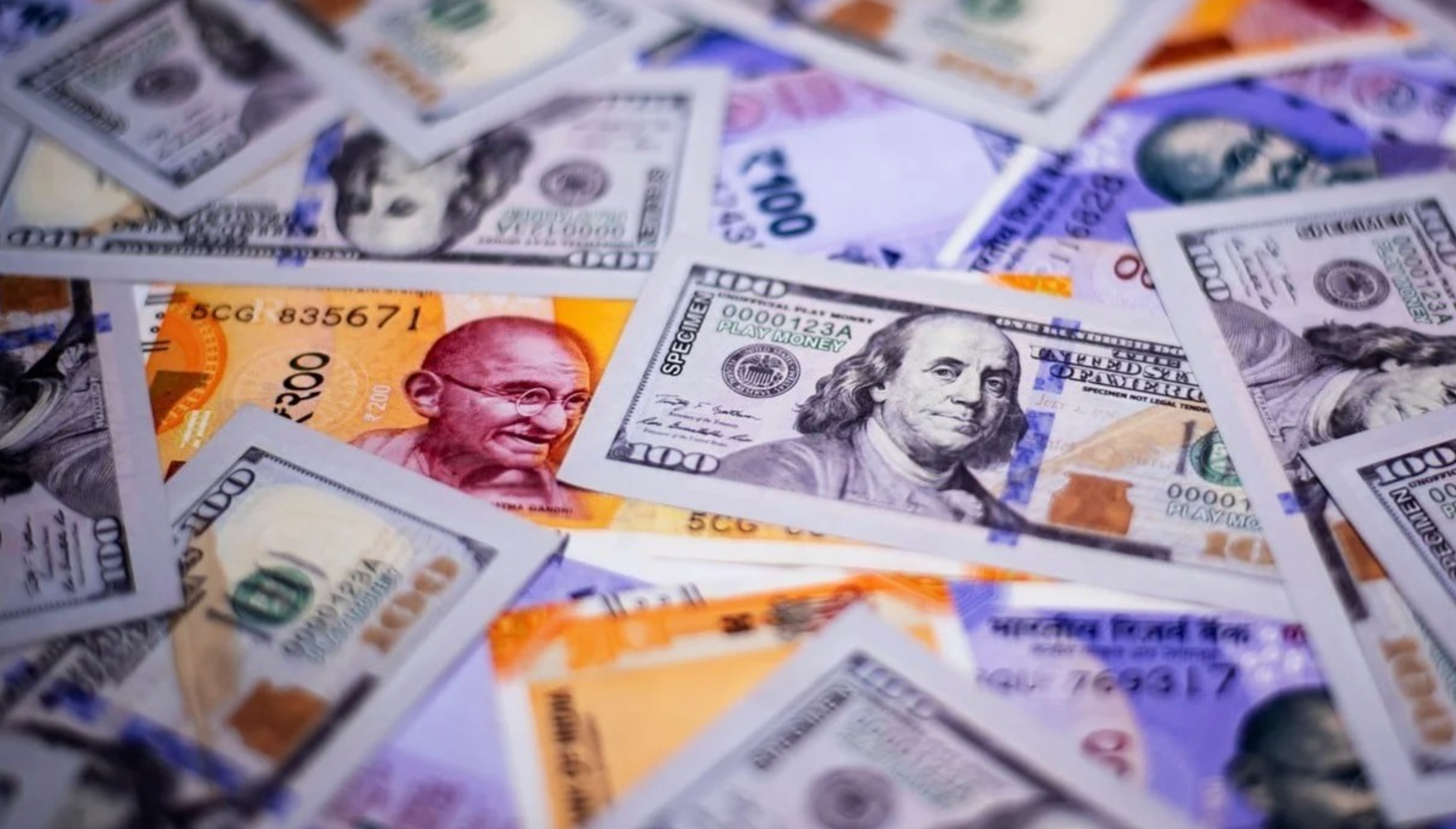
The Indian currency touched 93.24 against the US dollar on March 19, 2026, its weakest level ever, as fresh attacks in the Gulf pushed oil prices toward $120 a barrel and triggered massive capital flight.
This sharp drop marks the first time the rupee has ever crossed the psychological 93 barrier, catching markets off guard and sparking urgent talks at the Reserve Bank of India and North Block.
How Fast the Rupee Collapsed
The currency has lost almost 2% of its value since fighting intensified between the United States and Iran just weeks ago.
On March 19 alone, the rupee weakened past 93 within minutes of opening, closing at 93.24, down 87 paise in a single session. Traders described the selling as relentless.
This is now the lowest level in the 78-year history of the Indian rupee as a freely traded currency.
Oil Shock Hits India Hard
India imports more than 85% of the crude oil it consumes. When Brent crude jumped to nearly $120 a barrel after attacks on Gulf energy facilities, the impact on the Indian economy was immediate.
Higher oil prices mean wider trade deficit, costlier diesel and petrol, more expensive air tickets, and eventually higher prices for everything from vegetables to cement.
Economists now expect the current account deficit to widen sharply in the coming quarters if oil stays above $100.
Foreign Investors Run for the Exit
March 2026 has already seen foreign portfolio investors pull out more than $8 billion from Indian stocks, the biggest monthly outflow since January 2025.
The rush to safety has crushed sentiment in Mumbai’s Dalal Street. The Sensex and Nifty have both fallen over 6% since the conflict began.
Domestic mutual funds and retail investors have stepped in to buy some of the fallen shares, but they cannot fully absorb the foreign selling yet.
Will the Bleeding Stop Soon?
Major European nations and Japan have promised naval escorts to protect tankers passing through the Strait of Hormuz. The United States has also announced it will release more oil from its strategic reserves.
These steps helped oil prices pull back slightly on Friday, offering a ray of hope to Indian policymakers.
Yet most analysts say the rupee will stay under pressure until there is clear de-escalation in the Middle East.
The Reserve Bank of India has been selling dollars quietly to slow the fall, but officials know they cannot fight global risk-off waves forever.
For millions of Indian families, the weaker rupee already means higher fuel bills, costlier imported electronics, and more expensive foreign vacations this summer.
A generation that grew up watching the rupee slowly slide from 45 to 65 to 85 is now witnessing the fastest plunge in decades. The psychological blow is real, and the economic pain is only beginning.
What do you think happens next? Will oil calm down, or are we looking at 95 or even 100 before this ends? Drop your thoughts below and share this story with #RupeeCrisis if you’re watching the same nightmare unfold.







![gain Rise in Gold Rate in India After Falling Rs 21,200/24K; Will Gold Price Today Jump or Drop on 28 March? By Harshika Yadav Published: Saturday, March 28, 2026, 6:55 [IST] preference Add as a preferred source on Google Gold rates in India witnessed a modest recovery on March 27, 2026, after a sharp fall in the previous session, indicating a cautious stabilisation in the bullion market. The yellow metal had dropped by Rs 212 per gram (or Rs 21,200 per 100 grams) of 24 Karat (24K) earlier, but managed to regain some ground. Gold Price Updates as US-Iran Tensions Ease; Pakistan, Turkiye & Egypt Step Up Mediation Efforts The rise in yellow metal follows easing geopolitical concerns after US President Donald Trump signalled a delay in potential military action against Iran's energy infrastructure by 10 days, pushing the deadline to April 6. This development, along with ongoing diplomatic efforts, has helped support safe-haven demand. gold Rate Today Further adding to market sentiment, Pakistan's Foreign Minister Ishaq Dar confirmed that Islamabad is acting as an intermediary between the United States and Iran, relaying messages as part of efforts to de-escalate tensions. Countries like Türkiye and Egypt are also reportedly supporting the mediation process, offering some relief to global financial markets. Gold Rate in India: Check Latest 22K, 24K & 18K Gold Prices Per Gram 24 Karat Gold Rate Today in India In the 24 Karat segment, at the time of writing, the rate for 1 gram stood at Rs 14,471, rising by Rs 16 from Rs 14,455. For 8 grams, the price increased to Rs 1,15,768, up by Rs 128. The rate for 10 grams climbed to Rs 1,44,710, reflecting a gain of Rs 160, while 100 grams of 24 Karat gold were priced at Rs 14,47,100, marking an increase of Rs 1,600. 22 Karat Gold Rate Today in India The price of one gram of 22K stood at Rs 13,265, gaining Rs 15 from the previous session. For 8 grams, the rate rose to Rs 1,06,120, registering an increase of Rs 120. The cost of 10 grams advanced to Rs 1,32,650, up by Rs 150, while 100 grams were priced at Rs 13,26,500, reflecting a gain of Rs 1,500. 18 Karat Gold Rate Today in India The rate for one gram of 18K stood at Rs 10,853, up by Rs 12. For 8 grams, the price moved up to Rs 86,824, marking a gain of Rs 96. The rate for 10 grams climbed to Rs 1,08,530, increasing by Rs 120, while 100 grams were valued at Rs 10,85,300, reflecting an uptick of Rs 1,200. Latest MCX Gold Price In the domestic futures market, gold on the Multi Commodity Exchange (MCX) held firm above the Rs 1,44,500 level as per latest trading record, supported largely by the weakness in the Indian rupee, which continues to cushion local prices despite global volatility. Latest Spot Gold Rate The rebound in domestic gold rates comes alongside a recovery in international markets, where gold moved above the $4,400 per ounce mark. What Lies Ahead for Gold Prices? Check Gold Rate Prediction Jateen Trivedi, VP - Research Analyst (Commodity and Currency), LKP Securities, said, "Gold remained slightly positive, trading above $4,425 with highs near $4,475, supported by initial optimism around US-Iran talks. However, the sharp rise in crude continues to signal underlying market stress and inflation risks." From a technical perspective, he explained, "Technically, support is seen near Rs 1,42,000, while resistance is placed around Rs 1,46,500. Overall, gold is expected to remain volatile with limited upside unless clarity emerges on inflation and geopolitics."](https://keralanews247.com/wp-content/uploads/2026/03/rupee-and-dollar-scaled-120x86.png)