
BUSINESS
A Northeast Marketer Opened FCI’s Cheap Rice Door for Traders
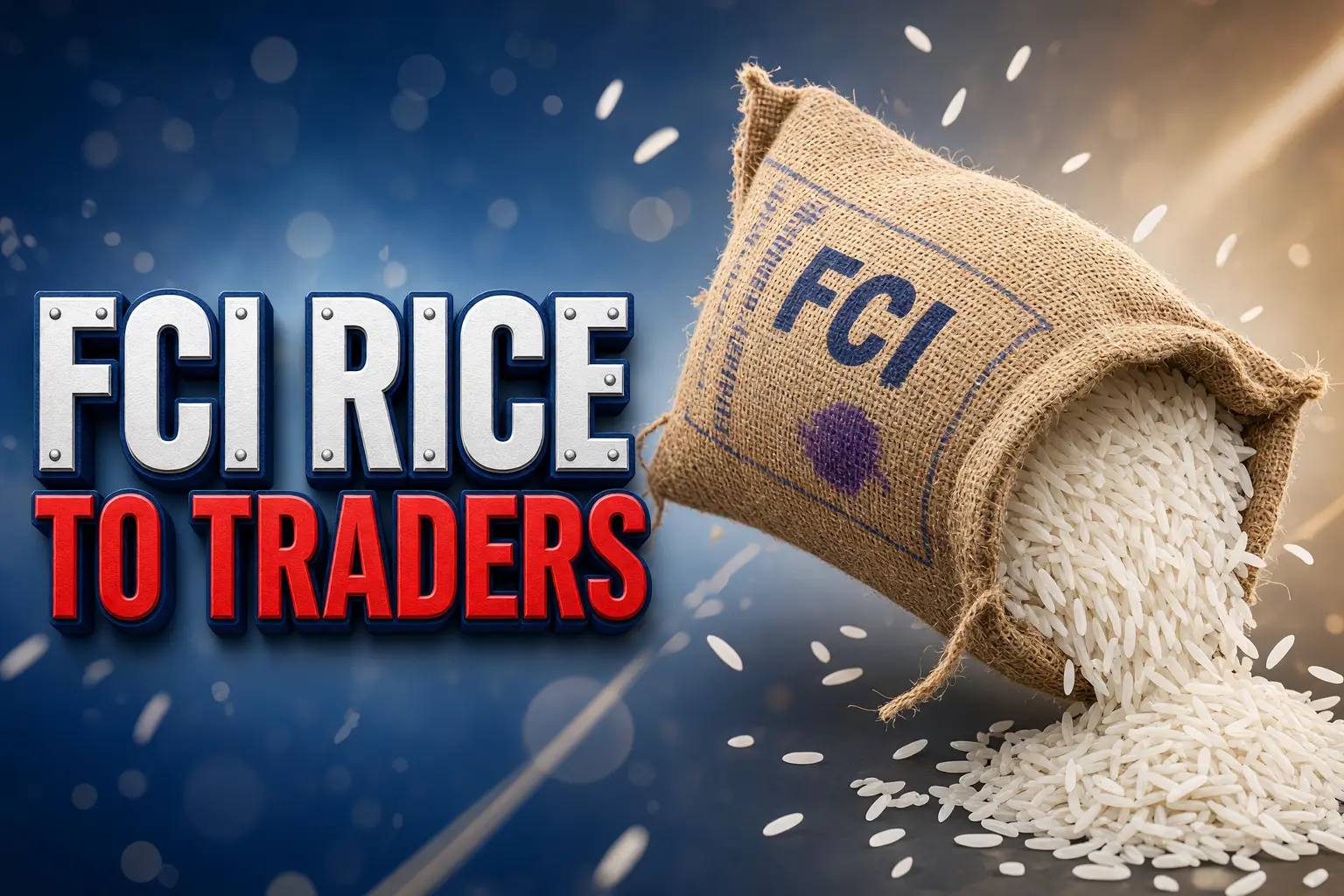
CBI booked eight people after NERAMAC, a Northeast farm marketer, lifted 50,645 tonnes of FCI rice in Delhi at the state rate for private traders.

The Central Bureau of Investigation booked eight people on August 27 after about 50,645 metric tonnes of FCI rice left Delhi depots at a state-welfare price. The grain had been allotted to the North Eastern Regional Agricultural Marketing Corporation, a Guwahati company built to sell Northeast farm produce, on a plea that Delhi’s daily-wage workers needed cheaper rice.
The FIR says the rice went to traders. NERAMAC was the wrapper that made a private lift look like a public job.
A Guwahati Marketer Asked Delhi for 31,000 Tonnes a Week
On January 7, Anjal Kumar Dutta, then additional general manager of NERAMAC in Guwahati, wrote to the Delhi food and civil supplies minister asking for 31,000 metric tonnes of rice a week. He sought the grain under the Open Market Sale Scheme (Domestic) 2025-26, in the category reserved for buyers who do not go through e-auction, and said it would be sold cheap to the public, daily-wage earners, labourers, migrant workers in Delhi, and people with no ration card.
FCI’s Delhi region then allotted 62,000 metric tonnes to NERAMAC between April 13 and May 15, 2026, equal to two weeks of that weekly ask. About 50,645 metric tonnes was actually released. The CBI says traders, not workers, lifted it from depots at Ghevra, Mayapuri and Narela and sold it on for “huge profits.”
The complaint reached the agency through Rizwan Ahmed, a section officer in the vigilance wing of the Department of Food and Public Distribution, with reports from a Neutral Committee set up to study the allotment and from FCI’s own vigilance unit. The FIR treats the episode as a criminal conspiracy among public servants and private traders, and it names unknown public servants as well as the eight accused.
Three Private Firms Became the Channel
Before the first truck moved, NERAMAC’s then managing director, Bhaskar Barua, signed three memorandums of understanding dated March 26. The papers empanelled private “channel partners” to distribute farm products to retailers, wholesalers and NGOs. The FIR says that stated purpose did not match the January 7 labourer plea sent to Delhi, and that the MoUs falsely claimed NERAMAC was authorised to buy and issue rice under OMSS(D) when FCI had given no such authority.
THE THREE FIRMS NAMED IN THE FIR
- Utapalakshi Agro Products: Rajesh Bajaj, named as director, is accused of bringing Delhi-NCR traders to the lift.
- Dibesh Commercials: Bajaj is named as director of this firm as well, so two of the three channel partners sat with one man.
- Super Grains: Pankaj Saraf, named as partner, is the third private accused in the same chain.
Traders then put Rs 23.25 per kilogram into NERAMAC’s bank account, a shade above the official issue rate of Rs 23.20. The private entities, the FIR says, took commissions from Rs 0.64 to Rs 2.50 per kg and the traders collected the rice at the depot gates. NERAMAC files were padded with date-wise charts that made it look as if the grain had gone through retail outlets in Delhi and Noida, and with backdated appointment letters for 23 sub-distributors.
Dilip Saha, then deputy manager for agri-business at NERAMAC, is the third NERAMAC officer named. On the FCI side the FIR names Kunhiraman Padmini Asha, then general manager of the Delhi region, Brahm Prakash, then assistant general manager (sales), and Amarendra Vikram, then manager (sales). The agency says they processed the proposal with “undue haste” and that the general manager kept approving releases after the policy breach was already visible on the page.
Why NERAMAC Could Not Buy at the State Rate
OMSS(D) is how FCI sells surplus grain once buffer needs are met. The July 10, 2025 policy is a buyer list with a price against each name, not a free-for-all with a few banned parties. The concessional sale of rice without participating in e-auction is written for state governments and their corporations, and for community kitchens, at Rs 2,320 a quintal from November 1, 2025, which is Rs 23,200 a tonne. Everyone else is supposed to bid, or to pay the higher depot rate.
WHO MAY BUY FCI RICE WITHOUT AN E-AUCTION
| Buyer | Route | Price from Nov 1, 2025 (Rs/MT) |
|---|---|---|
| State governments and their corporations | No e-auction | 23,200 |
| Community kitchens | No e-auction | 23,200 |
| Ethanol distilleries | Direct | 23,200 |
| NAFED, NCCF, Kendriya Bhandar (Bharat brand) | Direct | 24,800 |
| Small private traders at FCI depots | Direct | 28,900 |
| Private parties, 25% broken, via e-auction | E-auction | 28,900 |
| NERAMAC in this FIR | No e-auction | 23,200 |
NERAMAC is a central public sector enterprise under the Ministry of Development of the North Eastern Region. It is not a state corporation, not a community kitchen, not an ethanol plant, and not NAFED. The FIR’s line is blunt: only state governments and corporations of state governments were eligible for rice without e-auction, and a Government of India-owned enterprise was not. Had the 50,645 tonnes gone through e-auction at the reserve price of Rs 28,900 a tonne, FCI would have taken in another Rs 28.87 crore. That figure is the gap of Rs 5,700 a tonne on the quantity actually lifted, not a market-price guess.
A central body lifting cheap FCI rice is not unheard of. NAFED does it on a notified Bharat-brand mandate. The missing pieces here, the FIR says, were the mandate and the authorisation. FCI still booked the sale as if NERAMAC were a state.
Delhi’s No-Objection Sat in the File
The January letter was not posted to FCI. It went to the Delhi minister, and the city government then sent FCI a no-objection. Saurabh Bharadwaj, the AAP Delhi president, said on Tuesday that Additional Commissioner Arun Kumar Jha wrote to FCI on April 8 asking it to facilitate supply to NERAMAC, and that Jha, later suspended, told a show-cause notice he had acted after talks with, and on instructions from, Food and Civil Supplies Minister Manjinder Singh Sirsa. Bharadwaj wants Sirsa questioned about which NERAMAC officers visited the Secretariat and whom they met. “Sirsa is the minister for food and supplies, and we want the CBI to investigate his role,” he said.
The FIR records correspondence with the Delhi minister. It does not name Sirsa as an accused. That gap is what the opposition is trying to close, and it is also why the minister can still say the file was never his grain.
neither Delhi govt bought nor sold any rice
Manjinder Singh Sirsa, Delhi food and civil supplies minister, in the Assembly
Sirsa had told the House in August that a NERAMAC representation “may be considered positively according to rules and regulations,” that the rice would not touch Delhi’s own quota or budget, and that the matter sat between NERAMAC and FCI. He called AAP’s charges false and threatened legal action. The political fight now is whether a forwarded letter plus an NOC is a clerk’s job or the on-switch for a 50,645-tonne lift. The CBI has not answered that in the FIR, and treating the minister as convicted in the correspondence would outrun the document.
Officers Were Suspended Months Before the FIR
By the time the CBI signed the FIR, the house had already moved against several of the same people. The path from a January letter to a federal case is a vigilance file that did not stay internal.
FROM THE JANUARY LETTER TO THE CBI FIR
- January 7, 2026: Dutta asks Delhi for 31,000 metric tonnes of rice a week without e-auction, citing labourers and people with no ration card.
- March 26, 2026: NERAMAC signs three MoUs with private channel partners whose stated job is farm-product distribution, not a labour ration.
- April 8, 2026: Delhi’s additional commissioner sends FCI a no-objection for supply to NERAMAC.
- April 13 to May 15, 2026: FCI Delhi allots 62,000 metric tonnes and releases about 50,645 at Rs 23,200 a tonne.
- May 25, 2026: The Delhi regional general manager is suspended for issuing rice without auction to NERAMAC, a buyer the current OMSS(D) policy does not cover.
- June 17-18, 2026: NERAMAC suspends its managing director and an additional general manager.
- August 27, 2026: The CBI registers the FIR against eight named accused and unknown public servants.
That sequence cuts against any claim that the file was parked. FCI vigilance, a Neutral Committee, DoNER-side suspensions and then a CBI anti-corruption FIR in August is a slow walk, not a burial. The open question is the one the FIR still has to prove in court: whether the stack of a Guwahati letter, a Delhi NOC and three private MoUs was a paperwork error or a planned walk around the e-auction.
NERAMAC’s Job Was Northeast Produce, Not Delhi Rations
NERAMAC Limited was incorporated in 1982 as a central public sector enterprise and now sits under the Ministry of Development of the North Eastern Region. Its own site says it exists to market agri-horti produce of the North East, to train farmers, to back women-led firms in the region, and to add value to fruit, vegetables and spices. It lists itself as an implementing agency for the 10,000 farmer-producer groups scheme and says it has built 220 of those groups. The vision line is a trusted brand for authentic Northeast produce, not a Delhi cheap-rice window for people without ration cards.
The commercial work matches that brief. NERAMAC’s published activity is bulk buys of ginger, pineapple and chillies, plus cashew, maize, black pepper and broom grass, with processing plants in Tripura and Meghalaya and a handful of retail stores. It has three stores in Guwahati, three in Agartala, and one in Delhi. One shop in the capital does not explain 50,645 tonnes of FCI rice moving through Ghevra, Mayapuri and Narela in five weeks.
Using a DoNER marketer for a Delhi labour scheme had an obvious use on paper. NERAMAC is a government company, so a request on its letterhead can be forwarded as an official welfare proposal. It is not a state corporation, so it does not sit in the OMSS buyer table, which is the same fact that made the discount unlawful on the FCI side. The January letter borrowed the language of the poor. The March MoUs borrowed the language of farm retail. The traders paid NERAMAC and drove to the depot.
The Open Market Sale Scheme Still Has the Same Door
The July 10, 2025 policy will be replaced in the next season, as these circulars always are, but the design is stable. States that are not surplus can still lift rice without bidding, at the lowest notified rate, if they say they need it for their own schemes. Community kitchens and ethanol plants have their own lines. Private millers are told to bid. Each carve-out exists because the Centre wants surplus grain to move. Each carve-out is also a doorway a buyer can try to walk through in someone else’s name.
In this case the doorway was the state line, the name on the form was a Northeast marketing company, the city that forwarded the form said it had no rice and no money in the deal, and the men who paid Rs 23.25 a kilogram were traders. The CBI now has to show who decided that combination was close enough to a state purchase. The sacks have already left the three Delhi depots.

Bull Hits No. 1 on HBO Max, Just Not in America

Take-Two Stakes $1 Billion on Grand Theft Auto VI

Leaked DLSS 5 Warps Faces and Halves Frame Rates

John Ternus Starts as Apple CEO With a Hardware Bet

NHS Pharmacy Cholesterol Tests Find Risk Faster Than Treatment

Consumer Sentiment Falls to 51.7 as Future Outlook Darkens

Pluto’s Heart Glacier Still Pushes Liquid Nitrogen Upward

UMMC Will Rebuild 30-Year-Old Cancer Labs With $2.4 Million

Water-Shedding Coatings Charge the Drops That Pierce Them

An MRI Score Times Decline in Early-Onset Alzheimer’s
-
 BUSINESS3 weeks ago
Consumer Sentiment Falls to 51.7 as Future Outlook Darkens
-
 NEWS3 weeks ago
Pluto’s Heart Glacier Still Pushes Liquid Nitrogen Upward
-
 NEWS3 weeks ago
UMMC Will Rebuild 30-Year-Old Cancer Labs With $2.4 Million
-
 NEWS2 weeks ago
Water-Shedding Coatings Charge the Drops That Pierce Them
-
 NEWS1 week ago
An MRI Score Times Decline in Early-Onset Alzheimer’s
-

 ENTERTAINMENT2 weeks ago
Netflix Weighs Hosting Peacock and Fox One in Its App
-

 ENTERTAINMENT2 weeks ago
Peacock Restages Hilary Banks’s 30-Year New York Exit
-

 GAMING2 weeks ago
GTA 6’s 80-Hour Run Counts Goals That Change the Story