
NEWS
FDA Clears Rasonque and Widens Who Can Take It
The FDA approved Rasonque after it doubled second-line pancreatic cancer survival, then wrote a label that also covers patients who skip combo chemo.

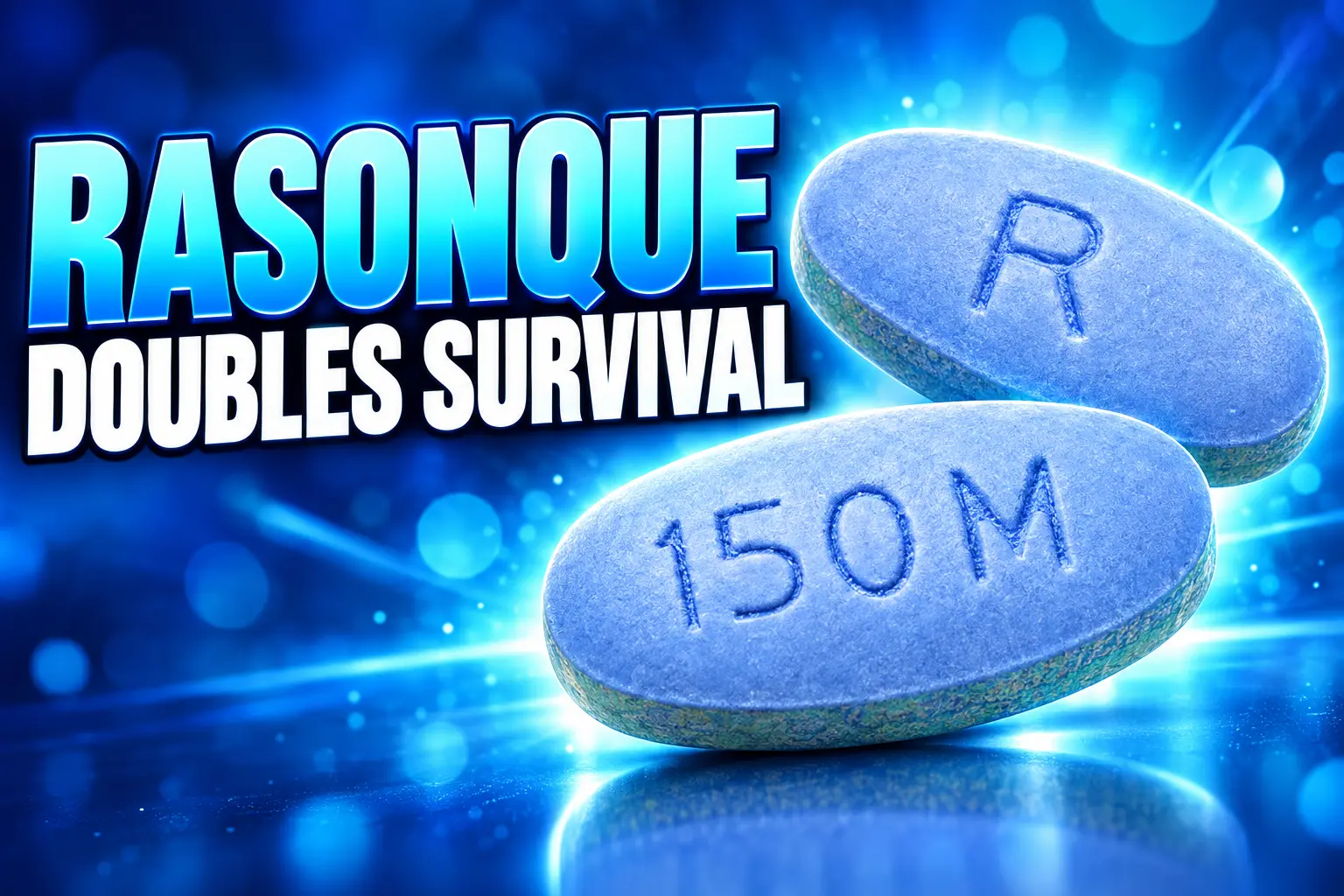
The FDA on August 26 approved Rasonque, a once-daily RAS pill, after a 500-patient trial nearly doubled survival in metastatic pancreatic cancer. Patients on daraxonrasib lived a median of 13.2 months, against 6.7 months on chemotherapy.
The agency approved Rasonque months ahead of schedule, 6.5 months before its user fee deadline, and gave the drug to Revolution Medicines of Redwood City, California. It is the first targeted medicine aimed at RAS, the growth switch that drives most of these tumors, after decades in which that protein was treated as unreachable.
The Pill That Doubled Survival Time
Rasonque is an oral RAS(ON) multi-selective inhibitor. It binds RAS in its active, GTP-bound state and is meant to shut down both mutant and wild-type forms of the protein. The label covers adults with metastatic pancreatic adenocarcinoma who have already had at least one systemic therapy, or who cannot take multiagent chemotherapy.
Acting FDA Commissioner Kyle Diamantas called the decision a duty to move faster for a cancer that has been extraordinarily hard to treat.
Today’s approval provides a critical new option for patients facing an extraordinarily difficult and historically hard-to-treat cancer. It is our fundamental duty to deliver more cures and meaningful treatments to patients as quickly as possible.
Kyle Diamantas, Acting FDA Commissioner
Angelo de Claro, director of the FDA’s Oncology Center of Excellence, said the drug showed unprecedented results in an area of high unmet need. The application carried Breakthrough Therapy, Orphan Drug, and Priority Review designations, and it ran through the Commissioner’s National Priority Voucher pilot.
What the RASolute 302 Trial Showed
The approval rests on RASolute 302, a global, open-label, randomized trial in people whose metastatic disease had already progressed after one line of systemic therapy. Investigators randomly assigned 500 adults, 248 to daraxonrasib and 252 to physician’s choice of standard chemotherapy. About 91.8% had RAS G12 mutations, the group that defined the dual primary endpoints of overall survival and progression-free survival.
In the overall population, the FDA reported 13.2 months of median overall survival on daraxonrasib and 6.7 months on chemotherapy, a hazard ratio of 0.40, or a 60% cut in the risk of death. Median progression-free survival was 7.2 months versus 3.6 months. Tumors shrank in 30% of patients on the pill and 11% on chemotherapy.
THE RASOLUTE 302 RESULTS
| Measure | Rasonque | Chemotherapy |
|---|---|---|
| Median overall survival | 13.2 months | 6.7 months |
| Median progression-free survival | 7.2 months | 3.6 months |
| Objective response rate | 30% | 11% |
| Stopped for treatment-related side effects | 1.2% | 11.2% |
Results in the RAS G12 group were almost the same: 13.2 months versus 6.6 months for overall survival, and 7.3 months versus 3.5 months before the cancer progressed. The most common grade 3 or higher treatment-related events on daraxonrasib were rash (13.7%) and stomatitis (12%). Patients on the pill also kept quality of life longer, with a median time to deterioration of 5.7 months versus 2.6 months, and they went longer before pain worsened (9.2 months versus 3.8 months).
The recommended dose is 300 mg by mouth once a day until the disease progresses or the side effects cannot be managed. Common reactions include rash, diarrhea, mouth inflammation, nausea, fatigue, vomiting, abdominal pain, swelling, lower appetite, and bleeding.
RAS Was Written Off for Decades
RAS is a molecular switch that tells a cell when to grow. When it is stuck on, tumors keep dividing. More than 90% of pancreatic adenocarcinomas carry an activating RAS mutation, which is why this cancer has been called the most RAS-addicted of the major solid tumors. For decades, drugmakers could not get a foothold on the protein’s smooth surface, and many teams walked away.
Channing Der, a RAS researcher at the University of North Carolina, later put the retreat in plain words: “Everyone ran away from KRAS.” The field’s luck turned in 2013, when Kevan Shokat at the University of California, San Francisco, found a hidden pocket in the KRAS G12C mutant. That crack produced sotorasib and adagrasib, which won approval in lung cancer. Those drugs left pancreatic cancer almost untouched, because G12C is rare in the pancreas.
HOW RAS MOVED FROM OFF-LIMITS TO APPROVED
- 2013: Shokat’s lab reports a druggable pocket in KRAS G12C, the first real crack in a target long treated as unreachable.
- 2021: The first direct KRAS G12C inhibitor reaches FDA approval, in lung cancer, eight years after that pocket was found.
- March 9, 2026: Revolution Medicines opens RASolute 303, testing daraxonrasib with or without chemotherapy as first-line treatment.
- May 2026: The FDA issues a safe-to-proceed letter for expanded access, letting some patients take the then-investigational pill outside trials.
- May 31, 2026: Full RASolute 302 results appear at the American Society of Clinical Oncology meeting and in the New England Journal of Medicine.
- July 22, 2026: The FDA accepts the new drug application, 35 days before the August 26 approval.
- August 26, 2026: Rasonque is approved in the United States as a 300 mg once-daily tablet.
The American Cancer Society estimates 67,530 pancreatic cancer diagnoses this year in the United States (35,190 in men and 32,340 in women) and 52,740 deaths (27,230 men and 25,510 women). The disease is about 3% of new cancers and about 8% of cancer deaths. Five-year relative survival sits at 13% for all stages combined, 44% when the tumor is still localized, 17% when it is regional, and 3% when it has spread to distant sites. The FDA says 90% to 95% of cases are pancreatic adenocarcinoma.
No Companion Test on the Label
Most targeted cancer drugs require a lab test that proves the tumor carries the mutation the drug hits. Rasonque does not. Revolution Medicines said the approval covers adults with metastatic disease with or without an identified RAS tumor mutation, and that it does not require a companion diagnostic. That is how the company describes its first broad RAS-targeted medicine.
The trial still enrolled people whose tumors had G13 or Q61 mutations, or no RAS mutation identified, and the survival benefit held in that overall group. The label also reaches patients who are not candidates for multiagent chemotherapy, a clause oncologists have already flagged as practical in clinic. We previously described the wider group now eligible to take it.
WHO THE LABEL COVERS
- The disease: Adults with metastatic pancreatic adenocarcinoma, the form that starts in cells lining the pancreatic ducts.
- Prior treatment: People who have received at least one prior systemic therapy.
- Unfit for combo chemo: People who are not candidates for multiagent systemic therapy, even if they have not had a prior line.
- Mutation status: Use is allowed with or without an identified RAS mutation, and no companion test is required.
- The dose: 300 mg by mouth once a day, continuing until the cancer grows or the toxicity is too much.
Brian Wolpin, director of the Hale Family Center for Pancreatic Cancer Research at Dana-Farber Cancer Institute and principal investigator of RASolute 302, said the result should change what doctors reach for after first-line chemotherapy has already failed.
For decades, despite RAS being the main driver and potential drug target for pancreatic cancer, physicians have largely relied on intravenous cytotoxic chemotherapy to treat this aggressive disease. This approval gives physicians the confidence that directly inhibiting RAS can make a striking difference for patients and provides a critically needed new approach to treating patients with metastatic pancreatic cancer.
Brian M. Wolpin, M.D., M.P.H., Dana-Farber Cancer Institute, RASolute 302 principal investigator
In some clinics, oncologists are already writing several Rasonque prescriptions in a single day. Jasmine Kamboj, a medical oncologist at Northfield Hospital in Minnesota, said her team spent about eight weeks getting daraxonrasib through expanded access for one patient before the approval landed.
A Monthly List Price of $39,800
Revolution Medicines set a wholesale acquisition cost of $39,800 for a 30-day supply at the recommended daily dose. The company launched (ON)Path, a support program that can help with insurance navigation, financial assistance, and treatment education, and it said eligible commercially insured patients may pay as little as $0 with copay help.
That list price is now the argument that follows the science. Pancreatic cancer skews older, which means many patients sit on Medicare Part D rather than commercial plans, and manufacturer copay cards generally do not apply to government insurance. The company has said it will give some patients a short free supply if coverage is delayed, and that uninsured and underinsured people who meet financial and medical criteria can receive the drug at no charge. What a given patient pays will still depend on the plan, the deductible, and whether assistance comes through.
Mark A. Goldsmith, chief executive and chairman of Revolution Medicines, tied the approval to a bet the company made on hitting RAS in its “on” state across many mutants, rather than chasing only G12C.
For the first time, patients have an approved targeted medicine designed to directly inhibit the main cause of pancreatic cancer, RAS, which has been one of the most intractable disease targets since its discovery decades ago.
Mark A. Goldsmith, M.D., Ph.D., chief executive officer and chairman, Revolution Medicines
The U.S. FDA approved the first multi‑selective oral RAS inhibitor in metastatic pancreatic cancer.
More: https://t.co/6gvJhAZnMw pic.twitter.com/E5zz13rzpN
— Revolution Medicines (@RevMedicines) August 26, 2026
Why G12C Drugs Missed the Pancreas
The first RAS pills to reach the market were built for KRAS G12C, a mutant that is common enough in lung cancer to support full development programs. In pancreatic adenocarcinoma, G12C shows up in only about 1% to 2% of tumors. The mutations that actually run this disease are mainly G12D, G12V, and G12R, which do not offer the same cysteine handle those first drugs need to lock on.
Daraxonrasib is a noncovalent tri-complex inhibitor. Instead of bonding permanently to one mutant, it is designed to suppress RAS signaling across a wide set of genotypes, including wild-type RAS, by blocking the active protein’s contact with downstream effectors. That is why a RAS inhibitor could win a pancreatic cancer label without a companion diagnostic, and why the survival curves in the overall trial population tracked the G12 curves so closely.
It is also why this approval sits in a different line from the G12C lung-cancer drugs. Those medicines proved RAS could be drugged. They did not give pancreatic cancer a matched tool. Rasonque is the first approved agent whose design lines up with the mutations that drive this tumor in the first place.
The Next Test Is First-Line Disease
The August 26 label still starts after chemotherapy, or in people who cannot take combination chemo at all. The open question is whether the same pill works earlier, when patients are fitter and the tumor has not already been through a first round of cytotoxic drugs. Revolution Medicines is running the first-line RASolute 303 trial, a three-arm study that began March 9, 2026, and is built to enroll about 900 people with newly diagnosed metastatic disease.
Patients are randomly assigned to daraxonrasib alone, daraxonrasib plus gemcitabine and nab-paclitaxel, or gemcitabine and nab-paclitaxel alone. RAS mutation status is used for stratification, but the study takes people with confirmed metastatic pancreatic adenocarcinoma regardless of that result. Coprimary endpoints are progression-free survival and overall survival. The FDA’s Project Orbis review, run with Health Canada while European and Japanese regulators observed, is meant to speed parallel decisions abroad; outside the United States the drug remains investigational.
Rasonque is available by prescription in the United States as a 300 mg tablet taken once a day. Median survival in the trial that won that prescription was 13.2 months, not a long life, but twice what second-line chemotherapy offered the same patients. The first-line trial will decide whether that gain can be pulled forward, before chemotherapy has already failed.
Frequently Asked Questions
What Is Rasonque Used for in Pancreatic Cancer?
Rasonque is approved only for metastatic pancreatic adenocarcinoma in adults who have already had at least one systemic therapy or who cannot take multiagent chemotherapy, and Revolution Medicines is also running late-stage work in RAS-mutant non-small cell lung cancer, where daraxonrasib already holds a Breakthrough Therapy designation for previously treated disease with KRAS mutations other than G12C, plus programs aimed at colorectal tumors driven by RAS.
Does Rasonque Require a RAS Mutation Test?
No companion diagnostic is required, and the RASolute 302 trial still enrolled people with RAS G13 or Q61 mutations or with no RAS mutation identified, a slice of the 500-person study that sat outside the 91.8% who had G12 mutations, yet the overall survival benefit in that mixed group matched the G12 result.
What Side Effects Does the Rasonque Label Warn About?
Beyond the common rash, diarrhea, and mouth sores, the prescribing information carries warnings for dermatologic and soft tissue toxicity, gastrointestinal perforation, interstitial lung disease or pneumonitis, and embryo-fetal toxicity, so the FDA tells clinicians to watch lungs and the gut lining and to prevent pregnancy during treatment.
How Is Rasonque Taken Each Day?
The approved dose is 300 mg orally once daily, continued until the cancer progresses or the toxicity becomes unacceptable, and the label allows dose changes to manage side effects and drug interactions rather than forcing an automatic stop at the first reaction.
Is Rasonque Approved Outside the United States?
No. The FDA reviewed the file under Project Orbis with Health Canada, while the European Medicines Agency and Japan’s Pharmaceuticals and Medical Devices Agency sat as observers, and the EMA has started a phased review and given daraxonrasib orphan designation plus high-priority status under its Cancer Medicines Pathfinder project, but the pill remains investigational outside the United States.
Disclaimer: This article is news reporting on an FDA drug approval and related trial results, and it is for information only. It is not medical advice, a treatment recommendation, or a substitute for a conversation with an oncologist about whether Rasonque, chemotherapy, or another option is appropriate in a specific case. Readers who are patients or caregivers should talk with a qualified cancer specialist, and with a pharmacist or insurer about coverage, before starting, stopping, or paying for any medicine. Survival figures, the approved use, the list price, and assistance rules reflect the FDA label, company statements, and American Cancer Society estimates as of September 2, 2026, and those facts can change.

IT Stocks Climb as Sensex Falls After RBI Hike

Anthropic Prices Claude Haiku 5.5 as a Subagent Worker

Nifty Falls While India Pays $121 a Barrel

OpenAI’s 722 Math Papers Leave the Checking to Humans

Flipkart Recruits Sellers and Riders for Big Billion Days

Consumer Sentiment Falls to 51.7 as Future Outlook Darkens

Pluto’s Heart Glacier Still Pushes Liquid Nitrogen Upward

The Extra Heat Month Hits Children Where Care Is Thinnest

UMMC Will Rebuild 30-Year-Old Cancer Labs With $2.4 Million

Netflix Weighs Hosting Peacock and Fox One in Its App
-
 BUSINESS2 months ago
Consumer Sentiment Falls to 51.7 as Future Outlook Darkens
-
 NEWS2 months ago
Pluto’s Heart Glacier Still Pushes Liquid Nitrogen Upward
-
 NEWS1 month ago
The Extra Heat Month Hits Children Where Care Is Thinnest
-
 NEWS2 months ago
UMMC Will Rebuild 30-Year-Old Cancer Labs With $2.4 Million
-

 BUSINESS1 month ago
Abbott Pays $670 Million to Exit a Missouri Food Verdict
-
 ENTERTAINMENT1 month ago
Netflix Weighs Hosting Peacock and Fox One in Its App
-

 NEWS1 month ago
Water-Shedding Coatings Charge the Drops That Pierce Them
-

 GAMING1 month ago
Take-Two Subpoenas Microsoft While GTA 6 Preorders Soar