
LIFESTYLE
NHS Pharmacy Cholesterol Tests Find Risk Faster Than Treatment
Free seven-minute NHS cholesterol tests start in about 100 English pharmacies this autumn, but the north London run started only 88 people on statins.

NHS England will offer free seven-minute cholesterol tests in about 100 pharmacies this autumn, aiming to cut heart and stroke deaths by a quarter. The pin-prick check is walk-in, and a pharmacist prescriber can give advice and decide if treatment is needed.
The harder number is already on the books. A north London run tested 2,493 people and started 88 on statins. Detection is quick. Getting people onto a drug that actually lowers risk is slower, and that is the part a 25 percent death target still has to clear.
Around 100 Pharmacies Will Offer the Checks This Autumn
NHS England set out the plan on 31 August, during the European Society of Cardiology meeting. Around 100 NHS pharmacies this autumn will take part. The service is a pilot, and it runs until spring 2027, after which the model is due to be assessed before any wider offer.
A lancet pricks a fingertip. The sample is read on the spot. In seven minutes the pharmacist has a cholesterol profile, then a clinical talk that also includes a blood pressure check. Results go out by email. UCLPartners, which helped run the London work, says the score also folds in age, sex, ethnicity, body mass index, lifestyle, diabetes, family history and local deprivation, and that a copy can sit in the NHS App.
David Webb, chief pharmaceutical officer for England, placed the service inside the 10 Year Health Plan’s shift of work that used to sit in GP surgeries.
By making it easier for people to get a quick and convenient cholesterol health check on their local high street, we can spot ticking time bombs earlier, helping people take action, and prevent heart attacks and strokes before they happen.
David Webb, Chief Pharmaceutical Officer for England, NHS England
HEART UK, the cholesterol charity that partnered on the London project, said it was proud of that work and looked forward to the next stage after the congress announcement. Dr Sotiris Antoniou, divisional director for clinical services at Barts Health NHS Trust and clinical lead for the scheme, said scaling the model could cut inequalities in places where cardiovascular disease hits hardest.
From this autumn, more NHS pharmacies in England will begin offering life-saving cholesterol check-ups.
This pilot is part of a wider effort to reduce deaths from heart disease and stroke by a quarter over the next decade.
Read more ➡️ https://t.co/CJJRexTso3 pic.twitter.com/cv1coxdRf5
— NHS England (@NHSEngland) August 31, 2026
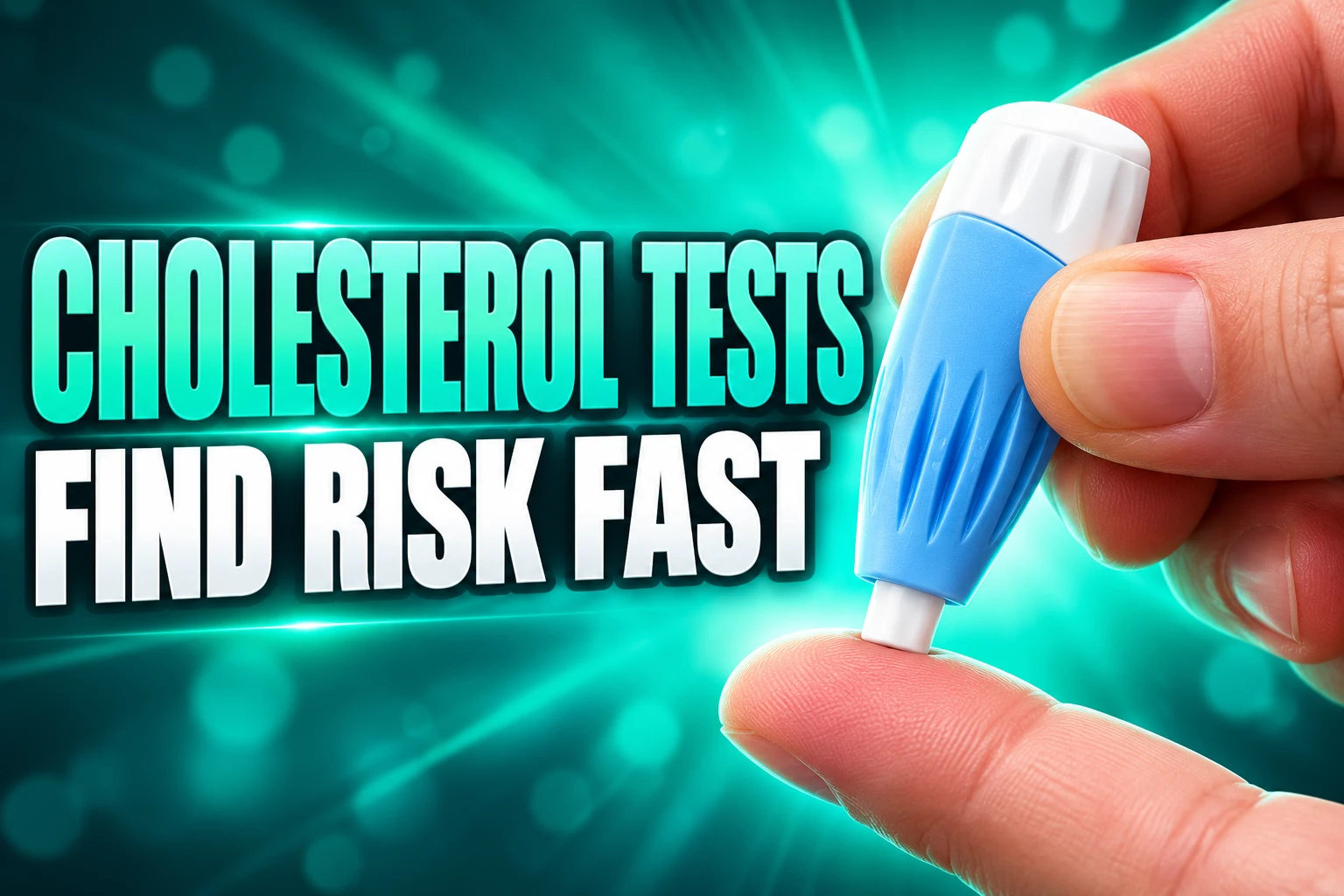
Who Can Walk In for a Free Cholesterol Test?
The door is open to a wide adult group, with three hard stops. There is no GP booking and no lab wait, which is the point of putting the analyser on the high street rather than behind a surgery appointment.
WHO QUALIFIES FOR THE WALK-IN CHECK
- Age band: People aged 40 to 84 can attend a participating pharmacy.
- Pregnancy: Pregnant people are excluded from the offer.
- Recent bloods: Anyone who has had a blood test in the past year is not eligible.
- Extra check: Eligible people are also offered a blood pressure reading in the same pharmacist-prescriber consultation.
- Aftercare: Patients get a copy of their results by email, and the pharmacist can give lifestyle advice or decide whether treatment is needed.
England already invites people aged 40 to 74 without diagnosed heart disease, diabetes or chronic kidney disease to an NHS Health Check every five years, and that visit already includes cholesterol. The pharmacy offer stretches the upper age to 84 and turns a five-year invite into a walk-in for anyone who has not had blood taken in the last 12 months. It does not replace the Health Check. It sits beside it, in shops that people already use for prescriptions and Pharmacy First.
One in Five Walk-Ins Met the Drug Threshold
The national pitch rests on a Barts Health NHS Trust programme run with UCLPartners and HEART UK. Between January 2025 and March 2026, 61 community pharmacies in north London tested 2,493 patients over 15 months. NHS England said 19 percent were suitable for drug treatment, about 474 people, and 88 started statins.
NORTH LONDON CHOLESTEROL PILOT, IN NUMBERS
| Measure | Full north London run | First seven pharmacies |
|---|---|---|
| People tested | 2,493 | 556 |
| Pharmacy sites | 61 | 7 |
| When | January 2025 to March 2026 | January to October 2025 |
| Flagged for drugs or high 10-year risk | 19 percent (about 474) | 111 with QRISK of 10 percent or more |
| Started statins | 88 | 24 |
That 19 percent line matches NICE advice on primary prevention. Adults with a 10-year cardiovascular risk of 10 percent or more should be offered a high-intensity statin, usually atorvastatin 20 mg, after a talk about benefits and harms. The pharmacy test is built to find that group without a fasting trip to a laboratory.
An earlier cut of the same work, covering 556 people in seven shops over 40 weeks, found 111 with a QRISK score of 10 percent or more, 14 with critically high cholesterol, and 27 with triglycerides above 4.52 mmol/L. Twenty-four people in that first group started statins. Chris Laing, chief executive of UCLPartners, said one in five people tested in north London were at high risk of a heart attack or stroke over 10 years, and that pharmacies could offer lifestyle advice or refer people to a GP sooner.
Why Only 88 People Started Statins in the Pilot
Eighty-eight starters from 2,493 tests is 3.5 percent of everyone screened, and about 18.6 percent of the 474 people flagged for drugs. The first seven shops landed in a similar place, with 24 starters from 111 high-risk results. Finding the risk is the part the analyser can do in seven minutes. Starting a daily tablet is a different job, and the London evaluation recorded a substantial level of resistance to taking statins.
That resistance is not a footnote. NICE already treats the 10 percent line as an offer, not an order, and people can choose diet, activity and weight change instead. Community Pharmacy England said the evaluation found more than half of patients identified as Asian, with most users in their 40s and 50s and a large share from deprived neighbourhoods. Asian patients were more likely to start statins. White patients were more likely to decline the drug and pick lifestyle change. Black patients had higher rates of drop-off after the visit.
The test also cannot do the whole pre-statin work a surgery still has to think about. A finger-prick lipid profile does not, by itself, rule out thyroid disease, new diabetes or a raised liver enzyme count, which GPs routinely check before locking someone into long-term treatment. If the pharmacist is not an independent prescriber, the abnormal result still has to land somewhere, usually in the GP record. Funding the shop to run the test without funding the surgery to finish the work splits one episode of care across two budgets.
Dr Rani Khatib, NHS England’s national specialty adviser for cardiovascular disease prevention, said people should know their cholesterol and blood pressure numbers and manage risk earlier. That only holds if the number leads to a plan the patient will follow. A high reading emailed after a seven-minute visit is not yet a prevented infarct.
Independent Prescribing Lands in the Same Season
The cholesterol pilot is timed with a larger move. In May the government agreed a £340 million community pharmacy deal that rolls out NHS-funded independent prescribing from autumn 2026. Webb said it would be the first time community pharmacists could prescribe NHS medicines across a range of conditions as a nationally commissioned service. Stephen Kinnock, minister of state for care, tied that shift to the 10 Year Health Plan and to easing pressure on GPs.
The two policies share a season and a workforce. They do not share a contract line. National independent prescribing is being added first as an extension of Pharmacy First and the pharmacy contraception service, with extra minor-illness pathways still to be signed off. The cholesterol checks are a separate 100-site pilot that happens to need a pharmacist prescriber in the room. Between March 2025 and February 2026, pharmacies already delivered 3.3 million Pharmacy First consultations, up 43 percent on the year before, with 86 percent of users reporting a good experience.
THE HIGH-STREET PREVENTION TIMETABLE
- 3 July 2025: The 10 Year Health Plan sets three shifts, from hospital to community, analogue to digital, and sickness to prevention.
- 29 May 2026: A £340 million pharmacy settlement agrees nationally commissioned independent prescribing from autumn.
- 7 July 2026: The cardiovascular disease modern service framework sets a 25 percent cut in premature heart and stroke deaths over 10 years.
- 31 August 2026: NHS England announces the 100-pharmacy cholesterol pilot, to run until spring 2027.
Alison McGovern, a health minister, called the cholesterol programme the type of innovation she wanted across the NHS, and said early detection could cut pressure on services. That only follows if the pharmacist can finish the job, or if the GP list is resourced to pick it up. Community pharmacists have been the slowest group of pharmacist prescribers to use that qualification in day-to-day work. Stacking a new diagnostic onto shops in the same months they take on national prescribing is a workforce bet, not a seven-minute trick.
England Has Lost More Than 1,000 High-Street Pharmacies
The plan puts more clinical work onto a thinner counter network. House of Commons Library figures show 10,526 pharmacies open in England in February 2026, against 11,609 in February 2016, 1,083 fewer pharmacies than in 2016, a 9 percent drop. One hundred pilot sites are under 1 percent of the England total. The other 99 percent will keep doing what they do now.
East London, where the model was built, is the kind of place the 10 Year Health Plan says it wants to reach. Partners on the project said about 220 people there die each month from heart and circulatory disease, and that pharmacies sit within walking distance for 90 percent of residents. The first evaluation also said the service pulled in a broad ethnic mix and a heavy share of people from poorer postcodes. That is the access argument, and it is real.
Capacity is the other half. Pharmacies are already treating common infections, issuing emergency contraception, checking blood pressure and, from this autumn, prescribing under the new national deal. Asking the same teams to run cardiovascular risk clinics without extra hands, or without a funded path back into general practice, is how a prevention scheme becomes a queue at both doors. Temporary shutdowns when a locum cannot be found already take hours out of the week. A seven-minute test is only seven minutes if a pharmacist is on the premises and free to run it.
Spring 2027 Is When NHS England Judges the Model
The death target that sits over the pilot is not a slogan invented for the congress. The government’s cardiovascular framework, published on 7 July, cites 33,000 premature deaths every year from heart disease and stroke in the UK, and a circulatory death about every three minutes. It says 70 percent of cardiovascular disease is tied to factors that can be changed, including cholesterol, blood pressure and smoking. If local services deliver the plan, ministers say it could prevent 1,600 to 2,400 premature deaths a year in the first three years, and 3,850 to 4,900 a year after 10 years.
THE HEART AND STROKE LOAD THE PILOT IS MEANT TO MOVE
- Premature deaths: About 33,000 people a year in the UK die early from heart disease and stroke.
- Pace of loss: Someone in the UK dies from heart or circulatory disease about every three minutes.
- Stated aim: Cut those premature deaths by 25 percent over 10 years.
- Blood pressure: Raise the share of people with well-managed high blood pressure to 80 percent within three years.
Jules Payne, chief executive of HEART UK, backed the framework’s aim and said raised cholesterol has to be found and managed earlier in life, including inherited lipid conditions. Professor Frankie Swords, national medical director of NHS England, said millions of people live with high cholesterol, high blood pressure or diabetes without knowing. Prevention accelerators in Greater London, Greater Manchester, Liverpool City Region, South Yorkshire and the West Midlands are already trying to take checks into everyday settings rather than waiting for a surgery visit or an A&E trolley.
A 100-shop cholesterol pilot will not, on its own, deliver that 25 percent cut. It will test whether a high-street analyser can find the same hidden risk the London pharmacies found, and whether more than 18.6 percent of the people who meet the drug threshold then start treatment. Spring 2027 is the date NHS England has given itself to decide if the model is worth taking beyond that first hundred counters.
Disclaimer: This article is news reporting and analysis of an NHS England pharmacy pilot and related government prevention plans. It is for information only and is not medical advice, a personal risk assessment, or a recommendation to start, stop or change any medicine, including statins. Readers who want a cholesterol check, blood pressure reading or treatment decision should speak to a pharmacist, GP or other qualified clinician who can review their own history and test results. Figures and service details reflect official statements as of 2 September 2026 and may change as the autumn pilot is confirmed and later evaluated.

IT Stocks Climb as Sensex Falls After RBI Hike

Anthropic Prices Claude Haiku 5.5 as a Subagent Worker

Nifty Falls While India Pays $121 a Barrel

OpenAI’s 722 Math Papers Leave the Checking to Humans

Flipkart Recruits Sellers and Riders for Big Billion Days

Consumer Sentiment Falls to 51.7 as Future Outlook Darkens

Pluto’s Heart Glacier Still Pushes Liquid Nitrogen Upward

The Extra Heat Month Hits Children Where Care Is Thinnest

Take-Two Subpoenas Microsoft While GTA 6 Preorders Soar

UMMC Will Rebuild 30-Year-Old Cancer Labs With $2.4 Million
-
 BUSINESS2 months ago
Consumer Sentiment Falls to 51.7 as Future Outlook Darkens
-
 NEWS2 months ago
Pluto’s Heart Glacier Still Pushes Liquid Nitrogen Upward
-
 NEWS2 months ago
The Extra Heat Month Hits Children Where Care Is Thinnest
-
 GAMING2 months ago
Take-Two Subpoenas Microsoft While GTA 6 Preorders Soar
-
 NEWS2 months ago
UMMC Will Rebuild 30-Year-Old Cancer Labs With $2.4 Million
-

 BUSINESS2 months ago
Abbott Pays $670 Million to Exit a Missouri Food Verdict
-

 ENTERTAINMENT2 months ago
Netflix Weighs Hosting Peacock and Fox One in Its App
-

 NEWS2 months ago
Water-Shedding Coatings Charge the Drops That Pierce Them