
BUSINESS
Consumer Sentiment Falls to 51.7 as Future Outlook Darkens
Michigan consumer sentiment fell to 51.7 in August as households cut their business outlook even while inflation expectations eased.

The University of Michigan’s consumer sentiment index finished August at 51.7, down 6.3 percent from July and 11.2 percent from a year earlier. The final figure was revised up from a preliminary 51.0 after interviews that ran from July 28 to August 24.
Year-ahead inflation expectations eased to 4.0 percent from 4.2 percent. Expected business conditions still fell 10 percent for the next year and 13 percent over five years.
The Final August Reading Settled at 51.7
Forecasters had centered on 51, matching the early-month print. The revision to 51.7 did not bring back July’s 55.2, and it left the current-conditions gauge at 51.9 and the expectations gauge at 51.5.
AUGUST 2026 MICHIGAN INDEX READINGS
| Index | August 2026 | July 2026 | August 2025 | Month change | Year change |
|---|---|---|---|---|---|
| Consumer sentiment | 51.7 | 55.2 | 58.2 | -6.3% | -11.2% |
| Current economic conditions | 51.9 | 54.8 | 61.7 | -5.3% | -15.9% |
| Consumer expectations | 51.5 | 55.4 | 55.9 | -7.0% | -7.9% |
The headline index moved 3.5 points on the month, inside the 4.8-point shift the survey says it needs before a change stands out from noise at 95 percent confidence. Current conditions moved 2.9 points and expectations 3.9 points, both under the 6-point bar for those gauges. Joanne Hsu, who directs the surveys, still called it a drop of about 6 percent and a reading about 11 percent below a year ago.
She tied the gloom to policy uncertainty that includes the Iran conflict, and she warned that another flare-up in trade fights would likely make the slide worse. The release covers a nationally representative web sample. Each household in the lower 48 states has an equal chance of being drawn.
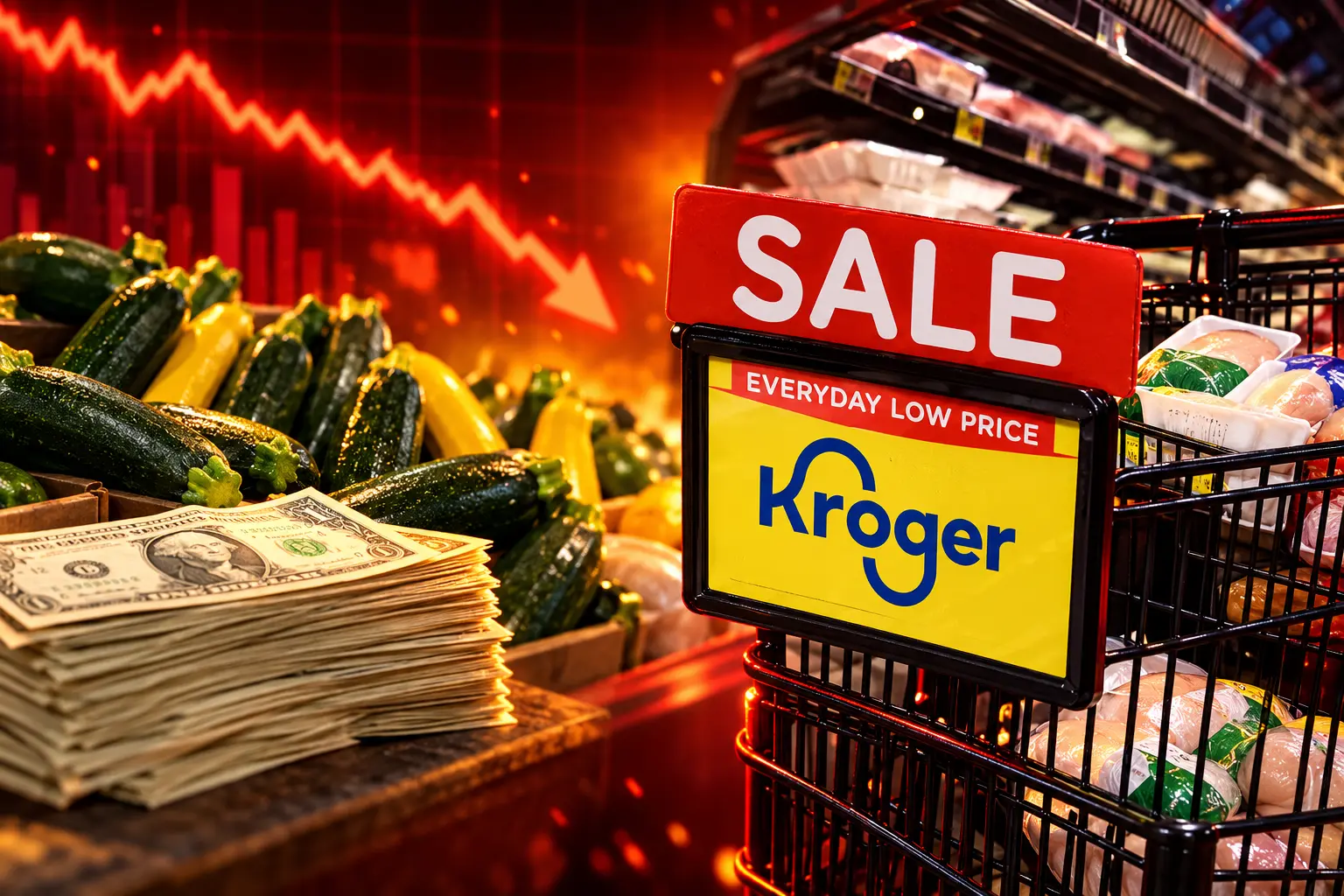
Inflation Expectations Fell as Business Outlooks Weakened
The early August version of this survey had year-ahead inflation expectations moving the wrong way. That uptick did not survive the final. They ticked down to 4.0 percent, which is still above the 3.4 percent recorded in February before the Iran conflict began, and above every 2024 reading. Long-run inflation expectations, the five-to-10-year measure, held at 3.3 percent for a third straight month, a bit above the 2.8 to 3.2 percent band seen through 2024.
With ongoing policy uncertainty including the Iran conflict, consumers anticipate further increases in gasoline prices both in the short and long run. In addition to the pocketbook issues that have been central to consumers’ views of the economy, they are increasingly worried that prospects elsewhere in the economy could be weakening.
Joanne Hsu, director, University of Michigan Surveys of Consumers, August 28 statement
That is the split the 51.7 headline hides. A growing 53 percent of consumers spontaneously said high prices are weighing on current personal finances, up from 50 percent in July and 45 percent in January. Hsu said a growing majority now expect inflation to outstrip income gains, and only 10 percent of consumers expect their purchasing power to rise in the year ahead.
Asked which hardship will be more serious for people, 36 percent named inflation this month and only 6 percent named unemployment. At the start of the year those shares were 23 percent and 14 percent, with the rest calling them equal. Households still have jobs on their minds less than prices, even as they mark down the wider business outlook.
Who Took the Hardest Hit in August?
Declines showed up in every political group and were sharpest among Republicans. The same pattern held for the households least able to absorb a higher cost of living. Those are the people who have been in this squeeze for years, Hsu said, and they still do not feel they are getting ahead.
GROUPS THAT FELL HARDEST
- Older consumers: The survey flagged older households among those less able to absorb a higher cost of living, and their sentiment fell harder than the national average.
- Lower- and middle-income households: These groups posted stronger decreases than higher-income respondents, matching the squeeze they report at the pump and the grocery aisle.
- No college degree: Adults without a degree were named in the university’s August note alongside income and age as a group with a sharper drop.
- No stock holdings: Households that do not own stocks also showed stronger decreases, a reminder that this reading is not a Wall Street mood ring.
- Republicans: All three partisan groups weakened, and the survey said the decline was particularly acute among Republicans.
Those buckets overlap. Older, non-college, lower-income voters without a brokerage account are also a core piece of the coalition that backed cheaper prices in 2024. Their sentiment is now doing the most work on the downside of this report.
The Most Expensive August on Record at the Pump
The price pressure sitting under those answers is not a vibe. It is in the official inflation print and in the weekly gasoline average.
THE JULY PRICE PRINT
- Headline CPI: Over the 12 months ended July, consumer prices rose 3.4 percent, the Bureau of Labor Statistics said, after a 3.5 percent year-over-year reading in June.
- Gasoline: Prices for gasoline of all types were up 24.6 percent over those 12 months, the main force behind a 14.7 percent jump in energy.
- Core prices: All items less food and energy rose 2.5 percent over the year, and food was up 3.0 percent.
- Jobs: The unemployment rate was 4.1 percent in July, which helps explain why so few people now pick joblessness over inflation as the larger hardship.
AAA put the national average for a gallon of regular at $4.09 on August 27. The auto club said August is on track to be the first August with every day above $4 a gallon, and the most expensive August at the pump on its books, beating the prior August mark from 2022, when the monthly average was $3.97. Crude was still in the $80-a-barrel range on volatility in the Strait of Hormuz. Hsu said consumers already expect further gasoline increases in both the short run and the long run.
The Federal Reserve’s 2 percent inflation goal remains out of reach on the 3.4 percent July reading. That gap is what households mean when they say their pay will not keep up.
A Second Survey Shows the Same Present-Future Split
Three days before Michigan published its final, the Conference Board reported a milder headline move with the same guts. Its Consumer Confidence Index eased 0.8 point to 89.4 in August from 90.2 in July. The present situation index rose 6.8 points to 121.2, the first gain after three months of decline. The expectations index, which tracks the six-month outlook for income, business, and jobs, fell 5.8 points to 68.2. Interviews ran from August 3 to August 16.
Looking ahead, consumers were more pessimistic about business conditions and the labor market over the next six months. Expectations for household incomes moderated but remained optimistic overall.
Dana M. Peterson, chief economist, The Conference Board, August 25 release
#ConsumerConfidence fell 0.8 points to 89.4 (1985=100) in August, down from 90.2 in July.
🌡️ The #PresentSituation Index rose 6.8 pts to 121.2, following three months of decline.
🔮 The #ExpectationsIndex fell 5.8 pts to 68.2. pic.twitter.com/Vm5UZRjHvj— The Conference Board (@Conferenceboard) August 25, 2026
Current jobs look better in that survey, not worse. The share saying jobs are plentiful rose to 27.0 percent from 24.4 percent, and the share saying jobs are hard to get fell to 19.5 percent from 21.7 percent. Future business conditions went the other way: 16.8 percent expected them to improve, down from 17.8 percent, and 23.1 percent expected them to worsen, up from 21.6 percent. Income hopes cooled too, with 17.6 percent expecting a raise, down from 19.5 percent.
Write-in comments stayed heavy on prices, oil, and gas. Mentions of war and conflict, food, trade, and jobs rose. Auto-buying plans remained strong on a six-month average, and home-buying plans held an upward trend after the slump of early 2024. The caution is about the next two quarters of business and hiring, not a freeze at the car lot.
By party, Conference Board confidence softened among Independents and Republicans in August, while Democrats were somewhat more positive. That partisan mix is messier than Michigan’s across-the-board drop, but both surveys have the people currently in power sounding worse about what comes next.
Republican Voters and the November Stay-Home Problem
Todd Belt teaches political management at George Washington University. He called the Republican slide a warning for turnout in the fall midterms, and he pointed at the same demographics Michigan just flagged: older people, people with no college degree, and lower-income households. Those groups backed a cheaper economy, he said, and they are now living with tariffs and the Iran war on top of prices that are still running above the Fed’s 2 percent target.
When it really starts to affect your pocketbook, when it’s really, really getting to the nitty-gritty and you can’t make ends meet, you just can’t out-message that. It’s beyond politics at this point.
Todd Belt, professor of political management, George Washington University
Belt’s other observation is the one that turns a sentiment print into a November problem. Discouraged Republican voters are more likely to stay home than to switch sides. Democrats, he said, look fired up to vote. A stay-home wave in the same counties that moved in 2024 would not show up as a party conversion. It would show up as empty chairs.
Political handicappers have already started treating the Republican drop as larger than the narrow midterm map would imply. The Michigan internals give them a mechanism: the people who feel prices most are the ones whose business outlook just cracked. Hsu has said consumers have felt stuck in this boat for some time. August did not create that mood. It confirmed that the two-month bounce through June and July did not talk them out of it.
Purchasing Power Has Been Sliding for a Year and a Half
Hsu said inflation-adjusted income expectations have broadly weakened over the past year and a half. The 2026 path of the headline index is the monthly version of that grind, from a spring collapse into a short rebound that did not hold.
THE 2026 SENTIMENT PATH
- March 2026: The index stands at 53.3 as the year begins to sour.
- April 2026: The reading slips to 49.8.
- May 2026: Sentiment hits 44.8, the lowest in the history of the series, under the June 2022 trough of 50.0.
- June 2026: A rebound to 49.5 begins the two-month climb.
- July 2026: The index reaches 55.2, the high for this stretch.
- August 2026: The final reading settles at 51.7, giving back part of the summer bounce.
Figures in the St. Louis Fed’s sentiment series through July match that path through 55.2. Hsu has cautioned against treating a modern reading near 50 as the same animal as a 50 from decades ago, because the survey is built to track trends, not to freeze eras in amber. The trend since early 2025 has been flat or falling. August fits that line.
The share volunteering that high prices are hurting personal finances is now 53 percent, versus 45 percent in January. The share naming inflation as the more serious hardship is 36 percent, versus 23 percent in January. Only 10 percent still think their purchasing power will rise in the next year. The next preliminary Michigan reading is due Friday, September 11, at 10 a.m. Eastern. Until then, the August final is the record: a present that did not collapse, a future that did, and a small club of households that still think their pay will beat prices.

IT Stocks Climb as Sensex Falls After RBI Hike

Anthropic Prices Claude Haiku 5.5 as a Subagent Worker

Nifty Falls While India Pays $121 a Barrel

OpenAI’s 722 Math Papers Leave the Checking to Humans

Flipkart Recruits Sellers and Riders for Big Billion Days

Consumer Sentiment Falls to 51.7 as Future Outlook Darkens

Pluto’s Heart Glacier Still Pushes Liquid Nitrogen Upward

Take-Two Subpoenas Microsoft While GTA 6 Preorders Soar

The Extra Heat Month Hits Children Where Care Is Thinnest

UMMC Will Rebuild 30-Year-Old Cancer Labs With $2.4 Million
-
 NEWS2 months ago
Pluto’s Heart Glacier Still Pushes Liquid Nitrogen Upward
-
 NEWS2 months ago
The Extra Heat Month Hits Children Where Care Is Thinnest
-
 GAMING2 months ago
Take-Two Subpoenas Microsoft While GTA 6 Preorders Soar
-
 NEWS2 months ago
UMMC Will Rebuild 30-Year-Old Cancer Labs With $2.4 Million
-

 ENTERTAINMENT2 months ago
Netflix Weighs Hosting Peacock and Fox One in Its App
-
 BUSINESS2 months ago
Abbott Pays $670 Million to Exit a Missouri Food Verdict
-
 NEWS2 months ago
FDA Clears Rasonque and Widens Who Can Take It
-

 GAMING2 months ago
GTA 6’s 80-Hour Run Counts Goals That Change the Story