
NEWS
Mumbai Airport Bills a Domestic Rebuild to International Slots
Mumbai airport is cutting 265 weekly T2 international slots so Terminal 1 domestic traffic can move in.

Mumbai International Airport Ltd has told 46 airlines to drop 265 of 770 weekly international departure slots at Terminal 2 from October 25. The airport called it a 33% cut, rounded up to the next whole number. Vacated T2 desks, belts and gates would then go to domestic operators so about 5 million passengers a year can move from Terminal 1 while that building is rebuilt.
Airlines on October 3 formally rejected the cut. They have until 4 PM on October 6 to name the slots. If they stay silent, MIAL says it will choose them.
A 33 Percent Cut With a 4 PM Deadline
The notice is not a new capacity study. It is the same one-third international shift that was meant to start on October 1, rewritten as a winter-season slot list after airlines refused to move a set share of T2 flying to Navi Mumbai International Airport.
Both airports sit in the Adani group. MIAL runs Chhatrapati Shivaji Maharaj International Airport. Navi Mumbai International Airport Ltd is a joint venture in which Adani Airport Holdings holds 74% and CIDCO holds 26%. IATA, in its September 9 letter to the Civil Aviation Ministry, flagged that common control as a reason the transition needs ministry oversight, not a one-way airport circular.
MIAL’s letter says the reduction starts at 23:59 hours on October 25, the opening of the winter schedule. From 0001 hours on October 26 it will start handing vacated T2 assets, including check-in counters, baggage belts, boarding gates and office space, to scheduled domestic operators.
THE PATH TO THE OCTOBER LIST
- December 25, 2025: Navi Mumbai airport starts domestic commercial flights.
- July 15, 2026: Air India Express opens the first international route, Abu Dhabi, three times a week.
- August 1, 2026: Akasa Air moves its domestic flying from Terminal 1 to Terminal 2.
- September 8, 2026: AERA revises Navi Mumbai’s tariff plan so a route already flown from Mumbai still counts as new at Navi Mumbai for landing-fee relief.
- September 9, 2026: IATA writes to the ministry against a forced one-third shift of each airline’s international passenger and cargo flying.
- September 16, 2026: MIAL holds an airline meeting; carriers later say it dwelt on the Navi Mumbai move, not the Terminal 1 timetable they had asked for.
- October 1, 2026: The original one-third transfer date passes without the shift.
- October 6, 2026: 4 PM deadline for airlines to mark which T2 departure slots to drop.
- October 25, 2026: Listed slots are to stop at 23:59 hours.
- January 15, 2027: Demolition of the north section of Terminal 1B is due to start.
Chief Airport Officer Vishnu Mohan Jha told Civil Aviation Secretary Samir Kumar Sinha that phase 1 is limited to that north section, which handles around 5 million passengers a year, so the rest of Terminal 1 can keep working. The new terminal is due in 2029 or 2030. MIAL says historic Mumbai slot rights will be honoured then.
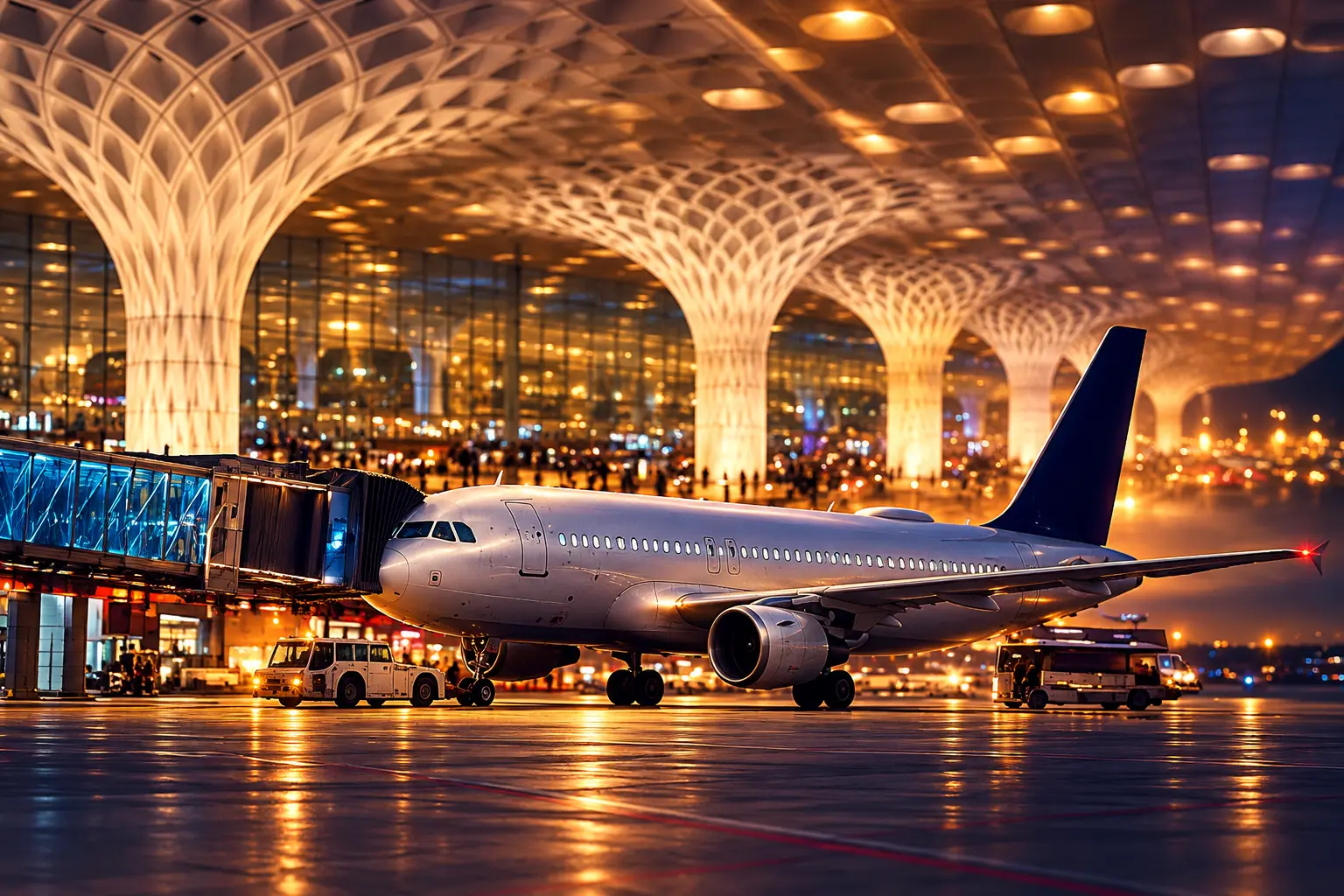
Airlines Have Already Told the Airport No
Airline managers told Adani Airports they back a Terminal 1 rebuild and do not treat that as consent to cancel T2 flying. They say the winter schedule was approved in June 2026, with aircraft, crews and tickets already set against it.
They also dispute the paper trail. A July 30 meeting went out without an agenda, they say, and the minutes did not match what members had said. The September 16 session was supposed to cover the Terminal 1 timetable. MIAL, they say, used it to press the T2-to-Navi Mumbai move. Several carriers skipped that meeting. MIAL then asked for transition plans by September 25 and recorded that several did not file them.
The group now wants a ministry-chaired stakeholder meeting on the Terminal 1 plan, and a bar on the airport acting alone. They warn that bookings already sit on approved winter flights. Unilateral cuts would hit those passengers first.
That objection has a physical core. Terminal 1 is a domestic building. The flying MIAL wants to remove is international flying at Terminal 2. The swap frees scarce T2 stands and processors for domestic aircraft that turn faster than long-haul wide-bodies, and it leaves Navi Mumbai as the only other Mumbai-region place to put the displaced international work.
IndiGo Faces 74 Weekly Slot Cuts
MIAL’s airline-wise schedule puts the heaviest mark on IndiGo, then Air India. The named foreign cuts in the same list are Emirates and Etihad Airways, 10 weekly departures each.
NAMED WEEKLY T2 CUTS IN THE MIAL LIST
| Airline | Current weekly T2 international departures | Slots listed for discontinuation | Remaining if the list stands |
|---|---|---|---|
| IndiGo | 224 | 74 | 150 |
| Air India | 100 | 33 | 67 |
| Akasa Air | Not listed | 11 | Not listed |
| Air India Express | Not listed | 7 | Not listed |
| SpiceJet | Not listed | 5 | Not listed |
| Emirates | Not listed | 10 | Not listed |
| Etihad Airways | Not listed | 10 | Not listed |
Those seven lines add to 150 of the 265 slots. The other 115 sit with the rest of the 46 airlines on the circular. MIAL says that if a carrier misses the October 6 filing, it will assign the dropped times on operational, capacity and implementation grounds, then send a final list to stakeholders.
Passengers will not see a single city-wide cancellation board on October 25. They will see whatever each airline does with the times it loses: a drop, a retiming, a move to Navi Mumbai, or a gap until 2029 or 2030. Because these are international departure slots in an already sold winter season, the first pain is tickets already issued against those timings.
Terminal 1 Comes Down on an AERA Order
MIAL’s public line is that it has little room left. Adani Airports CEO Arun Bansal said the Airports Economic Regulatory Authority order requires Terminal 1 to be torn down in this control period. The work was first slated for mid-2025 and held back, MIAL says, because airlines had nowhere else to go.
Navi Mumbai’s opening is the event that, in MIAL’s telling, removes that excuse. A spokesperson said airlines may relocate to Navi Mumbai or suspend operations from October 25 until the new Terminal 1 opens. “This is a temporary transition, and MIAL will honour airlines’ historic slot rights once the new terminal becomes operational,” the spokesperson said.
The regulator’s own file on the airport treats the old building as a safety job, not a cosmetic one. AERA recorded safety concerns at the old Terminal 1, noting T1A and T1B as more than 30 years and 60 years old, plus mixing of passengers at T1C. In the same control-period papers it proposed to rebuild Terminal 1 for 20 million passengers.
WHAT THE TERMINAL FILE ACTUALLY SAYS
- Two buildings today: Terminal 1 is sized for about 15 million passengers and Terminal 2 for about 40 million, per MIAL’s letter to the ministry.
- Phase 1 slice: Only the north section of Terminal 1B, about 5 million passengers a year, is in the first demolition.
- Where those 5 million go: MIAL’s airline circular sends that domestic traffic to Terminal 2, not to Navi Mumbai.
- Region maths: AERA’s Mumbai file puts combined MIAL and Navi Mumbai capacity with a new Terminal 1 at 85 million passengers, against Mumbai Metropolitan Region demand of about 95 million by FY29.
A rebuild can be both overdue and badly sequenced. The sequence here still puts international T2 times on the chopping block so a domestic terminal can come down, years after Navi Mumbai was sold as the extra runway the city needed.
What Happens to Historic Mumbai Slots?
That is the fight IATA is trying to move out of an airport inbox and into the ministry. The association, which has more than 370 airline members in 120 countries, told MoCA it is “fundamentally opposed to forced airline relocations.” Any transfer, it said, should be voluntary, commercially and operationally viable, and backed by a full operational readiness and airport transfer process agreed with airline users.
IATA and the airline community remain fully supportive of Navi Mumbai airport and the long-term development of the Mumbai dual airport system. However, this should be based on market forces and airlines choice rather than mandated, forced relocations.
Amitabh Khosla, Country Director (India), IATA, letter to the Civil Aviation Ministry
The letter also said a cut in Mumbai capacity should not be used to send a set share of each airline’s existing flying to Navi Mumbai. It asked for a capacity analysis, a duration for the constraint, and a reason for the one-third figure. It said the two airports’ slot pools should be run separately, and that carriers should not have to surrender Mumbai slots as the price of the move.
Those asks sit on the globally accepted airport slot guidelines published by IATA with Airports Council International and the Worldwide Airport Coordinators Group. Under the WASG, a series of slots kept in use for at least 80% of the season earns historic precedence for the next matching season. The same rulebook states that historic slots may not be withdrawn from an airline to make room for new entrants or any other class of operator.
MIAL’s promise to restore rights in 2029 or 2030 does not answer what happens to the 80% test across three winter seasons of “temporary” non-use. IATA also said Indian slot rules and international practice both require a transparent coordination process, with capacity analysis and talks, before a constrained airport is declared shorter than the schedule already approved.
On Navi Mumbai itself, the letter listed gaps airlines say still matter for long-haul work: ground handling, line maintenance approvals and type certificates, wet catering rather than dry, cargo, crew housing and transport, wide-body stands, and passenger links into the city. Challenge Group has already paused Mumbai cargo flying, saying the present Navi Mumbai setup does not give it the certainty that freight needs.
A Year of Free Landings at the New Airport
The tariff calendar has moved in the same direction as the slot circular. On September 8, AERA changed Navi Mumbai’s variable tariff plan so the landing-fee holiday attaches to a new route from Navi Mumbai, even when that city pair already exists at Mumbai. Under the old “new route in the Mumbai Metropolitan Region” test, a Dubai or London frequency copied across the creek would not have qualified.
NAVI MUMBAI LANDING RELIEF AFTER SEPTEMBER 8
- New passenger routes: 100% waiver of landing charges in year one.
- Short-haul, up to 5,000 km: 50% discount in year two.
- Long-haul, over 5,000 km: 50% in year two and 25% in year three.
- Freighters: 90% off in year one and 50% in year two.
AERA said the change would give the operator more room to build international flying and tie the discount to traffic. Navi Mumbai opened with capacity for about 20 million passengers a year and has published a 2040 target of 90 million passengers and 3.25 million tonnes of cargo. Domestic operations began on December 25, 2025. International flying began on July 15, 2026, with Air India Express to Abu Dhabi three times a week. By late September the airport still listed that as its only international passenger route, with about 95 to 110 flights a day after a summer peak near 140 to 150.
A second airport that is still thin on long-haul product, paired with a year of free landings for routes copied from Mumbai, is a commercial invitation. A 265-slot cut at T2, with the airport naming the flights if carriers will not, is the matching shove. Last-mile rail and metro links into Navi Mumbai were not finished in the years before opening, so the product being offered is a longer ground journey for a slot that, until October 25, existed at the city airport.
Air France-KLM Refuses to Split the City
Long-haul networks are built around one Mumbai station, not two. Air France-KLM, which runs 42 weekly services linking four Indian cities with Paris and Amsterdam, said a split across the two airports is not workable.
We have our connectivity in Mumbai and Mumbai airport is closer to the city. From that perspective, our wish would be to remain where we are today and splitting is not an option. We want to stay in Mumbai.
Air France-KLM official, briefing on the proposed Mumbai and Navi Mumbai split
That is the passenger-facing version of IATA’s slot argument. A historic T2 time is a connecting machine: inbound wide-body, ground time, outbound bank. Move a third of it 40 km east and the bank breaks unless both airports run as one campus, which they do not. Domestic T1 flying can take T2 processors for a few years. International flying that leaves Mumbai does not automatically reappear at Navi Mumbai with the same aircraft, the same local traffic, or the same onward seats.
MIAL still has a demolition date and an AERA file that says Terminal 1 cannot stay as it is. Airlines still have a winter season approved in June and a ministry letter from IATA that told MoCA not to let a capacity cut double as a relocation order. The October 6 filing was written as if carriers would volunteer the 265 times. On October 3 they said they would not. If they also skip the 4 PM list, MIAL has already said it will write the cancellations itself.

IT Stocks Climb as Sensex Falls After RBI Hike

Anthropic Prices Claude Haiku 5.5 as a Subagent Worker

Nifty Falls While India Pays $121 a Barrel

OpenAI’s 722 Math Papers Leave the Checking to Humans

Flipkart Recruits Sellers and Riders for Big Billion Days

Consumer Sentiment Falls to 51.7 as Future Outlook Darkens

Pluto’s Heart Glacier Still Pushes Liquid Nitrogen Upward

Take-Two Subpoenas Microsoft While GTA 6 Preorders Soar

The Extra Heat Month Hits Children Where Care Is Thinnest

UMMC Will Rebuild 30-Year-Old Cancer Labs With $2.4 Million
-
 BUSINESS2 months ago
Consumer Sentiment Falls to 51.7 as Future Outlook Darkens
-
 NEWS2 months ago
Pluto’s Heart Glacier Still Pushes Liquid Nitrogen Upward
-
 GAMING2 months ago
Take-Two Subpoenas Microsoft While GTA 6 Preorders Soar
-
 NEWS2 months ago
The Extra Heat Month Hits Children Where Care Is Thinnest
-
 NEWS2 months ago
UMMC Will Rebuild 30-Year-Old Cancer Labs With $2.4 Million
-

 ENTERTAINMENT2 months ago
Netflix Weighs Hosting Peacock and Fox One in Its App
-

 BUSINESS2 months ago
Abbott Pays $670 Million to Exit a Missouri Food Verdict
-

 NEWS2 months ago
FDA Clears Rasonque and Widens Who Can Take It