
NEWS
Supreme Court Pushes Centre to Keep Tribunal Members Sitting
The 2026 tribunal law already covers 248 members, yet the Supreme Court still wants a month of ad hoc holdovers so NGT and DRAT benches do not go dark.

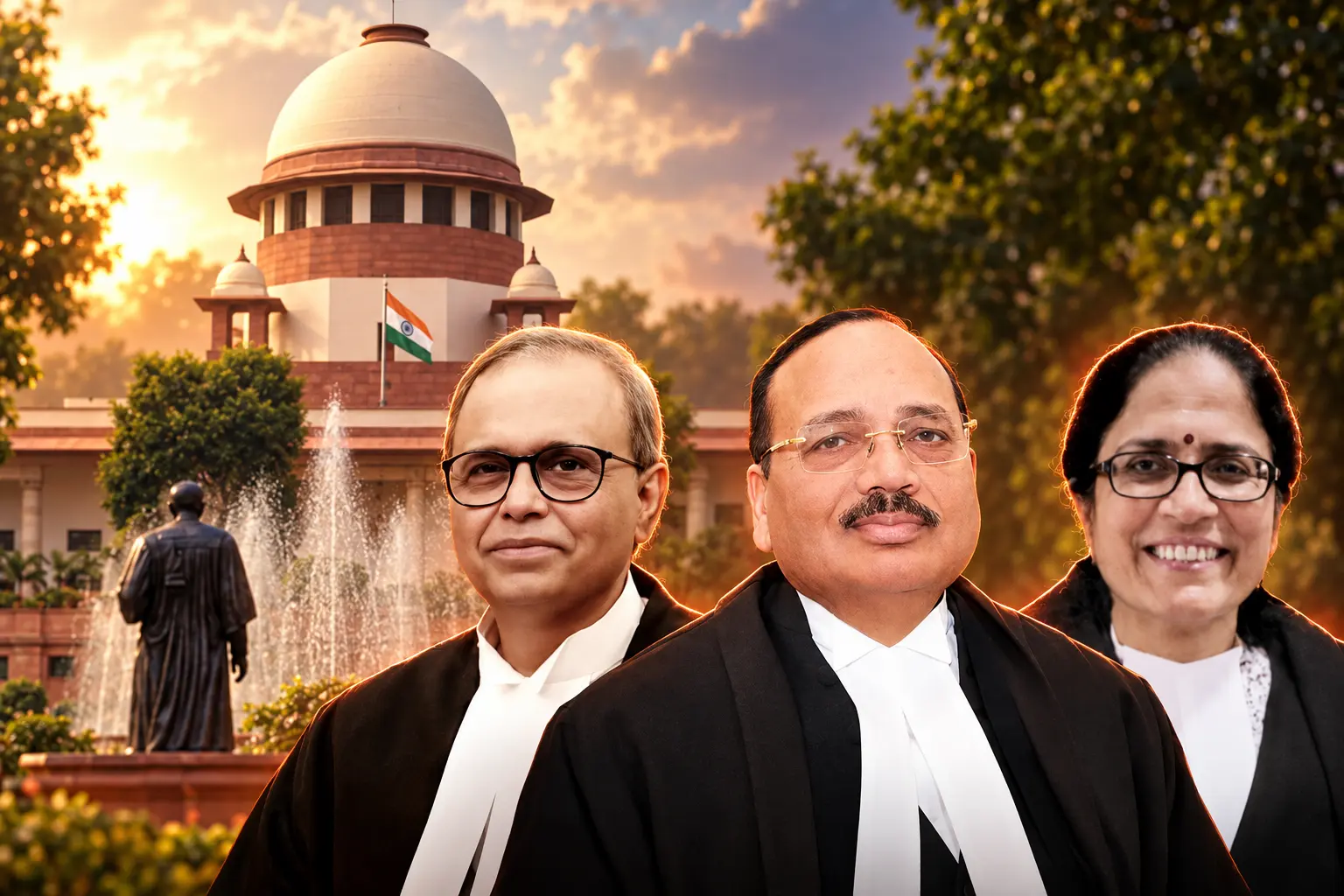
The Supreme Court on September 15 asked the Centre to keep retiring tribunal members in place for about a month. Chief Justice Surya Kant told Attorney General R. Venkataramani the benches should not go dark while new appointments catch up. The ask came a week after the government had already found 248 sitting members eligible for a statutory hold under the Tribunals Reforms Act, 2026.
Venkataramani said the appointment process was in motion and that interim applications for extra time should stop. The Chief Justice listed the Madras Bar Association matter for September 16 and wanted a hard answer on a short ad hoc bridge.
Three NGT Members Already Sit Past the Age Cap
The leftover problem is not a mass vacancy. It is a small group the new statute will not carry. On September 8, the same three-judge bench (Kant, Joymalya Bagchi and V. Mohana) kept two judicial members and one expert member of the National Green Tribunal in office until replacements arrive, even though they had crossed the age limit that blocks a further term.
The NGT Bar Association had warned that zonal benches could stall. The NGT Act does not allow a single-member bench, so losing one judicial member can shut a zone. The Western Zone bench at Pune was in that queue. So was a judicial seat and an expert seat at the principal bench in Delhi.
An NGT roster listed September 8 tenures for Justice Pushpa Sathyanarayana (appointed March 30, 2022), Justice Arun Kumar Tyagi (appointed March 25, 2022) and expert member Dr. A. Senthil Vel (appointed January 15, 2022). That roster, current through March 31, 2026, is the public list of who was already timed to that date. The September 8 order itself did not print the three names.
WHAT WE KNOW
- The NGT hold: Two judicial members and one expert member stay until fresh appointments, despite the age embargo.
- The statutory class: 248 members qualified under Section 24 of the 2026 Act, with 229 extension orders already out on September 8 and 19 more that day.
- The next listing: Venkataramani returns on September 16 with instructions on a short ad hoc bridge for other retiring officers.
WHAT IS UNCONFIRMED
- The month itself: The Court has asked the Centre to decide on about a month of extra time; it has not granted that month for every tribunal.
- The DRAT seat: The DRAT Calcutta Bar Association flagged the Presiding Member’s coming retirement; no public order has named a successor or a hold date.
- The Commission: The Act names a National Tribunals Commission, but that body starts only on a date the Centre notifies in the Gazette.
Saurabh Kulkarni, president of the NGT Bar Association (Western Zone), said his group had moved the Court earlier in 2026 because the Pune judicial member’s term was due to end in April and no fresh process was in sight. A February 11 stopgap had already kept three NGT judicial members, including the Pune seat, in office. The September 8 order was the next patch on the same bench.
Section 24 Picked 248 People and Stopped
Parliament’s 2026 Act is the text Venkataramani now points to when he says the file should close. It repeals the Tribunals Reforms Act, 2021. It sets a five-year term and a National Tribunals Commission, with chairpersons capped at 70 and members at 67. The Centre must appoint within three months of a search committee’s recommendation, and the committee sends one name plus a waiting list, not a two-name panel.
The hold for people already in the chair sits in Section 24. Anyone appointed under Chapter II of the 2021 Act on or after April 4, 2021, and still in office when the 2026 Act began, shall continue for five years or until the age cap, whichever comes first, and may be considered for reappointment. That is the track the Attorney General said covers 248 people. It is also why three NGT members dropped off it: they had already hit the age wall.
TWO TRACKS AFTER SEPTEMBER 8
| Track | Who | Legal basis | End point |
|---|---|---|---|
| Statutory hold | 248 members across tribunals | Section 24 of the 2026 Act | Five years from appointment, or age 70 (chair) / 67 (member) |
| Court hold | Two NGT judicial members and one expert member | September 8 interim order | Until fresh appointments, despite the age embargo |
| Pending ask | Other retiring officers, including DRAT Calcutta | Ad hoc bridge, not yet granted | About a month, if the Centre agrees on September 16 |
On September 8 the Court told the Centre to issue formal extension orders for the 248, subject to those two conditions. It also said the Union should take up fresh appointments under the 2026 Act without delay, and that the same logic should apply in other tribunals where the Centre has to fill seats. Seven days later, a new interim application was still needed.
The May Order Bought Time Until September 8
The date on the calendar was not an accident. It was the end of a Court-managed pause that began while the Centre wrote a new statute.
THE STOPGAP CALENDAR
- November 19, 2025: A bench of then Chief Justice B.R. Gavai and Justice K.V. Chandran strikes down provisions of the Tribunals Reforms Act, 2021 as an impermissible re-enactment of rules the Court had already voided, and gives the Union four months to set up a National Tribunals Commission.
- February 11, 2026: The Court lets three NGT judicial members continue as a stopgap after the Western Zone bar warned the Pune bench would stall.
- March 9, 2026: In the long-running Madras Bar Association docket, the Court records government principles under which chairpersons, presidents and members whose terms fall between March 9 and September 8 have their tenure extended until September 8, or until the maximum age in the law under which they were appointed, whichever is earlier.
- May 19, 2026: A bench of Chief Justice Kant, Justice Bagchi and Justice Vipul M. Pancholi extends all tribunal heads and members due to leave before September 8, with Venkataramani’s consent. The bench notes a selection committee is due to meet on September 8. The Attorney General says a new bill is meant for the monsoon session.
- August 10 to 13, 2026: Lok Sabha passes the Tribunals Reforms Bill on August 10, Rajya Sabha on August 11. President Droupadi Murmu gives assent on August 13. It becomes Act No. 17 of 2026.
- August 25, 2026: A Ministry of Law and Justice notification, F. No. J-18/57/2026-JUDICIAL, brings all provisions into force.
- September 8, 2026: The Centre reports 248 eligible members. The Court keeps the three age-barred NGT members in place. Venkataramani says a fresh selection should take about three months.
- September 15, 2026: The DRAT Calcutta bar’s application lands. The Chief Justice asks for about a month more of ad hoc cover and lists the case for September 16.
Four months from the November 19, 2025 judgment ran to March 19, 2026. The Act that names the Commission received assent in August. The September 8 committee date that justified the May hold arrived, and the Court was still writing personnel orders.
Why the Chief Justice Will Not Close the File
Venkataramani’s pitch on September 15 was that the statute now does the work. “Now that everything is set in motion. These IAs (interim applications) may not be entertained any longer. A month or two should not make a difference,” he said. He asked the bench not to keep feeding short extensions once the 2026 Act had a process.
The Chief Justice treated that gap as the next round of cases, not a rounding error. He wanted a decision from the government, not another petition from a local bar when a presiding officer retires.
Can you make a decision at your end that you will increase ad hoc arrangement for a month or so
Chief Justice Surya Kant, Supreme Court of India, September 15, 2026
He also wanted a promise on actual filling of posts, because disposing of the pending petitions without that promise just restarts the docket. That is the second cost of a thin bridge: each time the Court closes the file, a fresh interim application appears the day a bench goes short.
You need to give us a definite response that the posts will be filled. The moment we dispose of these petitions, and a fresh appointment is not made, another round will start.
Chief Justice Surya Kant, Supreme Court of India, September 15, 2026
“We don’t want tribunals to become defunct. Current arrangement may continue on ad hoc,” he said, and put the matter over to September 16 so the Attorney General could take instructions. He also said any extra time would be a stopgap with no vested right, tied to the moment a new appointee walks in.
Put the two clocks next to each other. On September 8 the government’s own law officer put a fresh selection at about three months. On September 15 he said a month or two should not matter. The Chief Justice is asking for the shorter patch plus a date by which the seats are actually filled. Without both, the Madras Bar Association file does not end. It repeats.
Pune’s Green Bench Cannot Sit With One Member
The people who feel a dark bench are not the retiring members. They are the parties already in the queue. NGT’s own listing showed 1,747 pending matters at the Pune bench as of July 31, 2026, the heaviest load among the four zonal benches. That zone covers Maharashtra, Gujarat, Goa, Daman and Diu, and Dadra and Nagar Haveli. If the judicial member leaves and no pair remains, those cases do not move to a one-judge list. They wait.
Debt recovery is in the same shape. Counsel on September 15 mentioned an application by the DRAT Calcutta Bar Association over the coming retirement of that bench’s Presiding Member. DRAT sits on appeals from debt recovery tribunals. A dark appellate chair does not pause interest or security enforcement. It parks the appeal.
WHO GOES DARK WITHOUT A HOLD
- NGT Western Zone, Pune: 1,747 pending matters as of July 31, 2026, and a two-member rule that turns one retirement into a closed court.
- NGT principal bench, Delhi: A judicial seat and an expert seat were among the three the Court held on September 8 so daily work did not stop.
- NGT Southern Zone: The NGT bar told the Court that more than one zonal bench was at risk once extended terms ran out on September 8.
- DRAT Calcutta: The local bar has already filed for urgent listing over a Presiding Member due to retire, the flashpoint that brought the case back on September 15.
A flattened “tribunal vacancies” headline hides that split. Most sitting members are no longer the emergency. The 248 are on a five-year clock unless they hit 70 or 67. The live fight is the age-barred leftover, and any other bench whose parent statute will not let one person sit alone while the Centre’s three-month selection runs.
The Act’s Appointment Engine Is Not Yet a Sitting Commission
The 2026 Act was written, in the bill’s own brief, in line with the Court’s earlier directions. It dropped the 2021 Act’s four-year term and the bar on appointing anyone under 50. It replaced a two-name panel with one recommended name and a waiting list. It told the Centre to appoint within three months, not “preferably” within three months. Those are the repairs the November 2025 judgment demanded on tenure and selection.
The engine for doing that work is the National Tribunals Commission: a chairperson (a former Supreme Court judge or High Court chief justice), two judicial members and two technical members, with a search-cum-selection committee under it. Section 3 of the Act is plain. The Commission exists from such date as the Central Government may, by notification in the Official Gazette, appoint. Commencement of the Act on August 25 did not, by itself, put five people in those chairs.
Venkataramani told the bench the new law “provides for the appointment process” and that the process is “set in motion.” He did not tell the Court the Commission is sitting. Until that gazette arrives, the selection machinery the AG is using to shut the interim applications is still a statute on paper plus whatever older committees the government is running in the meantime. That is why a one-month patch is still on the table 21 days after the Act came into force.
The Attorney General is due back before the same bench on September 16 with the Centre’s answer on that patch.
Disclaimer: This article is news reporting on court proceedings and a statute. It is for information only and is not legal advice, nor a view on any pending petition, appointment, or tenure. Readers with a matter before a tribunal, or a question about a member’s term, should consult a qualified advocate. Figures, seats and hearing dates reflect the public record as of the sources cited and can change with the next order.

IT Stocks Climb as Sensex Falls After RBI Hike

Anthropic Prices Claude Haiku 5.5 as a Subagent Worker

Nifty Falls While India Pays $121 a Barrel

OpenAI’s 722 Math Papers Leave the Checking to Humans

Flipkart Recruits Sellers and Riders for Big Billion Days

Consumer Sentiment Falls to 51.7 as Future Outlook Darkens

Take-Two Subpoenas Microsoft While GTA 6 Preorders Soar

Pluto’s Heart Glacier Still Pushes Liquid Nitrogen Upward

Abbott Pays $670 Million to Exit a Missouri Food Verdict

Netflix Weighs Hosting Peacock and Fox One in Its App
-
 BUSINESS2 months ago
Consumer Sentiment Falls to 51.7 as Future Outlook Darkens
-
 GAMING2 months ago
Take-Two Subpoenas Microsoft While GTA 6 Preorders Soar
-
 NEWS2 months ago
Pluto’s Heart Glacier Still Pushes Liquid Nitrogen Upward
-
 BUSINESS2 months ago
Abbott Pays $670 Million to Exit a Missouri Food Verdict
-
 ENTERTAINMENT2 months ago
Netflix Weighs Hosting Peacock and Fox One in Its App
-

 NEWS2 months ago
FDA Clears Rasonque and Widens Who Can Take It
-

 NEWS2 months ago
The Extra Heat Month Hits Children Where Care Is Thinnest
-

 NEWS2 months ago
UMMC Will Rebuild 30-Year-Old Cancer Labs With $2.4 Million