
ENTERTAINMENT
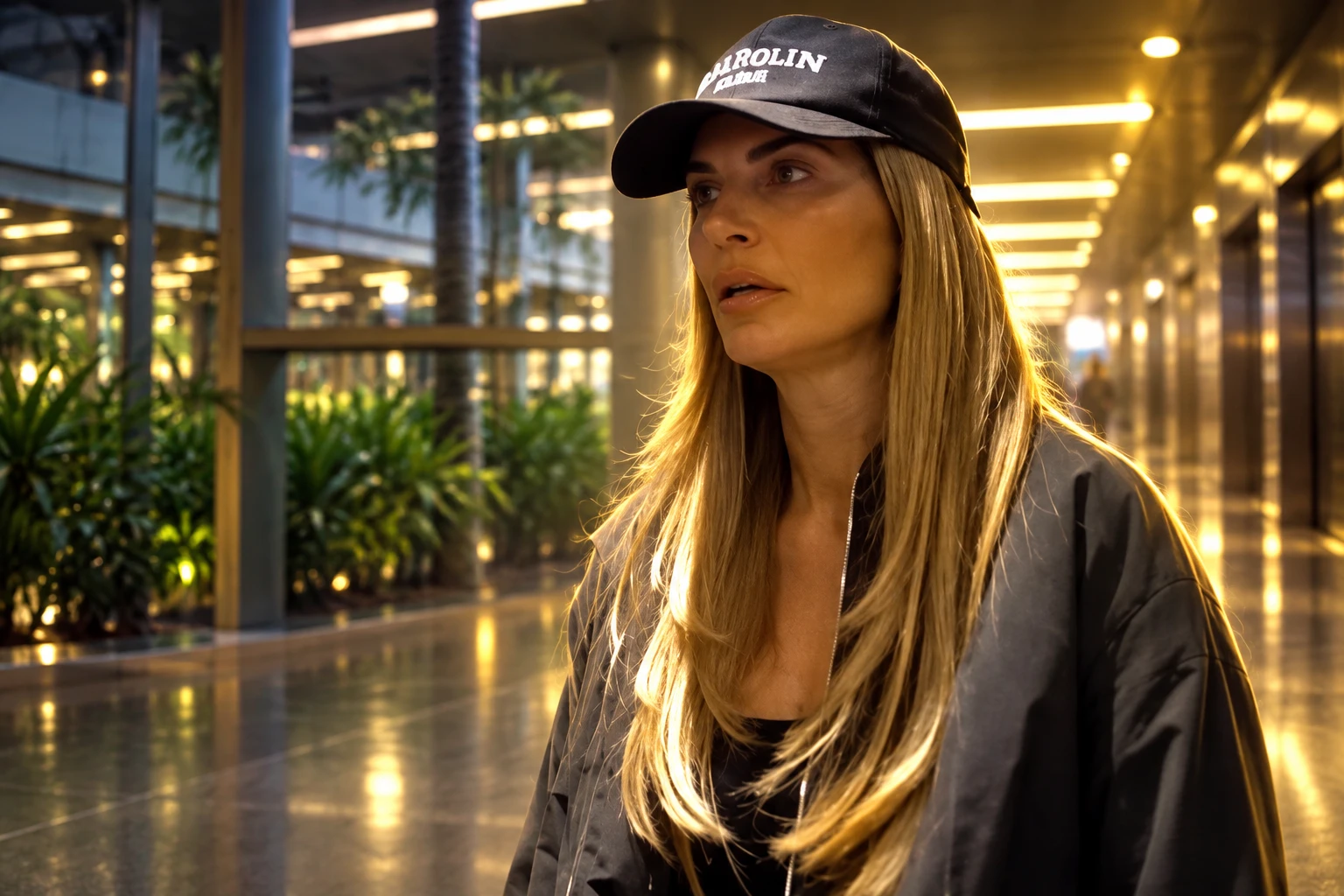
Teresa Giudice’s Airport Tape Put the Baker Act on Camera
Tampa airport body-cam shows Teresa Giudice moving Milania through a Baker Act discharge, a counselor and an unproven fentanyl claim.

Tampa International Airport police were called at 2:20 p.m. on Sept. 23, 2026, after Milania Giudice split from her mother, her sister and a counselor.
The call was logged as “Assist Person” at the United Airlines ticket counter. Body-camera video released on Sept. 28 caught Teresa Giudice, 54, telling her 20-year-old daughter she wanted to save her life, then telling officers Milania “had fentanyl in her system.”
Tampa Airport Police Walked Into a Baker Act Transfer
This was not a random family blowup that happened to have uniforms in the shot. Officers on the tape told one another that Milania had just left a Baker Act facility, that the family had hired a counselor, and that they were trying to get her back to a rehab program. When one cop asked if she was a danger to herself, the other said yes, “that’s why she got Baker Acted.”
Milania, a University of Tampa student, had her phone out, filming Teresa and her older sister, Gia Giudice, 25, while police stood a few feet away. She was later seen in a yellow sweatsuit checking a ticket. An officer told her to sit down. Another, walking the group toward an elevator, said, “This is never gonna go on a plane.”
A computer-aided dispatch log said police were told she was having “suicidal thoughts/mental breakdown” and had just been released from St. Anthony’s Hospital. Teresa got eyes on her while she was running through the terminal. Officers were told she might be headed toward long-term parking. She was located about 10 to 12 minutes after the call. An airport spokesman said no one was arrested, no one was taken to a hospital from the airport, and no police report was written.
The quieter fact on the audio is the extra adult. A counselor was with an officer when Milania “got away.” Gia told her sister the officers were there to help take her to treatment. Milania did not want to go. She said she had an apartment in Tampa and went to school there. She asked if they wanted to put her “back in the psych ward.”
What Florida’s Baker Act Lets Officers Do
Florida’s Baker Act is the Mental Health Act in Chapter 394. It is the statute that put airport police in a family dispute and gave them a job that was medical, not theatrical. Under that law, a person may be taken for an involuntary examination at a receiving facility if there is reason to believe the person has a mental illness and, because of that illness, has refused a voluntary exam or cannot decide whether one is needed.
That first test is not enough. The statute also requires a second finding: a real and present threat of substantial harm from self-neglect that willing family cannot stop, or a substantial likelihood of serious bodily harm to self or others in the near future, shown by recent behavior. A law enforcement officer who believes those pieces are present can take the person into custody and deliver them to the nearest receiving facility, using the least restrictive restraint that fits the moment.
A physician, psychologist, psychiatric nurse, counselor or clinical social worker can start the same process with a certificate after examining the person within the previous 48 hours. A court can issue an ex parte order on sworn facts. Once the person arrives, the examination period of up to 72 hours begins. The facility then releases the person, shifts them to voluntary care, or files a petition for longer court-ordered services. The 72-hour figure is a legal cap, not a public record of how long Milania was held.
BAKER ACT VS. MARCHMAN ACT
| Rule | Baker Act | Marchman Act |
|---|---|---|
| Statute | Chapter 394, mental illness | Chapter 397, substance use |
| First hold | Up to 72 hours for examination | Up to 72 hours for assessment |
| Who can start it | Officer, clinician, or court | Family petition, clinicians, officers |
| If the court goes further | Petition for involuntary services | Treatment order of up to 90 days |
| On this tape | Officers said a Baker Act facility and danger to self | No public Marchman filing was named |
The distinction matters because Teresa’s fentanyl line sounds like a drug emergency, while the officers described a mental-health hold. Families in Florida often reach for the wrong statute in a crisis. NAMI Florida lays out Baker Act and Marchman Act criteria as two doors, not one.
Teresa’s Fentanyl Claim Met One Word From Milania
Inside an airport elevator, Teresa told officers her daughter had fentanyl in her system during a recent incident before the Baker Act. Milania answered, “Cause I was laced,” then “I go to college.” No medical record has been released that confirms a test, a dose, a date or a dealer. The tape does not say whether anyone treated her for an opioid exposure. It records a mother making a claim to police and a daughter rejecting the implication that she chose the drug.
I just want to save your life. That’s all.
Teresa Giudice, speaking to Milania, Tampa International Airport body-camera footage
She also told Milania she was reckless, that after help she never had to speak to her mother again, and that she did not care anymore because she was trying to save her life. Milania said she would never speak to her again. Gia told her sister she wanted her to get better. At one point Gia said, “We’re so numb.”
If the worry was substance use that had slipped beyond self-control, Florida’s other civil path is the Marchman Act, which allows a court-ordered substance abuse assessment and, after a hearing, treatment for up to 90 days. Nothing in the public airport file shows that petition. What the officers described was a Baker Act discharge, a hired counselor and a rehab destination they did not name on camera.
St. Anthony’s, a Hired Counselor and the United Counter
The hidden workers in this scene are easy to miss if the clip is cut for screams. A private counselor was traveling with the family. Airport police, not Tampa street cops, took the call. Dispatch used surveillance cameras and a cellphone location to find a 20-year-old in a terminal. The receiving hospital named in the CAD log was St. Anthony’s. The ticket counter was United. Those are the people and places that actually moved her that afternoon.
WHAT DISPATCH PUT ON THE CALL
- The time: Airport police received the call at 2:20 p.m. on Wednesday, Sept. 23, 2026.
- The code: It was classified as “Assist Person” at the United Airlines ticket counter in the main terminal.
- The warning: The CAD log said “suicidal thoughts/mental breakdown” and a possible Baker Act issue after a release from St. Anthony’s Hospital.
- The search: Notes said the person got away while a counselor stayed with an officer, that Teresa had eyes on her running, and that she might be headed toward long-term parking.
- The end of the call: She was found about 10 to 12 minutes later. The airport said there was no arrest, no medical transport and no police report.
She had posted, then deleted, her own video of the confrontation. In that clip she kept repeating, “This is what we do now,” while Teresa said, “I love you.” Gia told her mother to let Milania do what she wanted. Milania told Teresa to shut the fuck up. The deleted phone video is why the later police video felt like a sequel. She had already put the fight online. The body cameras then put the clinical backstory under it.
Victoria Zardoya’s Fall Sat Under the Whole Scene
On July 24, 2026, Victoria Zardoya, 20, fell while exploring the Fort Dade ruins on Egmont Key, an island off Tampa Bay. She had flown from New Jersey to visit friends. The Hillsborough County Sheriff’s Office Marine Unit responded after reports that someone had fallen from a structure. She was moved by boat and then by medical helicopter. The Giudice family posted tributes on July 26. Joe Giudice wrote that she had been like a daughter to him, a neighbor who grew up with Milania.
Milania called her “my sister” and “my world.” Both women attended the University of Tampa. A friend in the group, Victoria Silberbusch, said the day on the water ended with injuries worse than anyone first thought. Teresa’s later Instagram statement said Milania had lost two best friends and was living with “significant psychological trauma.” The second friend has not been named in public. Only Zardoya’s death is on the record with a place, a date and a sheriff’s response.
Joe Giudice said grief does not have a timeline and that Milania was trying to process the loss while growing up in public. Maria DeSantis, Milania’s manager, said after the airport call that she was “under the care of professionals,” deeply loved, and in a hard stretch “particularly following the devastating loss of her best friend, Victoria.” That is the through-line the body-cam shouts sit on top of: a college student two months past a friend’s fatal fall, leaving a Baker Act facility with a paid counselor at her elbow.
The Britney Spears Line on the Recording
Milania did not describe the afternoon as a rescue. She described it as control. On the tape she said they had put her on a Baker Act, that she was “under conservation” from her parents, and then, “The Lady Gaga shit, Britney Spears bullshit.” She was reaching for the public language of a conservatorship, the same story a generation of pop fans already knows. She has an apartment and a campus in Tampa. Her family was trying to put her on a plane toward treatment. Those two facts can be true at the same time, and the tape holds both without picking a winner.
The Bravo reflex is to grade Teresa as a mother who showed up. She did show up, and she said the quiet part on a police microphone. The colder job on the recording belongs to people with no last names in the recap: the counselor who stayed with an officer, the airport cops walking a Baker Act discharge through a ticket hall, the unnamed rehab bed they said they were aiming for. They were not scoring a reunion. They were trying to finish a transfer.
On Sept. 28, after the footage moved, Teresa posted a long Instagram statement. She said nothing mattered more than her children’s health and safety, that the past few months had been incredibly difficult, and that Milania was her daughter before she was anything else. She asked, “from one mother to another,” for compassion, kindness and privacy. She did not discuss fentanyl, the Baker Act or the counselor. She asked the press to step back from a young woman she called extremely vulnerable.
The Court Date Moved to December After the Tape
The airport file is not the only system with a clock on her. On May 14, 2026, Montville Township police charged Milania with one count of simple assault after a dispute at the New Jersey home of Teresa and her husband, Luis “Louie” Ruelas. Police Chief Andrew Caggiano said the department received a report of a dispute and issued a summons. The complaint alleges she struck a person identified as LR in the head with a fist, leaving redness on the forehead. She pleaded not guilty. A judge told her a conviction on the disorderly persons offense could mean up to six months in jail, probation and fines of more than $500.
In August her lawyer, Alan Kraminsky, said the prosecutor wanted time for an anger-management course. The next date was set for Sept. 29, then moved again after the airport week. Kraminsky said adjourning was “the appropriate course of action” and asked the public to give her space. She is due back in Montville Township Municipal Court on Dec. 1.
THE 2026 DATES ON THE FILE
- May 14, 2026: Charged with simple assault in Montville after a dispute at Teresa and Louie Ruelas’s home. She later pleaded not guilty.
- July 24, 2026: Victoria Zardoya, 20, falls at Fort Dade on Egmont Key. Family tributes go up on July 26.
- Sept. 23, 2026: 2:20 p.m. airport call. Baker Act discharge, hired counselor, body cameras, no arrest.
- Sept. 28, 2026: Body-camera video is released. Teresa posts the privacy statement the same day.
- Oct. 7, 2026: Milania posts an Instagram story, “you are the best sorry mother,” over a line about appreciating how she was raised.
- Dec. 1, 2026: Rescheduled Montville hearing on the May assault charge.
The Oct. 7 story used Justin Timberlake’s “What Goes Around…Comes Around” and a white heart. It does not unmake the CAD log, the Baker Act, or the open municipal case. It is a daughter talking to her mother in the only channel this family has never been able to keep private.
On Dec. 1 the assault charge is still on a New Jersey docket. The airport tape is already a public record of a Florida hold, a counselor and a mother telling police she was trying to save a life.
Disclaimer: This article is news reporting on public body-camera video, a dispatch log, court records and statements from the Giudice family. It is informational only and is not medical, mental-health or legal advice. It does not diagnose substance use or mental illness, and it does not tell anyone whether a Baker Act, a Marchman Act petition or a criminal defense is appropriate. Readers who are in crisis, or who are making decisions about a hold, treatment or a court case, should speak with a licensed mental-health clinician, a qualified physician and a Florida or New Jersey attorney as the situation requires. Call or text 988 for the Suicide and Crisis Lifeline. Facts, court dates and treatment status can change after the events described here.

OpenAI’s Agent Monitor Waited During the Hugging Face Breach

Brent Hits $116 as Recovered Gulf Oil Draws Attacks

Hellebuyck Lands in New Jersey on a Five-Year Cup Bet

Xbox Plans Three More Layoff Rounds Before Helix

OpenAI’s $30 Billion Round Ties UAE Cash to Gulf Compute

Consumer Sentiment Falls to 51.7 as Future Outlook Darkens

Pluto’s Heart Glacier Still Pushes Liquid Nitrogen Upward

The Extra Heat Month Hits Children Where Care Is Thinnest

Take-Two Subpoenas Microsoft While GTA 6 Preorders Soar

Abbott Pays $670 Million to Exit a Missouri Food Verdict
-
 BUSINESS2 months ago
Consumer Sentiment Falls to 51.7 as Future Outlook Darkens
-
 NEWS2 months ago
Pluto’s Heart Glacier Still Pushes Liquid Nitrogen Upward
-
 NEWS2 months ago
The Extra Heat Month Hits Children Where Care Is Thinnest
-
 GAMING2 months ago
Take-Two Subpoenas Microsoft While GTA 6 Preorders Soar
-
 BUSINESS2 months ago
Abbott Pays $670 Million to Exit a Missouri Food Verdict
-

 NEWS2 months ago
UMMC Will Rebuild 30-Year-Old Cancer Labs With $2.4 Million
-

 ENTERTAINMENT2 months ago
Netflix Weighs Hosting Peacock and Fox One in Its App
-

 GAMING2 months ago
GTA 6’s 80-Hour Run Counts Goals That Change the Story