
BUSINESS
Texas Sues Nestlé Over Gerber’s Old Heavy-Metal Tests
Texas sued Nestlé and Gerber over 2017-2019 baby food metal tests that Congress published in 2021, after Plum signed stricter limits.

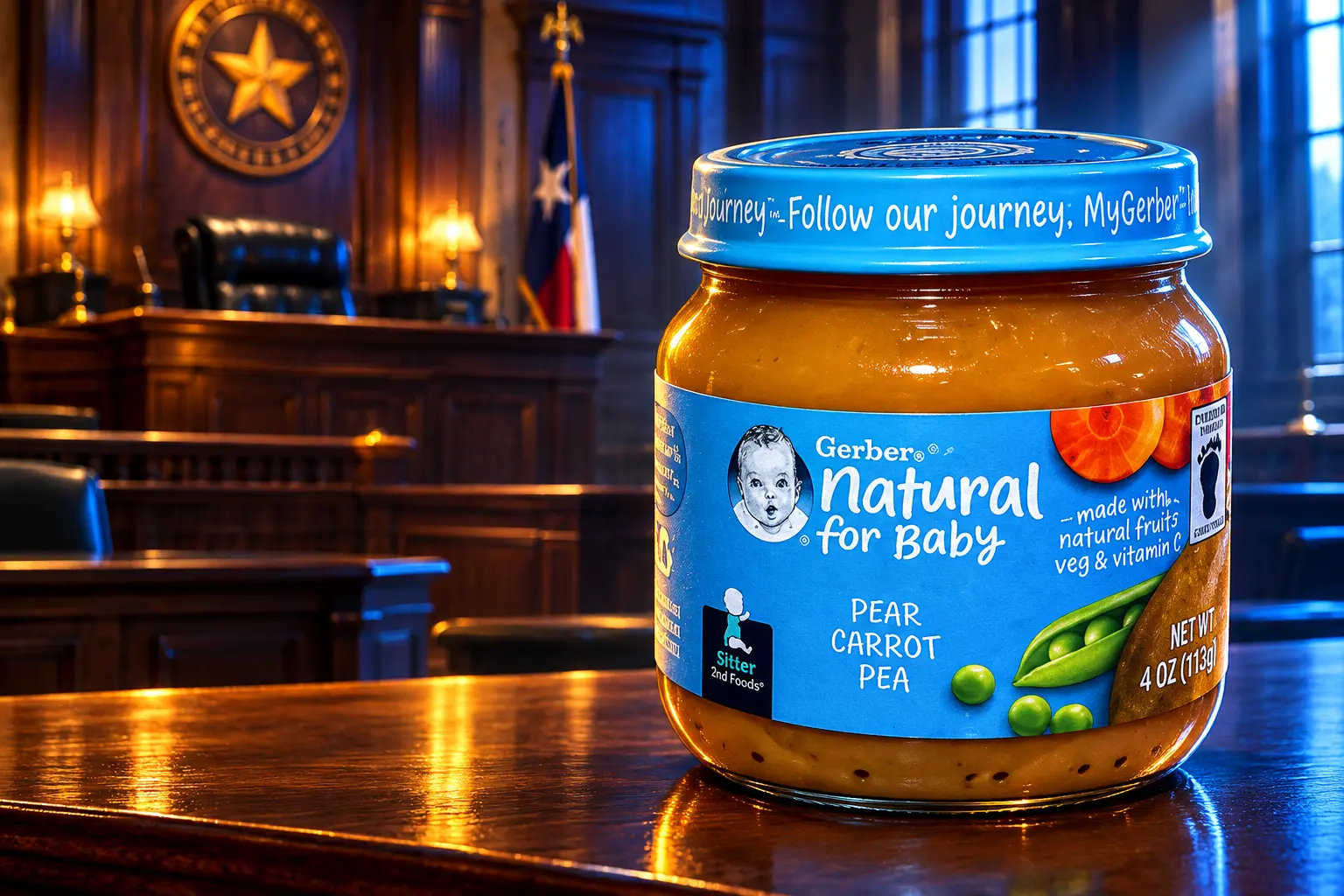
Texas sued Nestlé USA and Gerber on October 14 over baby food the state says carried dangerous arsenic and lead. The petition, filed October 9 in Collin County’s 494th District Court as case 494-08253-2026, treats Gerber’s own 2017-2019 ingredient tests as proof the brand deceived parents.
Those figures first went public in a February 2021 House subcommittee staff report. A Nestlé spokesperson said the allegations are without merit and that heavy metals occur in soil and water as crops grow.
Texas Turns a 2021 File Into a Deception Suit
Attorney General Ken Paxton sued Gerber Products Company and Nestlé USA under the Texas Deceptive Trade Practices Act. The claim is not a new lab sweep of store shelves. It is that Gerber sold jars as safe, rigorously tested, and recommended by pediatricians while its own tests showed high arsenic, lead and cadmium.
Gerber promised parents its food was safe and rigorously tested. Its own tests showed toxic metals in the food. When a company makes promises about what parents feed their babies, I will hold it accountable to ensure those promises are kept.
Ken Paxton, Attorney General of Texas, October 14, 2026 press release
Paxton’s office said the metals are neurotoxins, that federal agencies rank arsenic, lead and mercury first, second and third among substances that most threaten human health, and that no safe level of lead or inorganic arsenic has been set for a baby. The case asks a Collin County judge to treat the old test file, and the safety language still used on packs, as a Texas consumer-protection problem.
He announced the filing on his official account the same day.
NEW LAWSUIT: I sued major baby food companies Gerber and Nestlé for selling baby food containing dangerous levels of arsenic and lead. pic.twitter.com/jMYAXsLGnv
— Attorney General Ken Paxton (@KenPaxtonTX) October 14, 2026
The announcement landed while Paxton is running for the U.S. Senate. The first public fight was over his motives. The petition itself is built on something narrower: whether 2017-2019 test sheets, a 2021 Alaska cereal check, and front-of-pack safety claims add up to deception under Texas law.
67 Rice Flour Lots and the Old Test Sheet
From 2017 through 2019, Gerber used 67 batches of rice flour that had tested over 90 ppb inorganic arsenic, according to the 2021 House subcommittee staff report, which Paxton’s petition now recites. The same report said conventional sweet potatoes tested as high as 48 ppb lead and that some carrot batches reached 87 ppb cadmium. It also said Gerber rarely tested for mercury and, for most of that stretch, tested selected ingredients rather than the finished food a baby eats.
Paxton’s office repeats those findings as multiples of bottled-water limits: more than nine times the arsenic allowed in bottled water, up to 17 times the cadmium cap, and nearly 10 times the lead cap. The House report set those water caps at 10 ppb inorganic arsenic and 5 ppb each for lead and cadmium, which is the math behind the multiples.
GERBER’S 2017-2019 TESTS AGAINST TWO YARDSTICKS
| Ingredient and metal | Peak level cited | Bottled-water cap | FDA baby-food action level |
|---|---|---|---|
| Rice flour, inorganic arsenic | Over 90 ppb | 10 ppb | 100 ppb for infant rice cereal |
| Sweet potatoes, lead | 48 ppb | 5 ppb | 20 ppb for single-ingredient root vegetables |
| Carrots, cadmium | 87 ppb | 5 ppb | None finalized |
The rice-flour lots sit under the 100 ppb inorganic arsenic limit FDA uses for finished infant rice cereal, even as they sit more than nine times the bottled-water arsenic cap. The 48 ppb lead in sweet potatoes is 2.4 times the 20 ppb action level FDA later set for single-ingredient root vegetables, and nearly 10 times the 5 ppb bottled-water lead cap. Cadmium has no FDA baby-food action level at all, so the 87 ppb carrot figure is being scored against drinking water.
Why Texas Uses the Bottled Water Yardstick
Texas is not, in this filing, walking into federal court to enforce FDA rules as if they were statutes. It is telling a state judge that safety claims on a Gerber jar were false because the company’s own numbers were high when set beside a stricter, older benchmark parents already know: drinking water.
That move fills a hole FDA has left open. On January 6, 2025, the agency issued final guidance with a 10 ppb lead cap for most baby purees, yogurts, puddings, mixtures and single-ingredient meats, and 20 ppb for dry infant cereals and single-ingredient root vegetables. Those action levels are the point at which FDA may treat a food as adulterated. They are not binding rules, and the agency said it would weigh them with other facts before any enforcement case.
FDA also told parents not to throw out packaged baby food, and to feed a mix of vegetables, fruits, grains, dairy and protein so a child is less likely to take the same metal from the same food again and again. The guidance does not cover infant formula, drinks, or snacks such as puffs and teething biscuits. Inorganic arsenic in infant rice cereal is separately capped at 100 ppb. Cadmium, mercury and arsenic in other baby foods still lack final FDA action levels.
Measuring 2017-2019 rice flour against bottled water, rather than against the 100 ppb cereal cap, is how Texas makes a number that sits near a federal baby-food line look like a ninefold breach. Measuring carrots against a water cadmium cap is how it scores a metal FDA has not capped in jars. The legal bet is that a jury, or a judge on an injunction, will hear “nine times bottled water” before it hears “below the cereal action level.”
The Deal Plum Signed and Gerber Refused
Paxton opened the industry probe in August 2025 with civil investigative demands to Gerber and Plum Organics. Plum cooperated, told the state every lot is tested for lead, arsenic, cadmium and mercury before release, and on September 29, 2026, entered a first-of-its-kind testing agreement with Plum that the attorney general is now holding up as the standard other makers should meet.
Paxton’s office did not announce a fine in that deal. It announced limits, a ship-hold rule, and public lot results for Plum foods sold in Texas, searchable by UPC, lot number or “best by” date, with a QR code on packs covered by FDA’s lead guidance.
LIMITS PLUM ACCEPTED IN THE TEXAS DEAL
- Lead: Follow FDA’s January 2025 action levels for processed food intended for babies and young children.
- Cadmium: 40 ppb, taken from current European Union guidance because FDA has no baby-food action level.
- Inorganic arsenic: 20 ppb, also from EU guidance, far tighter than FDA’s 100 ppb rice-cereal cap.
- Mercury: 10 ppb as an internal Plum standard for pouches, with no FDA or EU baby-food cap to copy.
- Hold rule: Do not ship a lot if pre-release testing shows it exceeds the applicable limit.
Gerber did not sign that package. Two weeks later it was in Collin County as a defendant, with Nestlé USA beside it. The contrast is the state’s leverage: one brand agreed to EU cadmium and arsenic numbers Texas cannot get from FDA, and the market leader is being sued for selling safety language the state says its 2017-2019 tests already disproved.
Beech-Nut Pulled Its Rice Cereal After Alaska Tests
The petition also reaches past the 2017-2019 ingredient sheets to finished cereal. In 2021, Alaska’s state laboratory, in FDA-funded testing, found two Gerber rice cereal samples over the 100 ppb inorganic arsenic limit. A September 29, 2021 House subcommittee follow-up said Gerber rice cereal tested up to 116 ppb inorganic arsenic, with another lot at 101 ppb, and that Beech-Nut cereal tested as high as 125 ppb.
Beech-Nut recalled some lots and later stopped selling infant rice cereal. Paxton’s office says Gerber issued no heavy-metal recall or warning and kept selling, even though it has recalled products for plastic and choking hazards. Gerber said at the time that FDA retested a sample, could not confirm Alaska’s result, and told the company no action was needed.
FROM INTERNAL TESTS TO THE COLLIN COUNTY PETITION
- 2017-2019: Gerber uses 67 rice-flour lots over 90 ppb inorganic arsenic and records peak lead of 48 ppb in sweet potatoes and cadmium of 87 ppb in carrots, per the later House file.
- February 4, 2021: House Subcommittee on Economic and Consumer Policy staff report publishes those Gerber figures alongside results from other major brands.
- May 2021: Alaska reports Gerber rice cereal at 101 ppb and 116 ppb inorganic arsenic; Beech-Nut later recalls and exits infant rice cereal, Gerber does not.
- January 6, 2025: FDA finalizes lead action levels for processed baby foods and still has no final cadmium, mercury, or broad arsenic caps for jars.
- January 1, 2025: Gerber begins QR-code test posts for products made after this date.
- August 2025: Texas issues civil investigative demands to Gerber and Plum Organics.
- September 29, 2026: Plum signs the testing-and-disclosure deal; Gerber does not.
- October 9, 2026: Texas files the DTPA petition in Collin County; Paxton announces it on October 14.
Five years sit between the House report and the Texas petition. The test sheet did not get newer. The legal wrapper did.
How Gerber Answers the Deception Charge
Gerber’s line is that the metals are in the dirt, that they cannot be wiped out of the food supply, and that its foods meet FDA heavy-metal limits. A spokesperson said every product is screened for more than 500 toxins and contaminants, that safety norms meet or often exceed U.S. benchmarks, and that the company has long tried to cut the metals through sourcing, supplier rules, testing and quality controls.
At Gerber, nothing is more important than the safety and quality of our baby food, and it remains undisputed that Gerber products meet FDA limits for heavy metals.
Gerber spokesperson, in a statement
That defense talks about products on sale now. The petition talks about lots from 2017 through 2019 and about cereal samples from 2021. Both can be true in the same paragraph if the brand tightened controls after the House report and if current jars sit under the 2025 lead guidance. Texas says the front of the pack still promises a kind of safety the old tests, and the missing cadmium cap, do not support.
Gerber now puts test results behind a QR code. Paxton’s office says that applies to products manufactured after January 1, 2025. The attorney general’s answer is that the metals in the food did not change and neither did the safety claims on the front of the package. The complaint puts it in six words: the disclosure changed, the food did not. “A code on the back of the jar does not cure a false promise on the front,” Paxton said.
Putting numbers behind a code, as California-style disclosure rules pushed brands to do, does not by itself settle a Texas deception claim. The fight is whether “safe” and “rigorously tested” on the front can stand when the back, or a 2021 staff report, shows 87 ppb cadmium in carrots and no FDA baby-food cap for that metal.
The Caps FDA Has Not Written Yet
FDA’s Closer to Zero plan still lists arsenic action levels still in the propose stage for foods intended for babies and young children, with draft guidance targeted for 2025. Cadmium sits in the same propose column. Mercury is still in evaluate, because the agency treats seafood as the main dietary source and is weighing fish-advice updates rather than a jar cap. Lead in baby foods is the one line marked finalize, dated January 2025.
Action levels, FDA says, do not set a permitted amount of contamination. They are a tool for when some amount is unavoidable, and the agency does not need one in order to act against food it finds unsafe. Manufacturers already have a duty to run preventive controls for chemical hazards. That federal posture leaves a gap a state attorney general can walk through with bottled-water multiples and a DTPA petition, which is what Texas has done.
WHAT WE KNOW
- The filing: Texas sued Gerber Products Company and Nestlé USA on October 9, 2026, in Collin County, and Paxton announced the case on October 14 under the Deceptive Trade Practices Act.
- The test file: The 67 rice-flour lots, 48 ppb lead and 87 ppb cadmium match the February 2021 House subcommittee staff report on Gerber’s 2017-2019 internal tests.
- The Plum deal: Plum agreed on September 29, 2026, to FDA lead levels, EU cadmium and arsenic levels, a 10 ppb mercury cap, and public lot testing for Texas.
- The company line: Nestlé called the allegations without merit; Gerber says current products meet FDA heavy-metal limits and that metals occur in the environment.
WHAT IS UNCONFIRMED
- Finished-food levels: The petition has not, in the public releases, shown that today’s Gerber jars exceed the January 2025 lead action levels or the 100 ppb rice-cereal arsenic cap.
- Harm in Texas: The case is framed as deception, not as a completed finding that a named child was injured by a named lot.
- Money: Public summaries of the petition disagree on how much civil penalty the state is seeking, so that figure is not treated here as settled.
Gerber can still win if a judge accepts that environmental metals plus FDA-compliant current lots defeat a deception claim built on a 2021 report. Texas can still win if the court treats “safe” and “recommended by pediatricians” as promises the 2017-2019 sheets, the Alaska cereal hits, and the empty cadmium column cannot bear. Until one of those happens, the 67 rice-flour lots remain what they have been since February 2021: a public test file waiting on a forum that would treat them as a legal fact.
Disclaimer: This article is news reporting on a civil petition and related public records. It is for information only and is not medical, nutritional, or legal advice, and it does not tell anyone to stop, start, or change infant feeding or to take any step in the Texas case. Parents and caregivers who have questions about heavy metals in a child’s diet should speak with a pediatrician or other qualified clinician, and anyone with a legal question about the filing should consult a licensed attorney. Figures, case status, and FDA guidance described here reflect the public sources available on the dates given in the piece and may change as the court, the companies, or the agency issue new documents.

OpenAI’s Agent Monitor Waited During the Hugging Face Breach

Brent Hits $116 as Recovered Gulf Oil Draws Attacks

Hellebuyck Lands in New Jersey on a Five-Year Cup Bet

Xbox Plans Three More Layoff Rounds Before Helix

OpenAI’s $30 Billion Round Ties UAE Cash to Gulf Compute

Consumer Sentiment Falls to 51.7 as Future Outlook Darkens

Pluto’s Heart Glacier Still Pushes Liquid Nitrogen Upward

The Extra Heat Month Hits Children Where Care Is Thinnest

Abbott Pays $670 Million to Exit a Missouri Food Verdict

Take-Two Subpoenas Microsoft While GTA 6 Preorders Soar
-
 BUSINESS2 months ago
Consumer Sentiment Falls to 51.7 as Future Outlook Darkens
-
 NEWS2 months ago
Pluto’s Heart Glacier Still Pushes Liquid Nitrogen Upward
-
 NEWS2 months ago
The Extra Heat Month Hits Children Where Care Is Thinnest
-
 GAMING2 months ago
Take-Two Subpoenas Microsoft While GTA 6 Preorders Soar
-
 BUSINESS2 months ago
Abbott Pays $670 Million to Exit a Missouri Food Verdict
-

 NEWS2 months ago
UMMC Will Rebuild 30-Year-Old Cancer Labs With $2.4 Million
-

 ENTERTAINMENT2 months ago
Netflix Weighs Hosting Peacock and Fox One in Its App
-

 GAMING2 months ago
GTA 6’s 80-Hour Run Counts Goals That Change the Story