
NEWS
Nvidia’s Huang Resigns, and the Chip Door Starts to Close
Jensen Huang quit as Nvidia CEO on November 12. Colette Kress is interim chief as Congress revives bills to cut China’s remote use of US AI chips.

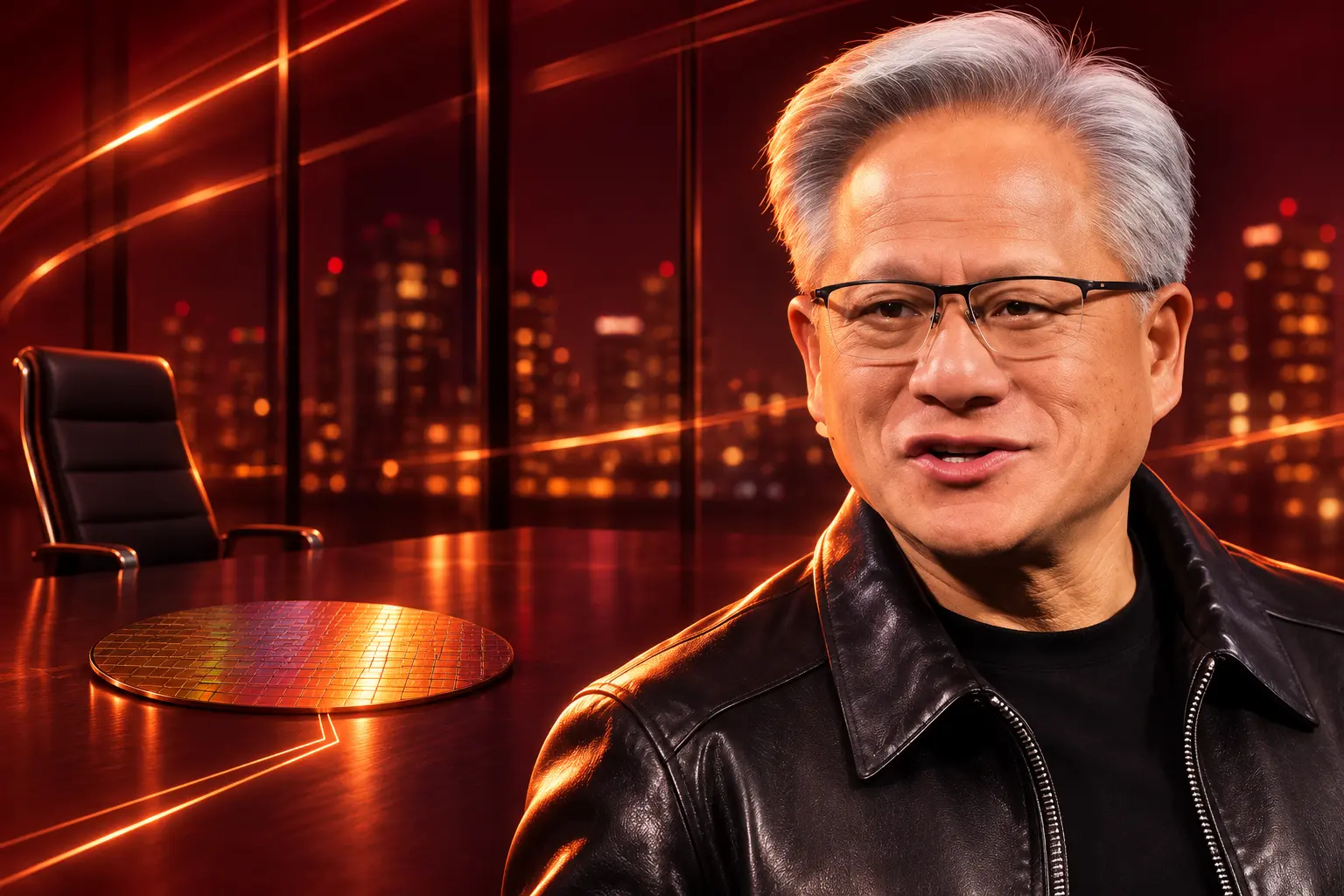
Nvidia’s board said on November 12 that Jensen Huang had resigned as president, chief executive, and a director, ending 33 years as the chipmaker’s only CEO. Finance chief Colette Kress will run the company as interim chief and keep her old job while directors search inside and outside Nvidia for a permanent successor.
The affairs got him out the door. The fight that follows is over who still gets to use the chips.
Colette Kress Takes the Job With No Roadmap
Kress has been executive vice president and chief financial officer since she joined Nvidia in September 2013, after nearly 25 years in finance at Cisco and Microsoft. The board said she will hold both the CEO and CFO titles until a permanent successor is named. Harvey C. Jones, a director since Nvidia’s founding in 1993 and a former chief executive of chip-design software maker Synopsys, became the company’s first-ever board chair the same day.
Colette has helped lead NVIDIA through a period of extraordinary growth and has a deep understanding of our business, customers, operations and financial position.
Harvey Jones, Chair of the NVIDIA Board of Directors, company statement, November 12, 2026
Jones said the board expects operations, customer commitments, and the product roadmap to continue without interruption. Kress told staff she would build on “the extraordinary foundation Jensen created over the last 33 years.” The statement does not mention the investigation, Alice Huang, or Megaspeed.
Huang is the only chief executive Nvidia has ever had. The company has no chief operating officer, and he kept the president’s title himself. Names in circulation for the permanent job include Ian Buck, who leads Nvidia’s AI hardware and software, Arm chief executive Rene Haas, AMD chief executive Lisa Su, Apple hardware chief Johny Srouji, and, in a remark from President Donald Trump, former Apple chief executive Tim Cook. Kress is on that list too.
He remains one of Nvidia’s largest shareholders, with a 3.6 percent stake worth about $160 billion. Losses since the first reports of his relationship with Alice Huang have taken about $500 billion off the company’s value. Shares in neoclouds that rent Nvidia gear fell hard on Thursday, with Nebius down as much as 19 percent and CoreWeave as much as 9 percent. Alphabet, which sells its own TPU chips to outside customers, rose slightly.
A Founding Director Now Runs the Board
Jones has sat on the board since 1993, the year Huang co-founded the company. Creating a chair splits oversight from day-to-day management on paper, a structure Nvidia never used while Huang ran both the board and the building. The board is considering internal and external candidates and has hired an outside search firm.
The personal case moved in four days. Huang emailed staff on November 8 admitting he had been unfaithful to his wife in a relationship with Alice Huang, also known as Huang Le, a former executive at Singapore firm Megaspeed International. US officials suspect her of working with Chinese intelligence. Beijing rejects that claim. On November 11, accounts of a second relationship with a subordinate, Kimberly Powell, Nvidia’s vice president of health care, reached the board. Directors met into the night. The company announced the resignation the next morning.
THE WEEK THE FOUNDER LEFT
- November 8, 2026: Huang emails staff, admits a relationship with Alice Huang, and pledges to cooperate with a board probe led by former prosecutor Joon Kim and law firm Wachtell Lipton.
- November 11, 2026: Reports of a second relationship with Kimberly Powell land. The board meets for hours and accepts Huang’s resignation as president, CEO, and director, effective immediately.
- November 12, 2026: Nvidia names Kress interim CEO and Jones the first chair, and says it will search inside and outside the company.
- November 17, 2026: Nvidia reports third-quarter fiscal 2027 results at about 1:20 p.m. PT, then holds its earnings call at 2 p.m. PT, the first without Huang as CEO.
- November 18, 2026: Kress hosts a company meeting. Anthropic is set to price its IPO the same day.
- November 19, 2026: Anthropic shares are due to start trading on Nasdaq under the ticker ANT.
Rep. Brian Mast, the Florida Republican who chairs the House Foreign Affairs Committee, said Huang agreed to a closed-door briefing before lawmakers break on November 20. Multiple Justice Department inquiries are underway, including an antitrust look at Nvidia and separate work on Megaspeed and Super Micro Computer. People familiar with the probes have said there is no sign the department is preparing criminal charges against Nvidia or Huang. Super Micro has said Megaspeed was never its customer.
How Much of China’s Compute Came Through the Side Door
Megaspeed is not a spy novel prop. It is a cloud firm that bought Nvidia servers, parked them in Southeast Asian data centers, and rented them to Chinese companies such as Alibaba, a structure that does not break current US export rules so long as the owner is not China-headquartered. It is also the firm US officials suspect of moving some of those chips physically into China, which is banned. Megaspeed denies smuggling. No charges have been filed. Nvidia has said there was nothing unusual about the commercial relationship.
Senator Michael Bennet, a Colorado Democrat on the Intelligence Committee, asked four Cabinet officials for answers by November 24, including Commerce Secretary Howard Lutnick. His letter puts Megaspeed’s Malaysian and Indonesian units at least at $4.6 billion of advanced Nvidia chips since 2023, including Blackwell processors the United States has not approved for China.
WHAT BENNET SAYS MEGASPEED DID
- Intelligence work: US agencies, he wrote, concluded Alice Huang was a Chinese intelligence asset who cultivated a close relationship with Huang and passed information on Nvidia and on the president.
- Sanctioned middlemen: The letter says Megaspeed used Aivres, a US-registered unit of blacklisted Chinese firm Inspur, to source hardware the parent could not buy directly.
- Physical diversion: A late 2024 Commerce inspection in Malaysia found advanced hardware in boxes rather than installed, which officials treated as a possible sign of onward shipment.
- Remote cloud access: Megaspeed still appeared on Nvidia’s site as a cloud partner as of October 29, offering Chinese clients compute on machines they could not import.
- Opaque ownership: The firm is described as a spin-off of Chinese gaming company 7ROAD. Singapore police have investigated it. Bridge Data Centres, backed by Bain Capital, has cut ties.
Those are allegations in a Senate letter, not findings in a courtroom. One separate investigative account has put a network around Alice Huang at about $7.5 billion of chips, or roughly 240,000 banned processors; that figure is unproven. Nvidia, asked earlier about smuggling, has said charged cases cover less than half of one percent of its products. Independent trade work puts the real share much higher.
The Institute for Progress estimates China will have access to about 4.6 million H100-equivalents by the end of 2026. In that mix, smuggling and overseas rentals together make up about 45 percent of China’s AI compute, more than the country’s own chip industry has produced.
CHINA’S AI COMPUTE MIX, IFP ESTIMATE FOR END OF 2026
| Source | H100-equivalents |
|---|---|
| Made in China | about 1.7 million |
| Rented in data centers outside China | about 1 million |
| Smuggled in | about 1 million |
| Imported legally | about 850,000 |
| Total | about 4.6 million |
Nvidia has tried to look busier on compliance. It rolled out a “fleet intelligence” tool that can track a chip’s location, but enrollment is voluntary and covers Nvidia Cloud Partners. It has cut more than half of its pre-approved Asian buyers and has told cloud partners not to rent more than half their capacity to Chinese firms, a cap US rules do not require. When it audited Megaspeed at the government’s request, it at first could not find about 50,000 chips, then said later visits had identified substantially all of them.
WHAT WE KNOW
- The job: Huang resigned as president, CEO, and director. Kress is interim CEO and still CFO. Jones is the first chair.
- The customer: Megaspeed bought at least $4.6 billion of Nvidia gear from 2023 through 2025 and rented capacity to Chinese firms.
- The admission: Huang confirmed a relationship with Alice Huang. Megaspeed denies illegal exports. No charges have been filed.
WHAT IS UNCONFIRMED
- Espionage: US officials suspect Alice Huang worked for Chinese intelligence. Beijing denies it. Singapore interviewed her and impounded her passport; it has not treated the case as spying.
- Volume: Claims of 240,000 banned chips and $7.5 billion in related shipments remain investigative, not adjudicated.
- Secrets: Nvidia has said it has no reason to believe national security or company secrets were compromised. The Kim probe is still running.
Bennet put the military stake in one line.
This flow of advanced AI chips to China and China’s access to restricted cloud computing capabilities risk enabling Beijing’s development of autonomous weapon systems, advanced cyber-warfare capabilities, and more powerful surveillance tools.
Sen. Michael Bennet, letter to Lutnick, Attorney General Todd Blanche, Secretary of State Marco Rubio, and Director of National Intelligence Jay Clayton, November 10, 2026
The House Already Passed a Remote-Access Clamp
Huang spent years telling Washington that shutting Nvidia out of China would only speed Huawei and the rest of Beijing’s chip drive. Amazon and Microsoft, two of Nvidia’s biggest customers, have backed tighter limits on those sales. The Trump administration reversed the Biden-era AI Diffusion Rule, pulled back draft licensing for Malaysia and Thailand, and has allowed H200 shipments to China case by case with a 25 percent cut for the US government. Lutnick’s department has faced criticism for not listing Megaspeed. A White House official has said the president maintains complete confidence in him.
The bills that sat still while Huang could still walk into the room are moving again. The Remote Access Security Act passed the House 369 to 22 in January 2026. It would give the Commerce Department’s Bureau of Industry and Security clear power to regulate remote, cloud-based use of controlled chips, the exact path Megaspeed used. It has not had a Senate vote. Nvidia warned in an August filing that the bill could hit its business hard. Chinese AI firms have been trying to lock in overseas Nvidia cloud time, people familiar with those talks have said, before that door shuts.
A companion measure, the Chip Security Act, would require location verification for advanced AI chips before export, turning Nvidia’s optional tracker into a default. It passed the House Foreign Affairs Committee unanimously in March 2026. Chip research firm SemiAnalysis has argued that slamming remote access shut would also squeeze open-source work with Chinese labs, a cost it says lawmakers have not priced. The status quo, however messy, still lets Washington see what those labs are training. A hard cut does not.
AMD, Custom Chips, and China’s Own Fabs
Chip design cycles run in years, so nobody eats Nvidia’s lead this quarter. The people who gain if more of those GPUs stay in the United States, or if Chinese labs lose the rental window, are already on the tape.
WHO MOVES IF THE DOOR NARROWS
| Party | What changes |
|---|---|
| AMD | Competes most directly with Nvidia on data-center GPUs; its shares jumped as Huang’s job came into doubt. |
| Broadcom and other custom shops | Stand to win if Google, Amazon, and Microsoft design more of their own silicon instead of waiting on Nvidia. |
| Has begun selling TPUs to outside customers, a path that looks more useful if Nvidia’s roadmap wobbles. | |
| US cloud giants | Get a larger share of scarce advanced chips if fewer of them flow to Southeast Asian rentals aimed at Chinese clients. |
| China’s chipmakers | Gain if tighter US rules finally force Beijing to fund domestic accelerators at scale, a long-stated goal. |
| Nvidia and the neoclouds | Lose the Huang premium, face more compliance cost, and watch China-linked Asian revenue come under a harsher light. |
Qualcomm’s robot chips sit further out. So does any claim that AMD or Google replaces CUDA in a hurry. The nearer shift is political: China hawks in Congress now have an easier time attaching export language to must-pass bills, and Huang is no longer the executive who could talk those amendments down.
Anthropic Still Lists Nvidia Among Its Buyers
The same week the AI boom’s most famous founder left, Anthropic’s IPO book filled to about six times the shares on offer. Filings put the range at $70 to $78 for 825 million Class A shares. At the top of that range the company would raise up to $64.4 billion in the public deal and another $26 billion in a concurrent private placement, or as much as $90.4 billion in all, larger than SpaceX’s $85.7 billion debut in June. Fully diluted value at the top of the range is about $1.4 trillion. On a non-diluted basis it is about $1 trillion. Bankers have discussed pushing the price toward a $1.5 trillion valuation. Goldman Sachs and Morgan Stanley are leading the offering.
The seven cornerstone buyers in the $26 billion private placement are Google, Nvidia, AMD, Broadcom, Micron, Microsoft, and TSMC. Nvidia is shopping for a chief executive and writing a check into the first frontier lab to go public. Anthropic’s run-rate revenue was about $81 billion as of October 31, up $10 billion from September 30. The last private round valued the firm at $965 billion. Trading is due November 19 under the ticker ANT, the day after Nvidia’s staff meeting and two days after Nvidia’s earnings call.
A Federal Reserve governor, Michelle Bowman, has warned of a “large correction” in stocks if AI returns fall short, pointing to $800 billion in AI-related debt plus off-balance-sheet liabilities and circular financing. October was the Nasdaq’s worst month in more than a year. The order book still filled. That is the wager: that Claude’s growth curve outruns the hole Huang left in the hardware layer everyone else is still buying.
The First Earnings Call Without the Founder
Inside Nvidia, the org chart is the argument. An internal suggestion-box post drawing more than 1,600 comments has urged the board to bring Huang back. Staff have written that Nvidia is Nvidia because of him, and that people make mistakes. Elon Musk replied “True” to investor Naval Ravikant’s line that Huang is irreplaceable. The counter is sitting in plain sight at Apple, which grew after Steve Jobs. Nvidia still has to prove the same thing with a finance chief in the chair and a 73-year-old founding director running the board.
The successor, whoever it is, will not have Huang’s leave to lobby the White House on export licenses, or his habit of keeping dozens of leaders reporting to one desk. That is the point of the new chair, the outside search, and the Kim file. It is also why the chip bills moved the moment he was gone.
Nvidia reports third-quarter fiscal 2027 results on November 17, the first earnings call the company has ever held without Huang as chief executive.
Disclaimer: This article is news reporting and analysis for general information only. It is not investment advice, a solicitation to buy or sell Nvidia, Anthropic, AMD, or any other security, and it is not a prediction of IPO pricing or of how Congress will vote on export bills. Readers who are considering any trade, subscription, or allocation tied to these companies should consult a licensed financial adviser who can review their own goals and risk limits. Share prices, offering ranges, run-rate figures, and the status of investigations and legislation are those published by the companies, lawmakers, and research groups cited here and can change without notice.

Baker Mayfield’s Foot Strain Tests Tampa’s Run-First Formula

Measles Turns Endemic After the US Loses Elimination Status

California Locks Waymo Off Freeways After a Recalled Defect

Aidan Hutchinson’s Season Ends on a Celebration Jump in Munich

Super El Niño Hits Food Systems Already Under Strain

Consumer Sentiment Falls to 51.7 as Future Outlook Darkens

Pluto’s Heart Glacier Still Pushes Liquid Nitrogen Upward

Take-Two Subpoenas Microsoft While GTA 6 Preorders Soar

The Extra Heat Month Hits Children Where Care Is Thinnest

Netflix Weighs Hosting Peacock and Fox One in Its App
-
 BUSINESS3 months ago
Consumer Sentiment Falls to 51.7 as Future Outlook Darkens
-
 GAMING3 months ago
Take-Two Subpoenas Microsoft While GTA 6 Preorders Soar
-
 NEWS3 months ago
Pluto’s Heart Glacier Still Pushes Liquid Nitrogen Upward
-
 NEWS3 months ago
The Extra Heat Month Hits Children Where Care Is Thinnest
-
 ENTERTAINMENT3 months ago
Netflix Weighs Hosting Peacock and Fox One in Its App
-
 NEWS3 months ago
FDA Clears Rasonque and Widens Who Can Take It
-

 NEWS3 months ago
UMMC Will Rebuild 30-Year-Old Cancer Labs With $2.4 Million
-

 GAMING3 months ago
GTA 6’s 80-Hour Run Counts Goals That Change the Story