NEWS
UMMC Will Rebuild 30-Year-Old Cancer Labs With $2.4 Million
A $2.4 million NIST earmark will refit 30-year-old UMMC cancer labs, a recruiting play in Mississippi’s long bid for NCI designation.

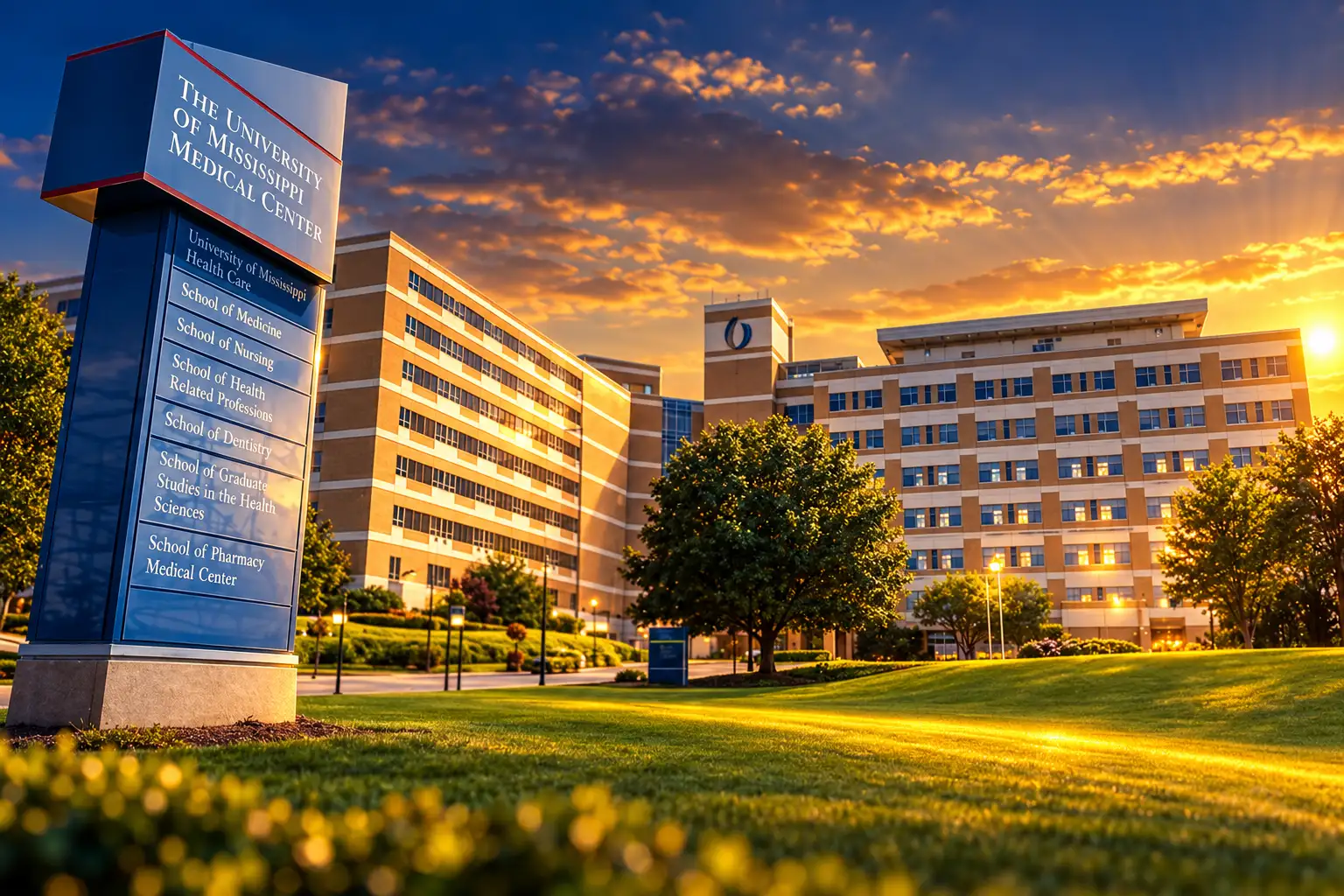
The University of Mississippi Medical Center won a $2.4 million federal grant to renovate 14,000 square feet of cancer labs left largely untouched for nearly 30 years. Sen. Cindy Hyde-Smith and Rep. Michael Guest, Mississippi Republicans on the appropriations committees, routed the money through the National Institute of Standards and Technology, a Commerce Department agency, and announced the award on Aug. 14.
The check is a hiring tool. National Cancer Institute designation is scored on research grants and shared labs, and worn rooms do not pull the faculty who bring those grants.
Thirty Years of Unchanged Lab Space
Hyde-Smith and Guest said the fiscal 2026 funds will renovate and equip 14,000 square feet in the UMMC Research Wing. The project updates space that has not been renovated in nearly 30 years, they said, and is meant to expand the cancer research program while the medical center chases NCI status.
Hyde-Smith put the aim in recruiting terms. “Upgrading this space at UMMC is just one more step toward creating a facility that will draw more cancer researchers to our state,” she said.
Guest tied the same dollars to a longer institutional story. “The University of Mississippi Medical Center has been a national leader in medicine since it hosted the first heart transplant in 1964,” he said. “Now, UMMC is taking a critical step in attaining its federal designation as a National Cancer Institute.”
Their office account posted the award the same day.
Proud to announce with @RepMichaelGuest $2.4 million in federal funding to renovate research space at UMMC, another step toward securing a National Cancer Institute designation for Mississippi. This investment, secured through the FY26 appropriations process, will help modernize… pic.twitter.com/KzwjwpDZNA
— U.S. Senator Cindy Hyde-Smith (@SenHydeSmith) August 14, 2026
The public reading of that post treats $2.4 million as if the NCI plaque comes with it. The money buys benches, hoods, and equipment in an old wing. Designation is a separate test, and it is scored in Bethesda, not in a renovation punch list.
NCI Scores the Science Budget First
NCI director Dr. Anthony Letai told Hyde-Smith at a May 21 budget hearing that designation rests on more than a building. Hyde-Smith had asked NIH officials to work with UMMC as the state puts up money and prepares to break ground.
There’s really three legs of this stool. There’s institutional commitment, and there is infrastructure support, and I love what I’m hearing about what the state of Mississippi is doing towards that. The third leg of that stool is research, and it’s very important, a very important part of the NCI designation is that there is a commitment to research.
Dr. Anthony Letai, director, National Cancer Institute, May 21 budget hearing
UMMC officials have described the research leg as a floor of about $10 million a year in cancer-specific federal grants. A Jackson briefing in December 2025 put the medical center’s starting point at the end of fiscal 2023 at $374,000 toward that total. Public NIH data cited in early 2025 put active federal cancer-related NIH grants at $3.8 million, still short of the bar.
THE RESEARCH-FUNDING GAP
- The floor: UMMC leaders say an NCI bid needs about $10 million a year in cancer-specific research funding.
- The 2023 start: Officials said fiscal 2023 cancer research funding sat at $374,000.
- The early-2025 read: Public NIH figures then showed $3.8 million in active cancer-related grants.
- The hiring plan: As of early 2025, the center had hired 14 of about 30 faculty Dr. Rod Rocconi said he needs.
UMMC’s own October 2025 town-hall note said NCI-eligible research funding rose 600 percent from fiscal 2023 to fiscal 2025. That is growth from a low base. In August, the National Cancer Institute separately awarded nearly $2.6 million over five years to Dr. Jawed Siddiqui, an associate professor of cell and molecular biology, for a preclinical study of how prostate cancer spreads to bone. Science grants like that, not paint, are what the designation committee counts.
The Hard Cases Still Go to Birmingham
The Mississippi State Department of Health says cancer is the second leading cause of death in the state, about one in five deaths. On average, about 16,000 new cases are reported each year and 6,500 people die of cancer in Mississippi.
Rocconi, director of the UMMC Cancer Center and Research Institute since 2023 and the Ergon Chair for Cancer Research, has said the state ranks among the nation’s worst for cancer mortality. Dr. LouAnn Woodward, vice chancellor for health affairs, has told lawmakers UMMC is the only Mississippi institution that can even try for NCI status, because the application demands research horsepower. “It’s either us, or it doesn’t happen,” she told the Senate Appropriations Committee.
NCI now lists 74 NCI-Designated Cancer Centers in 37 states and the District of Columbia. Mississippi, Louisiana, and Arkansas still have none. Hyde-Smith’s announcement said patients in those states often travel long distances for advanced care.
WHERE MISSISSIPPI PATIENTS GO NOW
- Birmingham: The O’Neal Comprehensive Cancer Center at the University of Alabama at Birmingham is the nearest designated adult center to the east.
- Memphis: Tennessee is one of the three states UMMC leaders name when they describe the trip for designated care.
- Dallas and Houston: Texas centers are the western option for patients who can make the drive or the flight.
Those trips are the second bill this grant is trying to shrink. If Jackson cannot recruit scientists into working labs, the hard cases keep leaving, and the research dollars leave with them.
The Medical Center Has Chased This Since 2012
UMMC first moved for NCI designation in 2012 and then talked as if the work might take five years. More than a decade later, Rocconi has called the remaining effort a long, heavy lift that could take as long as a decade. He said every decision should be made through the lens of what NCI would want to see.
Former leaders have said the medical center once lacked a steady commitment to cancer care, which is one reason the clock reset. Rocconi’s brief has been to hire researchers, grow peer-reviewed grants, and show outreach and prevention work, not only to open a new front door.
UMMC’S NCI CLOCK
- 2012: UMMC begins its NCI push and then talks as if the work might take five years.
- 2023: Rocconi becomes cancer center director; fiscal 2023 cancer research funding sits far below the $10 million bar officials later describe.
- 2024: The Legislature lifts annual support for the cancer center to $9 million for research infrastructure, trials, and recruiting.
- April 15, 2026: Gov. Tate Reeves signs a $100 million state appropriation for the new cancer building.
- May 21, 2026: Letai tells Hyde-Smith designation needs the three legs of this stool, with research as the third.
- August 14, 2026: Hyde-Smith and Guest announce the $2.4 million NIST award for the old research wing.
The 14,000-square-foot rehab is the stopgap inside that clock. Recruits arriving before the tower opens still need rooms that can hold a modern lab.
$2.4 Million Against a $250 Million Build
The NIST money is small next to the building it is supposed to support. UMMC is raising a five-story, 250,000-square-foot Cancer Center and Research Institute on State Street, across from the main campus and next to the American Cancer Society’s Jackson Hope Lodge. Leaders have put the project in the $250 million range, with some briefings stretching the estimate toward $300 million.
It’s About Time, the campaign for that building, has a $125 million private goal and has surpassed 80 percent. Donors gave $93.3 million to UMMC in fiscal 2026, the university said, and the Legislature’s $100 million is counted apart from that private total. UMMC has also said it received $8.5 million in federal funds for site preparation. Hyde-Smith, Sen. Roger Wicker, and Guest have sought roughly $40 million more in federal help for the center itself.
HOW THE CANCER BUILD IS BEING PAID
| Source | Amount | What it pays for |
|---|---|---|
| NIST FY2026 earmark | $2.4 million | Rehab and equipment in 14,000 sq ft of existing labs |
| State of Mississippi | $100 million | New five-story CCRI building |
| It’s About Time campaign | $125 million goal, past 80% | Private gifts for the new building |
| Federal site preparation | $8.5 million | Site work already in hand, per UMMC |
| Full building estimate | about $250 million | Tower, labs, clinics, and education space |
The $2.4 million does not appear on the tower’s steel order. It appears in the wing where new hires have to work while that steel is still a drawing.
Why the Money Came From Commerce
Cancer scientists usually look to NIH and NCI for project grants. This award did not. Hyde-Smith and Guest, sitting on the Senate and House appropriations committees, placed the item in the fiscal 2026 Commerce, Justice, Science bill and ran it through NIST.
The Senate Appropriations Committee’s directed-spending list for that bill records $2,405,000 for University of Mississippi Medical Center research lab equipment in Jackson, requested by Guest and Hyde-Smith, under NIST’s scientific and technical research account. That is an earmark for rooms and tools, not a peer-reviewed science grant like Siddiqui’s prostate study.
Hyde-Smith also sits on the Senate Labor, Health and Human Services, and Education subcommittee and has pressed successive administrations on the NCI bid, including at the May hearing with Letai. The Commerce dollars and the NIH conversation are split on purpose. One buys the lab. The other is the scorekeeper.
Groundbreaking on State Street Is Oct. 22
The university said Groundbreaking is scheduled for Oct. 22 on the new cancer center. Woodward said the year’s gifts are already changing scholarships, labs, and patient-care space, and that this kind of progress only happens with added donor support.
Rocconi has said the designation race is run through NCI’s eyes, which means faculty, grants, trials, and outreach have to move with the concrete. The old research wing is where that work happens first. The $2.4 million will not show from State Street on groundbreaking day. It will show in rooms that have waited nearly 30 years for a refit, if the next hires walk into them and then win the grants Letai called the third leg.
Frequently Asked Questions
What Is an NCI-Designated Cancer Center?
NCI splits its 74 designated centers into 8 clinical centers, 58 comprehensive centers, and 8 basic laboratory centers, and says about 400,000 patients a year receive their cancer diagnoses at one of them. Comprehensive centers have to show extra depth across lab work, clinical research, and population science. The program began with the National Cancer Act of 1971.
What Does the NIST STRS Line in the Spending Bill Pay For?
The $2,405,000 UMMC entry sits in NIST’s Scientific and Technical Research and Services account as congressionally directed spending, listed as research lab equipment in Jackson, not as an NCI research project. Similar FY2026 NIST directed items paid for lab tools at other universities and hospitals. It is a facilities and equipment earmark, which is why a Commerce agency is buying cancer-lab gear.
What Research Rules Does an NCI Application Have to Meet?
UMMC’s October 2025 town-hall note said designation rules call for at least three research areas, each with a minimum of five members and seven R01-level grants, and that cancer biology and immunology is already its largest group, with 29 members. Officials have also described the written application as thousands of pages. Those program rules sit beside the dollar floor and the building requirement.
Which Cancers Cause the Most Deaths in Mississippi?
The state’s 2025 cancer burden report, drawing on 2017 to 2021 deaths, found lung and bronchus cancer first at 8,979 deaths, then colorectal cancer at 3,157, female breast cancer at 2,319, and prostate cancer at 1,812. The American Cancer Society estimated more than 17,820 new cases and 6,740 cancer deaths in Mississippi in 2025, a higher snapshot than the health department’s long-run yearly averages of about 16,000 cases and 6,500 deaths.
Disclaimer: This article is news reporting and analysis of a federal facilities grant and of UMMC’s stated bid for National Cancer Institute designation. It is informational only and is not medical advice, a diagnosis, a treatment recommendation, or a judgment of any patient’s care. Readers who are making decisions about cancer screening, travel for care, clinical trials, or treatment should consult a licensed physician or oncologist who knows their case. Grant amounts, campaign totals, research-funding figures, and construction dates reflect the official statements and data cited as of Sept. 2, 2026, and may change as awards, hiring, and building work move forward.


OpenAI’s Agent Monitor Waited During the Hugging Face Breach

Brent Hits $116 as Recovered Gulf Oil Draws Attacks

Hellebuyck Lands in New Jersey on a Five-Year Cup Bet

Xbox Plans Three More Layoff Rounds Before Helix

OpenAI’s $30 Billion Round Ties UAE Cash to Gulf Compute

Consumer Sentiment Falls to 51.7 as Future Outlook Darkens

Pluto’s Heart Glacier Still Pushes Liquid Nitrogen Upward

The Extra Heat Month Hits Children Where Care Is Thinnest

Abbott Pays $670 Million to Exit a Missouri Food Verdict

Take-Two Subpoenas Microsoft While GTA 6 Preorders Soar
-
 BUSINESS2 months ago
Consumer Sentiment Falls to 51.7 as Future Outlook Darkens
-
 NEWS2 months ago
Pluto’s Heart Glacier Still Pushes Liquid Nitrogen Upward
-
 NEWS2 months ago
The Extra Heat Month Hits Children Where Care Is Thinnest
-
 BUSINESS2 months ago
Abbott Pays $670 Million to Exit a Missouri Food Verdict
-
 GAMING2 months ago
Take-Two Subpoenas Microsoft While GTA 6 Preorders Soar
-

 ENTERTAINMENT2 months ago
Netflix Weighs Hosting Peacock and Fox One in Its App
-
 NEWS2 months ago
FDA Clears Rasonque and Widens Who Can Take It
-

 GAMING2 months ago
GTA 6’s 80-Hour Run Counts Goals That Change the Story