
BUSINESS
Sojitz Buys the European Seafood Arm Sealaska Sold
Sojitz has taken Sealaska’s European seafood platform, including New England Seafood, so the Alaska Native corporation can fund programmes closer to home.

Sojitz Corporation has bought 100 percent of Sealaska Foods International Holdings, the London holding company behind New England Seafood International. The Japanese trading house named the deal on 2 October 2026, a day after Sealaska told its Alaska Native shareholders the European seafood arm was gone.
The price was not disclosed. Sealaska said the sale is the first step in turning that overseas platform into money for programmes at home, while Sojitz said it wants white fish, ready-to-eat packs and sushi demand in Europe and the United States.
Sojitz Takes Full Control of the UK Processor
Related companies under the SFIH umbrella, including New England Seafood International Limited (NESI), will become consolidated subsidiaries of Sojitz. SFIH, set up in October 2020 and based at One New Change in London, plans to change its name to Sojitz Seafood International Holdings. Daniel Thomas Aherne remains listed as representative director of both the holding company and NESI.
Sojitz said it wants new supply networks for white fish and other seafood in Europe and the United States, stronger product development for local tastes, and a wider customer base in the UK and the rest of Europe. NESI already sells fresh and frozen fish to retailers and foodservice buyers, including tuna, salmon and shellfish, and runs private-label lines plus the Leap and Fish Said Fred brands from plants in Chessington, Grimsby and Paignton.
Japan’s seafood market is reaching maturity, Sojitz said, and it has placed Europe and the United States as the growth markets for higher-value products. It put the UK seafood market of USD 5.7 billion on a stable-growth path, citing Market Research Future, and pointed to a shift toward fish as a quality protein and toward raw ready-to-eat packs, pre-seasoned ready-to-heat meals, sushi and other Japanese food.
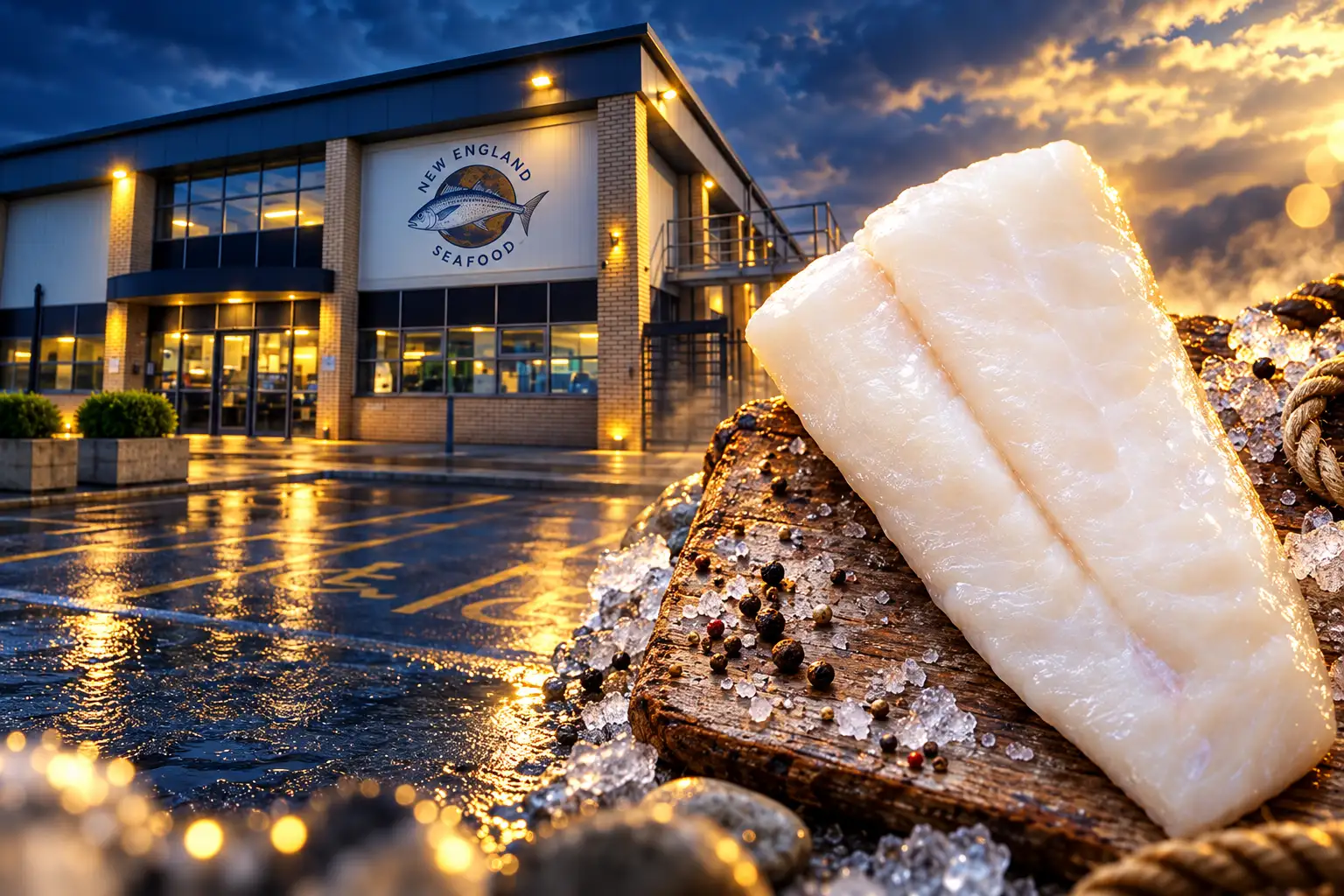
An Alaska Native Corporation Cashes Out a European Platform
Sealaska is the regional Alaska Native corporation for Southeast Alaska, formed under federal law in 1971 for shareholders of Tlingit, Haida and Tsimshian descent. Its April 2026 materials put the register at more than 27,000 shareholders. Profits from its businesses are meant to support dividends, scholarships, internships, burial help and other benefits, not a public stock market. Shares cannot be sold in the ordinary way.
The European seafood companies sat inside Woocheen, Sealaska’s ocean-health business unit. On 1 October 2026, Sealaska said Woocheen had sold SFIHL, which covers NESI and companies in Norway and Iceland, and that the move lets it expand shareholder programs closer to home.
This transaction is the first step in its strategy to realize that value, enabling Sealaska Corporation to expand shareholder programs that directly impact its communities closer to home.
Sealaska Corporation, 1 October 2026 statement
That home spend is already large, and it is separate from this sale. A spring 2026 distribution of $29.7 million went out on 16 April 2026, before the European exit, mixing $3 million from operations, $3.6 million from the Marjorie V. Young Shareholder Permanent Fund and $23.1 million in Alaska Native Claims Settlement Act Section 7(j) resource-sharing funds. Sealaska also said it had put more than $118 million into social and cultural programmes over the previous decade, and more than $27 million in 2025 into dividends, programmes and taxes paid on shareholders’ behalf.
Chairman Richard Rinehart said the board’s work is guided by the idea that everything is connected, and that business results should sit with stewardship of homelands and investment in people. President Sarah Dybdahl (Aanshawatk’i) said progress is measured through communities, language, education and the next generation, not only through the accounts. The October sale does not name a figure those programmes will receive. It does say this is how Woocheen starts to turn a global seafood platform into cash that can be used nearer home.
WOOCHEEN’S EUROPEAN BUILD, THEN THE EXIT
- Late 2020: Sealaska buys UK processor New England Seafood International.
- March 10, 2023: Woocheen takes a majority stake in Norwegian white-fish trader Normarine in Ålesund.
- October 1, 2026: Sealaska tells shareholders it has sold SFIHL, including NESI and companies in Norway and Iceland.
- October 2, 2026: Sojitz says it now holds 100 percent of SFIH and will fold the group into its seafood businesses.
The thank-you at the foot of Sealaska’s note ran in three languages of the region: Gunalchéesh. Háw’aa. T’oyaxsut ‘nüüsm. For a corporation whose owners cannot trade out on an exchange, a sale like this is one of the few ways to crystallise value from a foreign platform without listing it.
What New England Seafood Brings to the Buyer
NESI is the operating heart of the deal, a processor founded in December 1990 and based at 48 Cox Lane, Chessington. Its full accounts to 31 December 2024, filed at Companies House on 23 September 2025, show a company that grew sales and profit in the last reported year, which is not the profile of a distressed dump.
NESI’S LATEST FILED ACCOUNTS
| Year ended | Turnover | Pre-tax profit |
|---|---|---|
| 31 December 2024 | £218.1 million | £9.36 million |
| 31 December 2023 | £173.8 million | £3.67 million |
Turnover rose 25 percent year on year. The same filing puts staff at 766, net assets at £37.9 million and cash at £2.4 million. Those figures are for the UK company, not for the wider SFIH group, whose published group totals conflict across trade accounts and are not used here.
Sojitz said NESI has customer-led product work, labour-saving kit and automation, and a range of MSC or ASC certified lines. It also said NESI holds a large share of UK mass-retail sales in cod and other white fish, wild Alaskan salmon and sashimi-grade tuna, without giving percentages. The Leap brand launched in 2017 around wild-caught fish; Fish Said Fred followed in 2020. Chessington took over from a smaller Wandsworth unit in 2005 after volumes grew. Grimsby arrived in 2016 through the Albert Darnell plant on the Europarc estate.
Aherne has been the public face of that build. The plants now sit inside a Japanese trading house that already farms and processes tuna and that, in July 2024, bought US supermarket sushi counters. UK buyers who know NESI as a white-fish and salmon supplier will meet a new owner whose stated brief is sushi, raw ready-to-eat and ready-to-heat, as well as the existing chilled counter.
The Norway Cod Path Comes With the Deal
Sojitz was explicit that SFIH’s value is not only three English factories. The group has supply networks in Norway and Iceland for white-fish raw material, and Sojitz said the two sides will buy together, share processing know-how and cross-sell through combined networks. The UK plants are the customer door. The Nordic desks are the fish.
WHAT NOW SITS UNDER THE HOLDING COMPANY
- UK processing: NESI’s Chessington, Grimsby and Paignton sites, selling private label plus Leap and Fish Said Fred into retail and foodservice.
- Norwegian trading: Normarine in Ålesund, a white-fish trader in which Woocheen took a majority stake on 10 March 2023, still run by Bjørn Fladmark and Erik Sindre Pedersen.
- Iceland sourcing: companies Sealaska grouped with NESI under SFIHL, named by Sojitz as white-fish raw-material networks rather than as a second UK factory estate.
When Woocheen bought that majority stake in Normarine, Aherne described it as the next step in a sea-to-plate build that put Atlantic cod and haddock beside Alaska line-caught Pacific cod.
This investment shortens the path between sea and plate and brings our customers and consumers even closer to the Norwegian fishing community with whom Normarine has built more than 30 years of deep and enduring relationships.
Dan Aherne, NESI chief executive, March 2023 Woocheen announcement
Pedersen said at the time that Woocheen’s profits supporting Alaska Native shareholders and communities was part of the appeal, a focus on people, nature, water and careful use of resources. That ownership story now reverses. The Norwegian trader and the UK plants leave the Alaska Native corporation and enter a Tokyo-listed trading house that wants the same fish for a different reason: joint buying, more processed packs, and volume through Sojitz’s own sales net.
No UK retailer, union or plant committee put a public objection on the record in the days after the notices. The silence fits a holding-company transfer. The people who catch, cut and pack the fish did not become the story. The owners did.
Four Seafood Buys in Five Years
NESI is the fourth seafood purchase Sojitz has closed since 2022. The pattern is consistent: buy processing and selling power first in Japan, then take that kit into the United States and now into the UK and Nordic sourcing.
SOJITZ’S SEAFOOD DEALS SINCE 2022
| Closed | Target | What Sojitz bought |
|---|---|---|
| April 2022 | The Marine Foods Corporation | Tokyo seafood processor, taken from NH Foods (Nippon Ham), strong in sushi toppings |
| April 2023 | TRY Inc. | Shizuoka frozen-tuna processor, lifted from a 10 percent stake to full ownership |
| July 2024 | Sushi Avenue takeout business | US supermarket sushi, bought through Sojitz Corporation of America |
| October 2026 | SFIH, including NESI | UK processing plus Norway and Iceland white-fish supply, to be renamed |
TRY, founded in 1988, handles 26,000 tons of super-frozen tuna a year and sells to more than 300 wholesale and sushi-chain customers, with an ultra-low-temperature chain below -50C and two HACCP-certified plants for US and EU export. Marine Foods gave Sojitz a domestic processing and customer base for raw fish used in sushi. The US step was different: Sojitz took the takeout sushi counters in over 300 stores, mostly in the Midwest, and paired them with MF America, a Portland, Oregon wholesale base Marine Foods opened in January 2024.
The Japan Processors Came First
The 2022 and 2023 deals were about control of fish inside Japan, tuna in particular. Sojitz already had farming and wholesale through Sojitz Foods. Buying Marine Foods and then TRY added factories, cold chain and sushi-chain accounts at home before it spent on foreign store counters.
The US Counters Opened the Overseas Door
Sushi Avenue put Sojitz in American supermarkets rather than in another Japanese plant. NESI now does the European version of that move, except the UK company is a processor with its own brands and Nordic supply, not a chain of in-store sushi kiosks. The four deals read as one chain from Japanese tuna plants to US sushi cases to a UK white-fish door that can also cut sashimi-grade tuna.
Ready-to-Eat Fish Is the Stated Aim
Sojitz’s notice dwells on convenient packs: processed raw ready-to-eat items, pre-seasoned ready-to-heat items, sushi and other Japanese food, set against a UK market it calls concentrated enough to grow in without building a new industry from scratch. It said the combined groups will raise value across all of Sojitz’s seafood businesses by connecting resource markets around the world, and that NESI’s automation and certified lines are part of that kit.
For Sealaska’s shareholders, the European chapter is over. Woocheen still has other ocean-health work; this sale is only the first step in taking value out of the global platform. For the 766 people on NESI’s last filed headcount, and for Normarine’s desks in Ålesund, the next brief comes from Tokyo: joint buying of white fish, more processed packs, and a sales push that treats the UK as a hub for Europe and a bridge toward the same US demand Sojitz already bought sushi counters to serve.
SFIH still plans to take the Sojitz Seafood International Holdings name. Sealaska said it will keep shareholders informed as new information becomes available. The fish path from Norway and Iceland through Chessington, Grimsby and Paignton now sits on Sojitz’s books, and the cash from that transfer is meant to work closer to Sealaska’s homelands than a London holding company ever could.
Frequently Asked Questions
Who owns New England Seafood International now?
Sojitz Corporation owns it through Sealaska Foods International Holdings Limited, which it said it acquired in full on 2 October 2026 and which plans to change its name to Sojitz Seafood International Holdings. NESI itself remains a UK private limited company, number 02565953, with its registered office at 48 Cox Lane, Chessington, Surrey, KT9 1TW, and Daniel Thomas Aherne as representative director on Sojitz’s company overview.
What is Sealaska Corporation?
Sealaska is the for-profit Alaska Native regional corporation for Southeast Alaska, created under the Alaska Native Claims Settlement Act. It enrolled 15,782 original shareholders who had to have at least one-quarter Native blood quantum and be born by 18 December 1971; shareholders later voted in 2007 to enrol descendants, and the corporation’s 2026 materials describe a register of more than 27,000 people of Tlingit, Haida and Tsimshian background. Its stock is not publicly traded and cannot legally be sold on an open market.
Which UK factories does New England Seafood run?
Three: a chilled plant on the Cox Lane Industrial Estate in Chessington, occupied from 2005 after the company left a smaller Lydden Road unit in Wandsworth; a 37,000 sq ft site on Grimsby’s Europarc Industrial Estate, added in 2016 when NESI bought Albert Darnell Ltd; and a site in Paignton. The Chessington address is also the company’s registered office.
What other seafood firms has Sojitz bought since 2022?
Three before NESI. In April 2022 it took full ownership of The Marine Foods Corporation, a Tokyo processor bought from NH Foods. In April 2023 it raised a 10 percent stake in TRY Inc., a Shizuoka frozen-tuna firm founded in 1988 that handles 26,000 tons a year, to 100 percent. In July 2024, through Sojitz Corporation of America, it bought Sushi Avenue’s US supermarket takeout sushi business, which Sojitz said spanned over 300 retail locations, mainly in the Midwest, and paired it with MF America in Portland, Oregon.
What do MSC and ASC marks on NESI products mean?
Sojitz said NESI’s range includes products with Marine Stewardship Council (MSC) or Aquaculture Stewardship Council (ASC) certification. MSC is an international mark for wild-caught seafood from fisheries assessed on stock use and environmental responsibility. ASC is the farmed equivalent, covering farming conditions and labour as well as environmental practice. Sojitz listed those marks as part of NESI’s offer to UK mass retailers alongside cod, wild Alaskan salmon and sashimi-grade tuna.

OpenAI’s Agent Monitor Waited During the Hugging Face Breach

Brent Hits $116 as Recovered Gulf Oil Draws Attacks

Hellebuyck Lands in New Jersey on a Five-Year Cup Bet

Xbox Plans Three More Layoff Rounds Before Helix

OpenAI’s $30 Billion Round Ties UAE Cash to Gulf Compute

Consumer Sentiment Falls to 51.7 as Future Outlook Darkens

Pluto’s Heart Glacier Still Pushes Liquid Nitrogen Upward

The Extra Heat Month Hits Children Where Care Is Thinnest

Abbott Pays $670 Million to Exit a Missouri Food Verdict

Take-Two Subpoenas Microsoft While GTA 6 Preorders Soar
-
 BUSINESS2 months ago
Consumer Sentiment Falls to 51.7 as Future Outlook Darkens
-
 NEWS2 months ago
Pluto’s Heart Glacier Still Pushes Liquid Nitrogen Upward
-
 NEWS2 months ago
The Extra Heat Month Hits Children Where Care Is Thinnest
-
 GAMING2 months ago
Take-Two Subpoenas Microsoft While GTA 6 Preorders Soar
-
 BUSINESS2 months ago
Abbott Pays $670 Million to Exit a Missouri Food Verdict
-

 NEWS2 months ago
UMMC Will Rebuild 30-Year-Old Cancer Labs With $2.4 Million
-

 ENTERTAINMENT2 months ago
Netflix Weighs Hosting Peacock and Fox One in Its App
-

 GAMING2 months ago
GTA 6’s 80-Hour Run Counts Goals That Change the Story